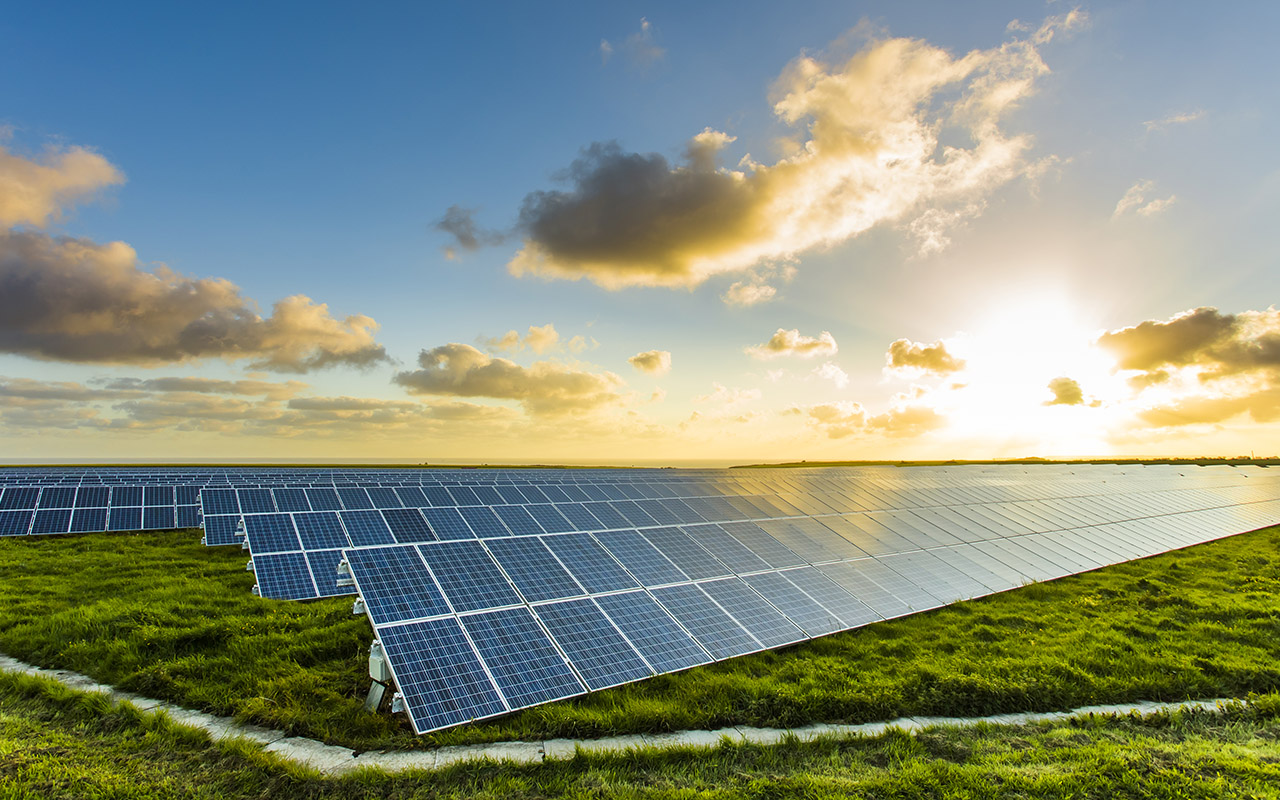
The silicon is hungry. It consumes watts like air.
The narrative has shifted. For three years, the market obsessed over parameters and token windows. Now, the bottleneck is physical. It is copper, transformers, and high-voltage lines. As of May 15, 2026, the artificial intelligence race has officially transitioned from a software sprint to a brutal energy marathon. The World Economic Forum recently highlighted this pivot, noting that the challenge for Europe is no longer a lack of clean energy. The issue is the speed of alignment. Supply, infrastructure, and demand are out of sync. This is a structural failure that threatens to turn the continent into a digital museum.
Lucy Yu, CEO of the Centre for Net Zero, has been vocal about this disconnect. According to her analysis, the continent has the renewable capacity. It simply lacks the grid agility to move that power to where the GPUs live. In the last 48 hours, energy spot prices in the European Energy Exchange have shown extreme volatility. This is not a coincidence. Data centers are hitting the ceiling of local grid capacities in Dublin, Frankfurt, and Amsterdam. The arbitrage is no longer about code. It is about who can secure a 500-megawatt connection before the decade ends.
The gridlock of the FLAP-D markets
London, Amsterdam, and Frankfurt are the historical heart of European data. They are also the most congested. Grid operators are now issuing moratoriums on new connections. In Dublin, the situation is critical. Data centers now consume roughly 20 percent of Ireland’s total electricity. This is a systemic risk. The technical mechanism of this failure is simple but devastating. AI training runs require constant, baseload-style power. Renewables provide intermittent surges. Without massive battery storage or nuclear baseload, the grid oscillates. These oscillations destroy the economics of high-density compute.
Investors are looking at the spread. The cost of power in the United States remains significantly lower due to deregulated grids in states like Texas. Per recent Bloomberg energy data, the price per megawatt-hour for industrial users in Northern Europe has spiked by 14 percent since the start of the quarter. This is the premium for a failing infrastructure. Europe is rich in wind and solar, but that energy is often trapped in the North Sea while the data centers are stuck in urban hubs. The transmission loss and the cost of new subsea cables are being priced into the next generation of AI models.
Projected AI Energy Demand vs Grid Capacity Surplus (MW)
The technical debt of the European grid
The problem is inertia. Not just political inertia, but physical grid inertia. Large-scale AI inference clusters require a level of stability that current European distribution networks were not designed to handle. When a massive cluster spins up for a training epoch, it creates a localized demand spike. If the grid lacks sufficient synchronous condensers or fast-acting storage, frequency drops. This forces operators to throttle the very industries they claim to support. The Reuters energy desk reported yesterday that several German industrial zones are now facing mandatory load-shedding protocols to protect the stability of the wider network.
This is the hidden cost of the green transition. We built the generation before we built the delivery. Lucy Yu’s point about aligning supply and demand is the central thesis of the 2026 energy market. If the infrastructure cannot move the electrons, the electrons are worthless. This has led to a surge in ‘behind-the-meter’ solutions. Tech giants are now bypasssing the public grid entirely. They are building proprietary gas turbines and small modular reactors (SMRs) directly on-site. This is the ultimate privatization of infrastructure. It leaves the public grid with the bill and the tech firms with the power.
The 2026 Energy Cost Matrix
The following table illustrates the growing disparity in operational costs for tier-one data center operators across the continent. These figures reflect the blended rate of spot pricing and grid access fees as of May 15, 2026.
| Region | Avg. Cost per MWh (€) | Grid Connection Wait Time (Months) | Renewable Mix (%) |
|---|---|---|---|
| Nordics (Norway/Sweden) | 42.50 | 14 | 98 |
| Germany (Frankfurt) | 118.20 | 48 | 52 |
| Ireland (Dublin) | 145.00 | 72 | 41 |
| France (Paris) | 88.00 | 24 | 75 |
| United Kingdom (London) | 132.40 | 36 | 48 |
The data shows a clear divergence. The Nordics offer the only viable path for large-scale training, yet the latency to the rest of Europe remains a hurdle for real-time inference. France is emerging as a dark horse due to its nuclear baseload, which provides the stability that AI workloads crave. Meanwhile, the UK and Germany are trapped in a cycle of high costs and long wait times. This is not just an energy crisis. It is a competitive de-industrialization of the digital economy.
The race for power has only just begun. While the software layer of AI becomes commoditized, the physical layer becomes a luxury. The winners of the next eighteen months will not be the companies with the best algorithms. They will be the companies that own their energy supply chains. Watch the upcoming June 12 release of the ENTSO-E Summer Outlook. If the grid stability projections for the Rhine-Main region show further degradation, expect a massive capital flight from German data centers toward the nuclear-backed clusters of the Rhone Valley.