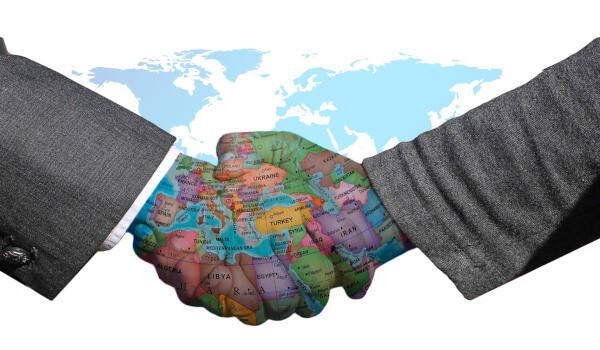
Capital has no country.
The latest Forbes Billionaires list confirms a uncomfortable truth. Wealth is not just growing. It is migrating. As of March 2026, 80 countries and territories now claim at least one billionaire resident. This is an increase from 78 just twelve months ago. The data suggests a massive fragmentation of global capital. We are seeing the rise of the ‘Middle Power’ billionaire. These are individuals who have decoupled from the traditional financial hubs of New York, London, and Hong Kong. They are setting up shop in jurisdictions that offer more than just tax breaks. They are looking for sovereignty and regulatory immunity.
The mechanics of wealth dispersion
The increase to 80 nations is not a sign of global economic health. It is a symptom of the ‘Great De-risking’ that began in late 2024. According to the Bloomberg Billionaires Index, the concentration of wealth in the top 0.001 percent has reached a point of saturation in developed markets. Investors are now chasing yield in frontier markets where the rule of law is flexible. The addition of two new territories to the Forbes list indicates that the infrastructure for extreme wealth is now portable. You no longer need a Wall Street pedigree to amass a ten-figure fortune. You need a data center, a private security firm, and a friendly local government.
Visualizing the expansion of the billionaire class
The Friday market signal
Market action on Friday, April 24, provided the perfect backdrop for this report. The US Dollar Index (DXY) showed unexpected resilience. This pressured emerging market currencies. However, the private wealth in those same emerging markets remained insulated. This is because modern billionaires do not hold their wealth in local currency. They hold it in offshore dollar-denominated assets or tokenized commodities. Per recent filings on SEC EDGAR, the volume of family office registrations in non-traditional jurisdictions has spiked 14 percent since January. This is a flight to safety that the mainstream media misinterprets as ‘global growth.’
Regulatory arbitrage and the new frontier
The two new territories on the Forbes list are likely beneficiaries of the recent shift in global tax transparency rules. When the G20 pushed for a global minimum tax, they inadvertently created a market for ‘sovereign holdouts.’ These 80 nations represent a menu of options for the ultra-wealthy. If one jurisdiction tightens its belt, the capital moves to the next. The technical mechanism here is the ‘Shell-to-Shell’ transfer. It allows for the instantaneous relocation of paper wealth without moving a single physical asset. This is why the billionaire count is rising in places you would least expect. It is not about where the money is made. It is about where the money is allowed to exist in peace.
Tech as the primary driver
Technology remains the engine. But it is no longer just Silicon Valley technology. We are seeing a surge in ‘Localized AI’ ventures. These companies are being built to serve specific regional needs in Southeast Asia and Africa. The founders are becoming billionaires overnight because they are capturing markets that the American tech giants have ignored or been blocked from entering. Data from Reuters Financial indicates that venture capital flows into these ‘billionaire-maker’ jurisdictions have tripled in the last eighteen months. The barrier to entry for extreme wealth has been lowered by the availability of cheap, scalable compute power.
The erosion of the nation-state
This dispersion of wealth is a direct challenge to the power of the nation-state. When 80 different territories are competing for the favor of a few thousand individuals, the individuals hold the leverage. They can dictate policy. They can demand infrastructure. They can ignore local labor laws. The Forbes list is a leaderboard of this leverage. It shows that the world is becoming a collection of private fiefdoms. The staccato of capital movement is faster than the pace of legislation. Governments are playing a game of catch-up that they are destined to lose.
Watching the May liquidity window
The next major data point arrives on May 12. This is the date for the next US inflation print. If the numbers come in hot, expect another wave of capital flight from the US into these 80 billionaire-friendly jurisdictions. The markets are currently pricing in a 65 percent chance of a rate hold, but the ultra-wealthy are already moving toward the exits. Watch the capital flow into the two newest territories on the list. That is where the real story is being written. The 2026 wealth map is not just a list of names. It is a blueprint for the post-national economy.