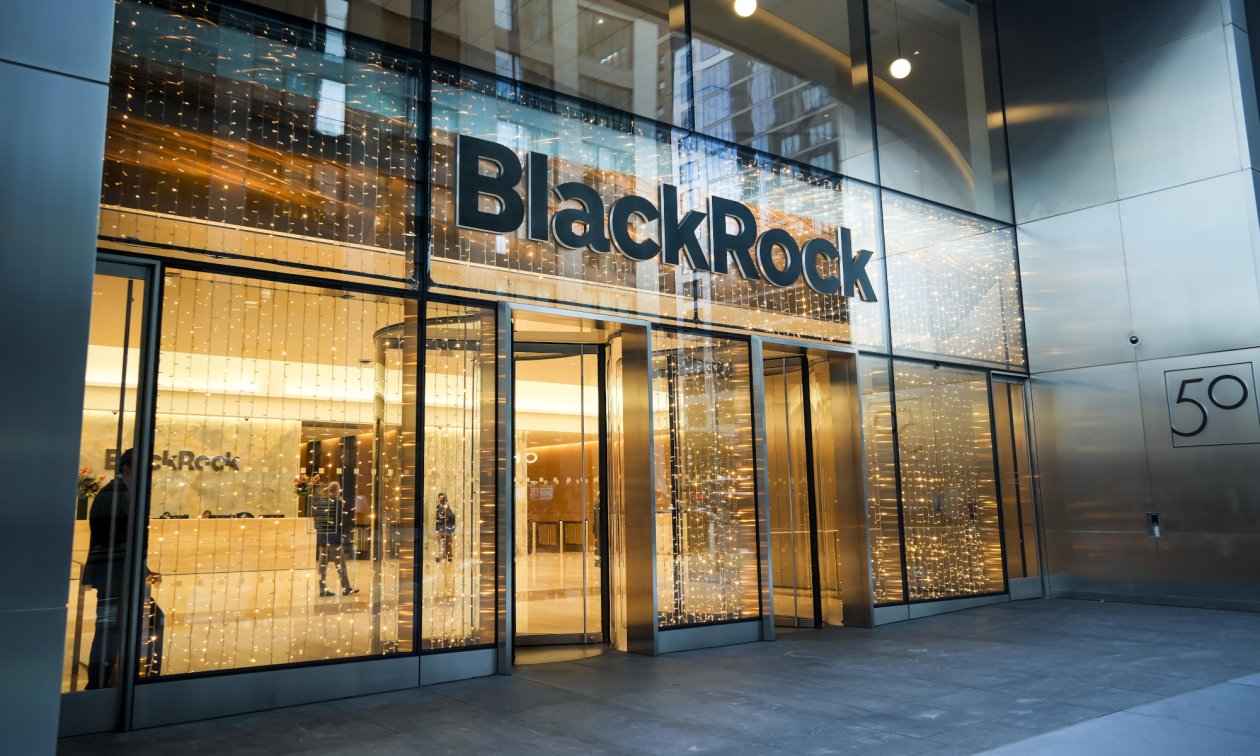
The BlackRock Sentiment Harvest
BlackRock is not in the business of idle curiosity. When the world’s largest asset manager poses a question about Middle East positioning, it is collecting data for its proprietary risk models. The tweet issued on May 28, 2026, functions as a public sentiment probe. It signals a shift from theoretical geopolitical risk to realized portfolio restructuring. Larry Fink’s machine is gauging the breaking point of global markets.
Institutional investors are no longer hedging against temporary volatility. They are pricing in a permanent state of friction. The Middle East conflict has transcended the typical energy spike narrative. It now dictates the viability of entire supply chains and the security of maritime trade routes. BlackRock understands that retail and institutional responses to this conflict provide a high-fidelity map of where capital will flee next.
Data Mining Geopolitical Stress
The poll is a facade for sentiment analysis. BlackRock uses its Aladdin platform to process millions of data points, but human anxiety remains a critical outlier. By asking which aspect of the conflict has shifted positioning, they are identifying the specific catalyst for the next liquidity event. This is not about the ethics of war. This is about the cold calculus of capital flight.
Modern risk management requires more than just monitoring Brent Crude prices. It requires an understanding of how regional instability affects the semiconductor trade and the stability of the petrodollar. If investors cite shipping lane security as their primary concern, the model adjusts for prolonged inflationary pressure. If they cite sovereign debt instability, the model pivots toward hard assets and defensive equities. BlackRock is crowdsourcing the next market bottom.
The Death of the Peace Dividend
Investors are abandoning the long-held assumption of regional stability. The peace dividend that fueled emerging market growth for decades has evaporated. Capital is retreating to the core. This shift represents a fundamental rejection of high-beta assets in favor of domestic security and energy independence. The conflict has forced a re-evaluation of the global energy mix, prioritizing immediate availability over long-term sustainability goals.
Technical indicators suggest a massive rotation into the defense sector and localized energy production. The volatility in the Strait of Hormuz is no longer a tail risk. It is a baseline expectation. This realization has triggered a cascading effect across fixed-income markets, as sovereign risk premiums are recalculated in real-time. BlackRock is watching these flows to determine if the rotation is tactical or structural.
Supply Chain Weaponization
Logistics have become a theater of war. The conflict has demonstrated that control over transit chokepoints is more valuable than the commodities themselves. Insurance premiums for maritime freight have reached levels not seen in the modern era. This cost is being passed directly to the consumer, cementing inflation as a permanent fixture of the 2026 economic landscape.
Financial positioning has shifted toward companies with vertically integrated supply chains. The era of just-in-time manufacturing is dead. It has been replaced by just-in-case stockpiling. This transition requires immense capital expenditure, which further suppresses corporate margins. BlackRock’s inquiry targets the exact moment an investor realizes that the old playbook of globalized trade is no longer functional.
The Kinetic Defense Pivot
Defense stocks are the new safe havens. The Middle East conflict has accelerated the development of autonomous warfare and drone technology. Investors are pivoting away from pure-play software toward kinetic hardware. This is a return to industrialism. The market is rewarding companies that produce the physical infrastructure of security.
BlackRock is tracking this migration from growth to value with surgical precision. The shift in positioning reflects a broader loss of faith in diplomatic resolutions. Markets are now betting on the endurance of the conflict rather than its cessation. This cynical outlook is the primary driver of capital allocation in the current fiscal quarter. The question posed by BlackRock is merely a confirmation of a trend that their internal algorithms have already identified.
Algorithmic Realignment
The feedback from this query will be fed into predictive models. These models dictate the movement of trillions of dollars. If the consensus points toward a specific vulnerability in the regional infrastructure, BlackRock will lead the exit from those positions before the general market reacts. This is the advantage of being the world’s largest data aggregator.
Transparency is a tool for the powerful. By appearing to engage with the public, BlackRock masks the fact that they are the ones defining the narrative. The Middle East conflict is the catalyst, but the positioning shift is the true story. It is a story of a world fragmenting into rival economic blocs, where the only certainty is the continued accumulation of data by those who control the gates of capital.