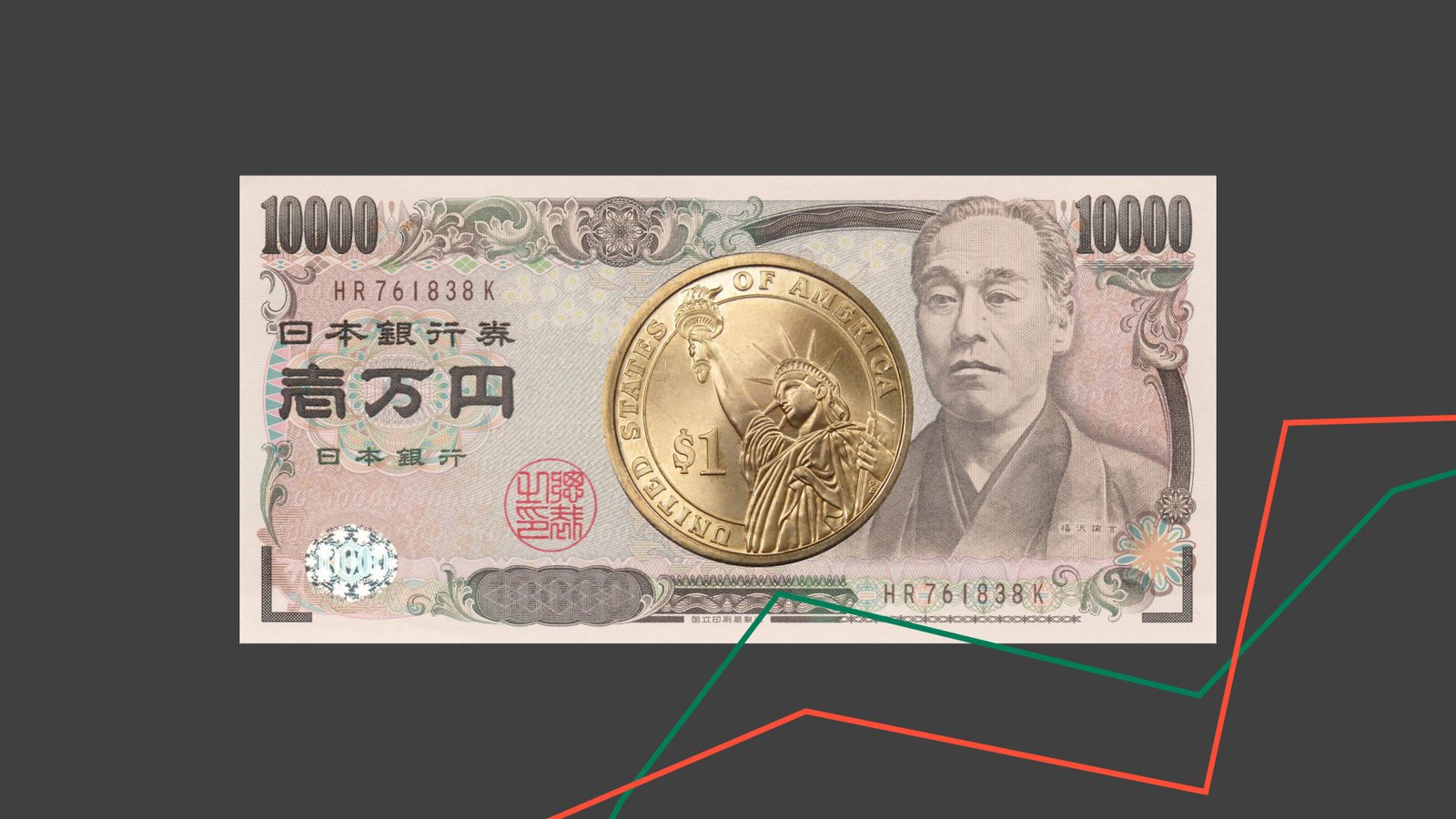
The policy pivot fell flat.
Despite the Bank of Japan (BOJ) executing a 25 basis point hike on December 19, 2025, the yen remains in a technical tailspin. Governor Kazuo Ueda’s attempt to normalize monetary policy has instead triggered a massive short-squeeze on the dollar, pushing USDJPY toward the 154.50 resistance zone. The institutional consensus suggests that the market had already priced in a hawkish shift, leaving the actual announcement as a classic sell the news event for the Japanese currency. Instead of the anticipated repatriation of capital, global macro funds are doubling down on the yield gap between Tokyo and Washington.
The divergence in real yields remains the primary driver of this volatility. While the BOJ raised its short-term policy rate to 0.75 percent, the Federal Reserve has maintained a restrictive stance at 4.50 percent, creating a carry trade environment that refuses to die. According to data from Reuters, the spread between the 10 year Japanese Government Bond (JGB) and the 10 year US Treasury still exceeds 330 basis points. This gap effectively subsidizes dollar bulls, rendering the BOJs incremental hikes insufficient to alter the long-term capital flow trajectory.
The Structural Failure of the December Hike
Market participants spent the weeks leading up to the December 19 meeting anticipating a more aggressive stance. When the BOJ policy statement dropped, the language regarding future hikes was described by analysts as cautious and data-dependent. This ambiguity provided the green light for algorithmic trading desks to resume yen-funded carry operations. The yen did not just fail to gain; it suffered its sharpest single-day decline against the dollar since the third quarter. The technical breakdown above the 152.00 handle, a level previously defended by the Ministry of Finance, indicates that the markets perceived resolve for further intervention is waning.
Dissecting the Real Interest Rate Trap
Japanese inflation, while cooling from its 2024 peaks, remains sticky above the 2 percent target. This creates a paradox for Governor Ueda. Raising rates too quickly risks a domestic recession, yet moving too slowly ensures the yen continues its role as the worlds preferred funding currency. The December 19 decision was supposed to signal the end of the transition period, but the bond market reacted with a collective shrug. As reported by Bloomberg, the 2 year JGB yield barely moved following the announcement, suggesting that fixed-income investors do not believe the BOJ can sustain a hiking cycle into 2026.
Institutional outflows are also accelerating. Japanese life insurers, traditionally the bedrock of domestic capital, are finding more value in hedged foreign credit than in local bonds. This institutional exodus puts constant downward pressure on the yen. The following table illustrates the widening policy divergence that has defined the 2025 fiscal year.
| Date | BOJ Policy Rate | Fed Funds Rate | USDJPY Exchange Rate |
|---|---|---|---|
| March 2025 | 0.25% | 5.00% | 146.50 |
| June 2025 | 0.25% | 4.75% | 148.20 |
| September 2025 | 0.50% | 4.75% | 145.80 |
| December 19, 2025 | 0.75% | 4.50% | 154.20 |
The Technical Mechanics of the Breakout
From a quantitative perspective, the price action on December 20 confirms a major trend reversal. The USDJPY pair has cleared the 200-day moving average and the 61.8 percent Fibonacci retracement level of the summer sell-off. This is not just a sentiment shift; it is a forced liquidation of yen-long positions. Retail traders who went long on the yen in anticipation of the hike have been wiped out by the volatility, adding fuel to the dollars ascent. High-frequency trading firms are now targeting the 155.00 psychological level, which acts as a magnet for stop-loss orders.
The BOJ is effectively trapped. If they intervene in the foreign exchange market now, they risk burning through dwindling reserves with little effect, as the fundamental driver—the interest rate differential—remains intact. The Federal Reserve, despite its own domestic challenges, has shown no sign of an emergency pivot to lower rates, especially as US labor data for November came in stronger than expected. Per the Yahoo Finance currency dashboard, the yen is currently the worst-performing G10 currency of the quarter, down 4.2 percent since October.
The Road to the January 2026 Milestone
Focus now shifts to the 2026 Shunto wage negotiations. For the BOJ to justify further tightening, it needs to see evidence of a sustained wage-price spiral. If the preliminary wage data expected in mid-January 2026 fails to show a minimum 5 percent increase across major corporations, the BOJ will likely be forced to pause. This creates a high-stakes environment for the start of the new year. Investors are no longer looking at policy rates alone; they are scrutinizing the ability of the Japanese economy to absorb higher borrowing costs without a total collapse in consumer spending. Watch the January 16, 2026, release of the Tokyo CPI data as the next definitive signal for whether the yen can find a floor or if a slide toward 160.00 is inevitable.