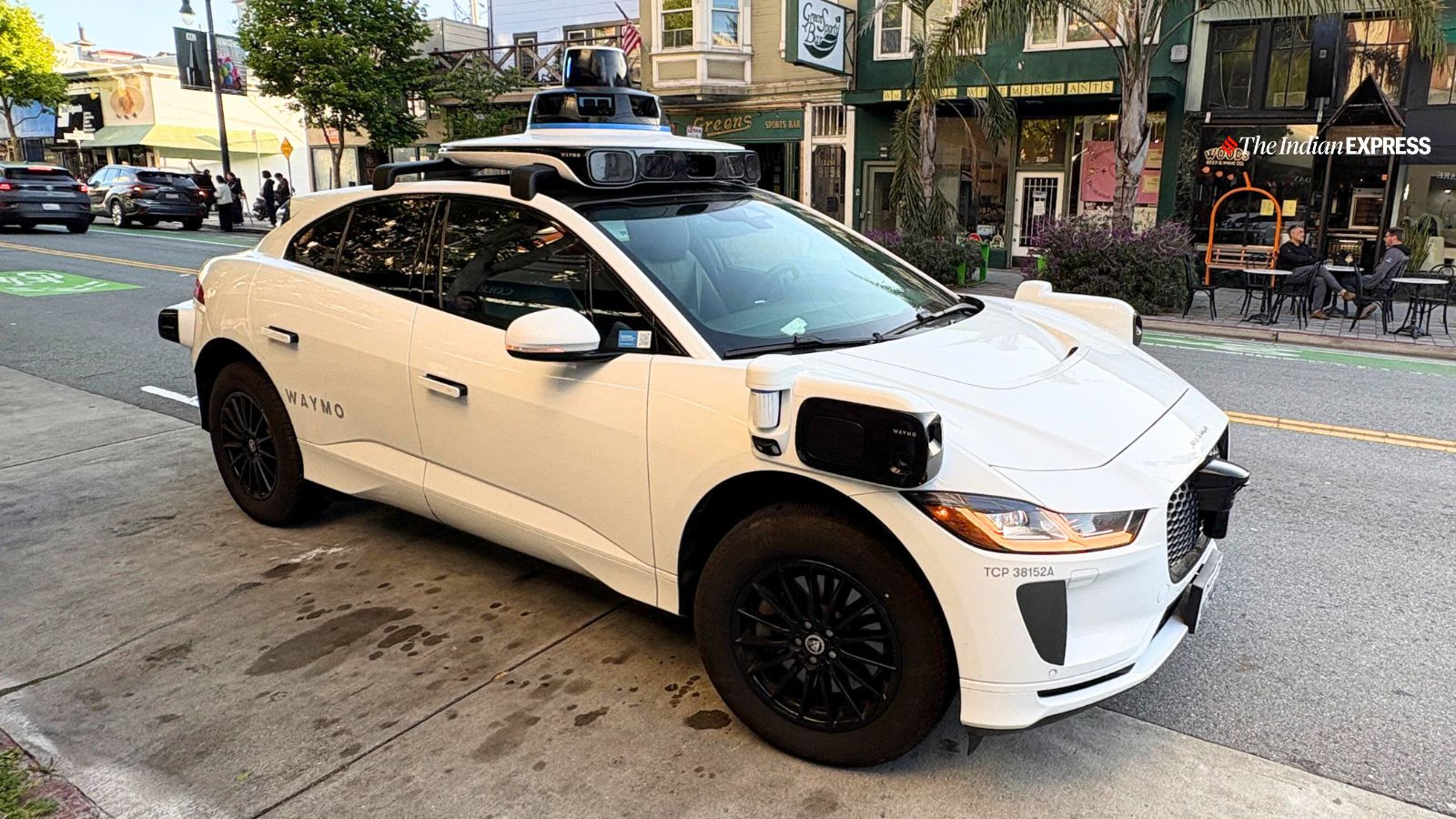
The algorithm hit a wall. A double-parked delivery truck baffled the lidar sensors in downtown Austin. In a remote operations center, a human clicked a mouse to suggest a new path. This is the reality of the forty to one ratio. Waymo has finally pulled back the curtain on its operational leverage. The numbers are impressive but the security implications are chilling.
The Myth of Total Autonomy
True autonomy remains a ghost in the machine. While the marketing suggests a driverless future, the infrastructure relies on a thin line of human intervention. Waymo recently confirmed that it maintains a ratio of one remote assist operator for every forty vehicles in its fleet. This metric is the holy grail of unit economics in the robotaxi sector. It represents the tipping point where labor costs finally retreat behind capital expenditures. However, this efficiency creates a concentrated point of failure. If one operator is responsible for forty multi-ton kinetic objects, the margin for error vanishes.
Remote assistance is not remote driving. The distinction is vital for regulatory compliance. Operators do not use steering wheels or pedals. They provide ‘intent’ or ‘path validation’ when the onboard AI encounters an edge case it cannot resolve. According to recent filings with the National Highway Traffic Safety Administration, these interventions are becoming less frequent but more complex. The machine handles the mundane. The human handles the chaos. By stretching one human across forty vehicles, Waymo is betting on the statistical improbability of simultaneous edge cases.
The Overseas Security Gambit
Labor arbitrage has entered the autonomous stack. A recent investigation by Forbes highlights a growing trend of utilizing overseas staff for these critical remote assist roles. This is a classic Silicon Valley move to protect margins. It also introduces a massive surface area for cyberattacks. Moving the ‘human-in-the-loop’ to jurisdictions with laxer data sovereignty laws creates a nightmare for security architects. A compromised terminal in a low-cost labor market could theoretically issue conflicting pathing instructions to dozens of vehicles simultaneously.
The technical mechanism of this risk is found in the latency of the feedback loop. Remote assist requires a high-bandwidth, low-latency connection to stream 360-degree video data to the operator. When these operators are located thousands of miles away, the ‘handshake’ between the vehicle and the human is subject to the whims of transcontinental fiber optics. If an overseas node is throttled or intercepted, the vehicle remains ‘stuck’ in its environment, creating a physical blockade in urban centers. This is no longer a software bug. It is a geopolitical vulnerability.
Visualizing the Efficiency Threshold
The following chart illustrates the aggressive scaling of operator efficiency over the last four years. As the ratio climbs, the cost per mile drops, but the systemic risk per operator increases exponentially.
Operator to Vehicle Efficiency Evolution (2022-2026)
Market Comparison of Human Intervention
Waymo is not alone in this race, but they are the most transparent. Competitors like Cruise and Zoox maintain different levels of human oversight, often hidden behind layers of corporate opacity. The industry is moving toward a ‘black box’ model of operational metrics, making the 1:40 revelation even more significant for market analysts at Bloomberg and other financial institutions.
| Company | Estimated Operator Ratio | Primary Assistance Location | Fleet Size (Active) |
|---|---|---|---|
| Waymo | 1:40 | Global/Mixed | ~2,500 |
| Cruise | 1:15-1:20 | Domestic (US) | ~1,200 |
| Zoox | 1:10 | Domestic (US) | ~500 |
| Tesla (FSD) | 1:1* | Driver-led | 500,000+ |
*Tesla FSD requires a physical human in the seat, representing a 1:1 ratio that the company aims to disrupt with its unreleased Robotaxi platform.
The Fragility of the Stack
The 1:40 ratio assumes a stable environment. It does not account for coordinated disruptions. If a weather event or a localized network outage occurs, the demand for human intervention spikes. This is known as ‘intervention clustering.’ When five percent of the fleet requires help simultaneously, a 1:40 ratio results in an immediate backlog. Vehicles sit idle. Traffic grinds to a halt. The economic advantage of the ratio disappears as the brand equity erodes under the weight of public frustration.
Furthermore, the reliance on overseas staff introduces a ‘trust gap’ with local municipalities. City councils in San Francisco and Phoenix are already questioning the data privacy implications of streaming live street-level video to operators outside of U.S. jurisdiction. The potential for intelligence gathering via robotaxi sensors is a non-trivial concern for federal agencies. Waymo’s push for efficiency might have inadvertently triggered a regulatory backlash that will demand onshore operations, potentially doubling their labor costs overnight.
Investors should watch the upcoming March 2026 California Public Utilities Commission (CPUC) hearing. The focus will be on ‘Operational Redundancy and Data Sovereignty.’ If the commission mandates domestic-only remote assistance, the 1:40 ratio will no longer be an asset. It will be a liability. The next data point to monitor is the ‘Mean Time Between Intervention’ (MTBI) as Waymo enters the high-density markets of the Northeast. If MTBI drops, the 1:40 ratio will break.