Formula One has ceased to be a sport in the traditional sense. It has metastasized into a closed-loop financial ecosystem where the barrier to entry is now measured in billions, not millions. As of today, November 21, 2025, the release of the latest Forbes valuation report confirms a staggering reality: the average value of a team on the grid has surged to $3.6 billion. This represents an 89 percent increase since 2023, effectively pricing out all but sovereign wealth funds and the most aggressive private equity firms.
The Liquidity Trap of the Paddock
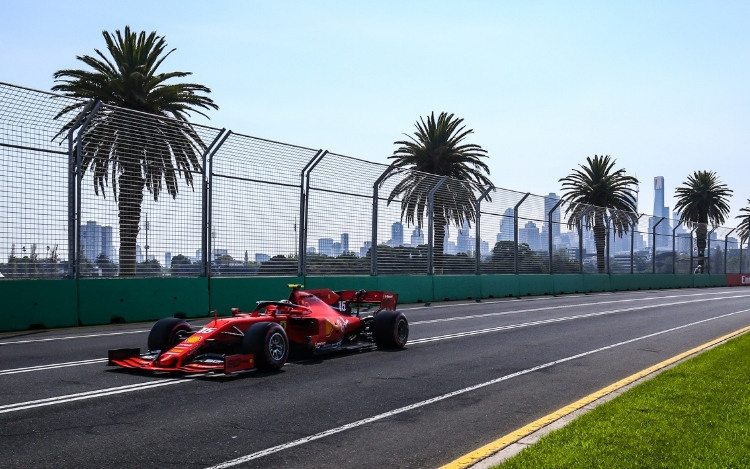
Scarcity is the primary driver of this equity explosion. With only ten slots available and the anti-dilution fee for new entrants rumored to be rising toward $700 million in the upcoming 2026 Concorde Agreement, current owners are sitting on assets with ironclad moats. The valuation floor is no longer the $1.5 billion cited two years ago. Today, even Haas, the perennial backmarker, commands a valuation of $1.57 billion. The top of the grid has entered a different stratosphere. Ferrari now leads the pack at $6.5 billion, followed closely by Mercedes at $6 billion, following the recent minority stake acquisition by CrowdStrike founder George Kurtz.
Institutional interest is pivoting from mere sponsorship to direct equity. The shift is visible in the historic 10-year, $1.5 billion partnership with LVMH which officially replaces Rolex as the global timepiece and luxury partner starting in 2025. This deal alone injects approximately $150 million per season into the central pot, further inflating the EBITDA multiples used to justify these record valuations. Investors are no longer buying into a racing team; they are buying into a global entertainment franchise with 24 high-margin events per year.
Antitrust Pressure and the American Pivot
Despite the financial euphoria, the Department of Justice (DOJ) remains the wild card. The ongoing antitrust investigation into Liberty Media, triggered by the rejection of the Andretti-Cadillac entry, has created a regulatory overhang that the market is only beginning to price in. Investors are monitoring the FWONK stock performance, which closed today at $93.52, down from its October peak of $109.36. This cooling reflects anxiety over potential forced expansion or a restructuring of the commercial rights distribution.
The technical mechanism of this valuation surge is tied to the 2021 cost cap, which successfully decoupled team spending from external sponsorship luck. By limiting operational expenditure to roughly $170 million, Liberty Media has ensured that even mid-field teams can operate profitably. Revenue is no longer a tool for survival but a dividend for shareholders. This fundamental shift from a “spend-to-win” model to a “franchise-profitability” model is why McLaren has seen its valuation jump 203 percent in just two years.
Current Valuation Leaders as of November 21, 2025
The following table outlines the current hierarchy of the grid based on the most recent institutional audits and private equity transactions.
| Team | Estimated Valuation (USD) | Key Investor / Partner |
|---|---|---|
| Ferrari | $6.50 Billion | Publicly Traded / Exor |
| Mercedes-AMG | $6.00 Billion | INEOS / George Kurtz (5%) |
| McLaren | $4.40 Billion | Mumtalakat (Bahrain) |
| Red Bull Racing | $4.32 Billion | Red Bull GmbH |
| Aston Martin | $3.18 Billion | Arctos Partners / HPS |
Beyond the top five, the battle for the “middle class” is intensifying. Audi’s acquisition of Sauber, currently valued at $1.88 billion, serves as the benchmark for a works-team entry. The Qatar Investment Authority’s minority stake in Sauber confirms that sovereign wealth is now the preferred backstop for the sport’s expansion. This institutionalization is further solidified by Apple’s reported confirmation as the new U.S. broadcaster starting in late 2025, a move that is expected to double the current domestic media rights value from Disney-owned ESPN.
The next critical milestone occurs on January 1, 2026, when the new Technical Regulations and the 9th Concorde Agreement officially go live. Watch for the finalization of the “New Entrant Fee” in the coming weeks; if the figure is set at $700 million or higher, the $3.6 billion average valuation will not be a ceiling, but the new support level for the entire industry.