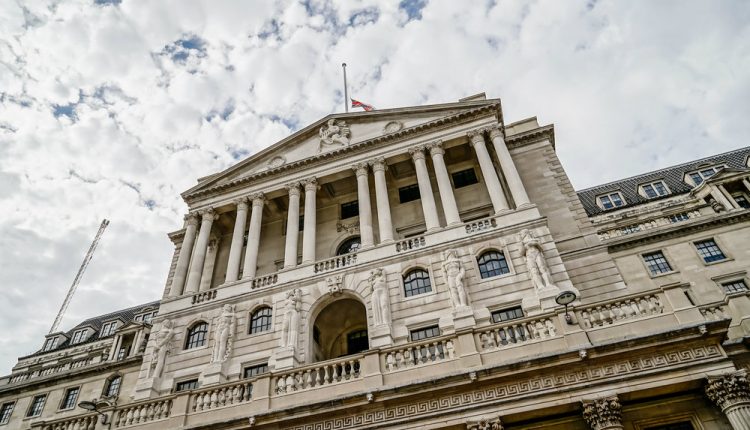
The $1.6 Billion Daily Hemorrhage
Day 41. The United States government remains shuttered, surpassing the 35-day record of 2018-2019 and entering uncharted fiscal territory. According to the latest Bloomberg terminal data from the November 7 market close, the annualized cost to the US economy has reached $65.6 billion. This is not a theoretical exercise in political posturing. This is a systemic drain on liquidity. Goldman Sachs analysts updated their Q4 GDP growth forecasts on November 8, slashing projections by a full 1.2 percentage points as federal spending, which accounts for roughly 7% of total US output, remains frozen.
Treasury Yields and the Liquidity Trap
The Treasury General Account (TGA) is the epicenter of the crisis. As of November 10, 2025, the TGA balance has plummeted to a dangerously low $38 billion. When the TGA drains, it temporarily injects liquidity into the private banking system, but this is offset by the massive risk premium now attached to US sovereign debt. The 10-year Treasury yield climbed to 4.92% this morning, a 14-basis-point jump in 48 hours. Investors are no longer pricing in a ‘standard’ political delay; they are pricing in a structural failure of governance. Credit Default Swaps (CDS) on US 1-year debt have spiked to 175 basis points, the highest level in modern history, indicating that the cost to insure against a US technical default is now higher than that of several emerging market nations.
Defense Industrial Base on Life Support
The surface-level narrative suggests defense contractors are insulated by long-term backlogs. The math says otherwise. Lockheed Martin (LMT) and Boeing (BA) operate on a cycle of progress payments governed by the Prompt Payment Act. With the Department of Defense (DoD) contracting offices largely furloughed, the administrative mechanism for verifying milestones and releasing funds has seized. For Lockheed Martin, this creates a working capital crisis. The company’s Q3 10-Q filing, accessible via SEC EDGAR, reveals that a stoppage exceeding 30 days puts $4.2 billion in anticipated F-35 program cash flow at risk. Boeing faces a different, more localized catastrophe. FAA certification for the 737 MAX 10 is effectively suspended because the engineers required for flight test oversight are currently considered ‘non-essential’ personnel. Every day the government is closed, Boeing’s delivery schedule for 2026 slips by an estimated 1.8 days due to the compounding effect of inspection bottlenecks.
Forex Volatility and the De-Dollarization Catalyst
The US Dollar Index (DXY) is exhibiting a rare ‘shutdown divergence.’ Historically, the dollar serves as a safe haven during domestic crises. However, as of November 10, the DXY has slipped to 102.40, losing ground against the Euro and the Swiss Franc. The mechanism is simple: the erosion of the ‘Full Faith and Credit’ of the United States. Foreign central banks, particularly in the ASEAN region, have increased their gold reserves by 4% over the last 30 days, according to Reuters market reports. This shift suggests that international creditors are losing patience with the weaponization of the US budget process. If the 10-year yield continues to rise while the dollar falls, it signals a ‘Twin Deficit’ crisis that could force the Federal Reserve to intervene with emergency liquidity injections, further complicating the inflation fight.
The Technical Breakdown of Government Spending
| Sector | Daily Economic Impact | Personnel Status | Critical Milestone at Risk |
|---|---|---|---|
| Defense (LMT, BA, GD) | $480 Million | 35% Furloughed | F-35 Block 4 Software Integration |
| Transportation (FAA/TSA) | $120 Million | Essential (Unpaid) | MAX 10 Type Certification |
| Financial Oversight (SEC/CFTC) | $45 Million | 90% Furloughed | Spot Ethereum ETF Options Approval |
| Energy (DOE) | $95 Million | 60% Furloughed | Strategic Petroleum Reserve Refill |
Sovereign Risk and the Path to January
The focus now shifts from the immediate budget fight to the looming debt ceiling ‘X-date.’ While the shutdown halts discretionary spending, it does not stop the clock on the Treasury’s borrowing authority. The market is currently obsessing over the January 15, 2026, milestone. If a budget resolution is not reached by the end of November, the ‘burn rate’ of the Treasury’s remaining cash will accelerate as tax receipts from corporate quarterly filings are processed by a skeleton crew at the IRS. This creates a feedback loop where lower administrative capacity leads to slower revenue collection, moving the default date closer. The next data point for the market to digest will be the November 14 Treasury Statement, which will reveal exactly how much of the $38 billion buffer remains. Watch the 1-month T-bill yield; if it crosses 5.5%, the market is no longer betting on a resolution, but on a total financial dislocation.