The Ghost in the Machine is a Line Item
The ghost haunting Wall Street this Halloween is not a specter of the past. It is a line item on the Q3 balance sheets. As the market closed yesterday, October 30, the collective intake of breath from the buy-side was audible. Microsoft and Meta released their earnings, and the verdict was a brutal lesson in expectations versus reality. While the numbers were technically beats, the market punished them. The reason? Capital Expenditure. The bill for the artificial intelligence revolution has arrived, and it is denominated in billions of dollars of hardware that has yet to show a direct, linear path to margin expansion.
The Forbes CIO Summit, scheduled for November 18, has shifted from a celebratory victory lap into a high-stakes war room. Executives from Honeywell, Capital One, and Bristol-Myers Squibb are no longer talking about what AI might do. They are being forced to defend what it is costing. For the investigative investor, the narrative arc has shifted from the excitement of the discovery phase to the grueling reality of the integration phase. We are following the money, and right now, the money is flowing into data centers and cooling systems faster than it is returning as dividends.
Honeywell and the Industrial Quantum Bet
Honeywell is currently navigating a complex pivot. Per their recent quarterly disclosures, the industrial giant is leaning heavily into the automation of the physical world. Their $1.9 billion acquisition of CAES is a clear signal that they are betting on the intersection of defense tech and high-frequency sensing. However, the friction lies in the legacy segments. While their aerospace division continues to carry the weight, the industrial automation sector is facing a slowdown. The risk here is a classic margin squeeze: the cost of upgrading their “Honeywell Forge” platform with generative capabilities is high, but the speed at which their industrial clients are willing to sign seven-figure contracts for AI-integrated factories is slowing.
The Capital One Credit Logic
Capital One remains the outlier in the financial sector. Their proposed merger with Discover, which continues to face intense regulatory scrutiny as we head into the final months of 2025, is a play for data sovereignty. According to latest SEC filings, Capital One has scaled its cloud-native infrastructure to a point where its credit decisioning models are running at a 30 percent higher efficiency than traditional peer banks. But the reward comes with a massive operational risk. By moving their entire logic stack into an AI-first environment, they have created a single point of failure. If the models hallucinate a shift in credit risk during a period of high interest rates, the fallout will be systemic. The market is watching the net interest margin (NIM) closely, which has shown signs of compression in the 48 hours following the latest Fed commentary.
Bristol-Myers Squibb and the Patent Cliff
For Bristol-Myers Squibb, the stakes are existential. With the patent protection for Eliquis and Opdivo nearing its end, the company is desperate for an R&D miracle. Their investment in “in-silico” drug discovery is an attempt to use transformer models to predict molecular binding with a precision that was impossible three years ago. The goal is to reduce the failure rate of Phase 1 trials by 20 percent. If they succeed, they bypass a decade of wasted capital. If they fail, they are a legacy pharmaceutical company with a shrinking pipeline and a massive technology overhead. The data suggests their current R&D spend as a percentage of revenue has spiked to its highest level since 2021.
Visualizing the Efficiency Divergence
The Q3 Performance Matrix
The following data represents the core financials for the tech-integrated leaders as of the October 31, 2025 market open. These figures highlight the disconnect between revenue growth and the cost of technological maintenance.
| Company | Q3 Revenue Growth (YoY) | AI-Related CAPEX Increase | Operating Margin Impact |
|---|---|---|---|
| Honeywell (HON) | +4.2% | +18% | -1.2% |
| Capital One (COF) | +6.1% | +22% | -0.5% |
| Bristol-Myers (BMY) | +2.8% | +31% | -2.4% |
The Mechanism of the AI Squeeze
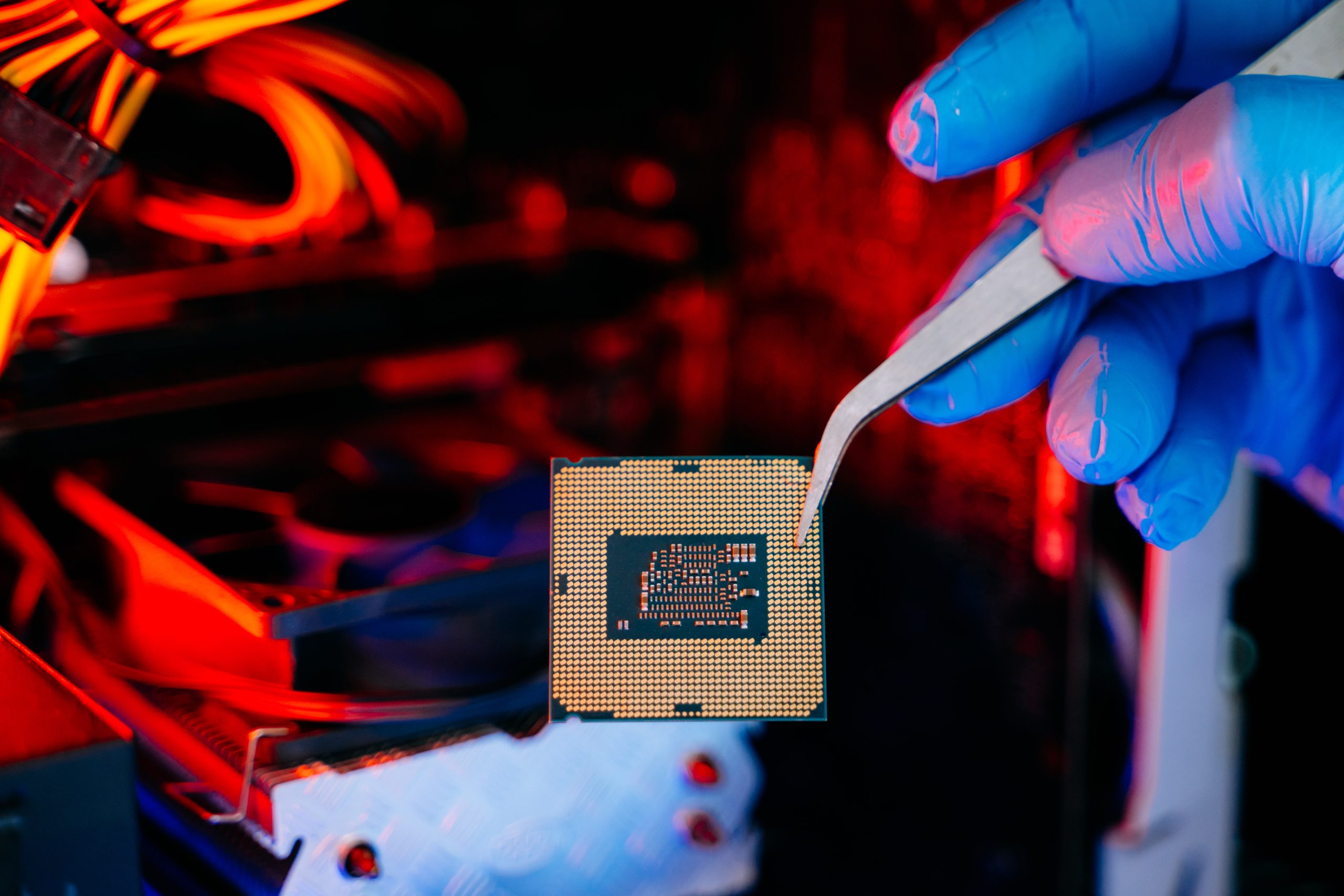
Why is this happening? The technical mechanism is simple: compute intensity. As companies like Capital One move from simple regression models to deep learning architectures, their demand for H200 and Blackwell chips has skyrocketed. Unlike traditional software, where the marginal cost of a new user is near zero, the marginal cost of an AI query is significant. Each credit assessment or molecular simulation requires massive power and cooling. This is not a “set it and forget it” technology. It is a continuous burn of capital.
We are seeing a trend where the infrastructure providers (the “arms dealers”) are capturing 80 percent of the value, while the implementers (the “soldiers”) are taking the hits to their margins. This is the risk that will be debated in the boardrooms of the Forbes CIO Summit. The question is no longer “How do we use AI?” but rather “How do we stop AI from eating our EBITDA?”
Watching the January Milestone
The market is currently pricing in a soft landing, but the volatility in tech stocks this week suggests that patience for the AI ROI is wearing thin. Per the latest market data, the Nasdaq is on track for its worst Halloween performance in three years. Investors should look toward the January 2026 JP Morgan Healthcare Conference as the next major data point. We expect Bristol-Myers Squibb to release the first verified results of their AI-accelerated Phase 1 pipeline there. If those results show a significant reduction in time-to-market, the capital flight from pharma may reverse. Until then, the focus remains on the burn rate. Watch the 10-year Treasury yield. If it stays above 4.5 percent, the cost of financing these AI dreams will become too expensive for any firm with a weak cash flow position to sustain.