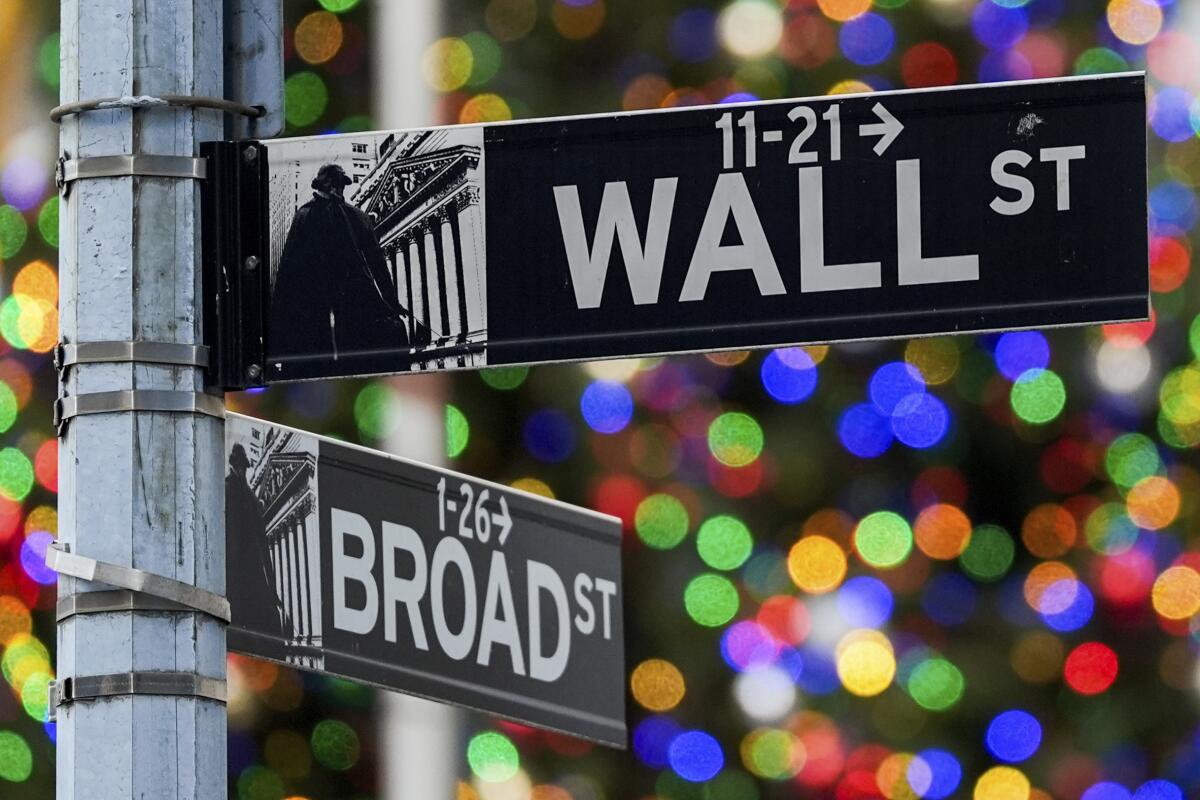
The Supreme Court spoke. The White House ignored it. By Saturday morning, the 10% tariff was a 15% blanket duty. Markets are now pricing in a trade war that the judiciary cannot stop. Today, the S&P 500 is spiraling. The technical support levels are crumbling under the weight of executive orders and supply chain panic.
The Executive Circumvention
Legal gymnastics are the new macro drivers. On Friday, February 20, the Supreme Court ruled 6-3 that the President lacked the authority to impose sweeping tariffs under the International Emergency Economic Powers Act (IEEPA). The relief rally was short-lived. Over the weekend, the administration pivoted. It invoked a 150-day emergency window using alternative trade statutes to implement an upsized 15% global tariff. The result is a market in shock. According to Bloomberg market data, the VIX has spiked 11% today, bringing its year-to-date gain to a staggering 40%.
This is not just about trade policy. It is about the erosion of institutional predictability. Investors are grappling with a reality where judicial oversight is bypassed by administrative reclassification. The 15% levy applies to all global goods. It acts as a massive regressive tax on the American consumer. Retailers like Costco and e-commerce giants like Amazon are already calculating the recoupment of $170 billion in previously paid levies, but the new 15% wall makes those recoveries look like a rounding error.
Major Market Index Performance (February 23, 2026)
| Index | Level | Daily Change | YTD Change |
|---|---|---|---|
| S&P 500 | 6,837 | -1.08% | -4.2% |
| Nasdaq Composite | 22,627 | -1.17% | -5.8% |
| Dow Jones Industrial | 48,804 | -1.55% | -3.1% |
| CBOE Volatility (VIX) | 19.09 | +11.0% | +40.0% |
The AI Capex Reckoning
Nvidia is the only pillar left. On Wednesday, February 25, the chip giant will report its fiscal 2026 fourth-quarter results. The stakes are existential. Analysts are calling for earnings of $1.53 per share on revenue of $65.7 billion. This represents a 71.9% year-over-year increase. But the market is no longer impressed by growth. It is obsessed with the Blackwell production ramp. Investors are looking for proof that the $500 billion opportunity for Blackwell and the upcoming Rubin architecture is materializing.
The narrative has shifted from potential to sustainability. Hyperscalers are under pressure. Their capital expenditure is essentially Nvidia’s top line. If the return on investment for generative AI remains elusive, the capex cycle will peak. Citrini Research recently published a report suggesting that the AI build-out is hitting a logistical wall. This has sent ripples through the semiconductor sector. The PHLX Semiconductor Index is down, despite Nvidia’s marginal 0.9% gain today as traders hedge ahead of the call.
Global Policy Rate Divergence (February 2026)
The Takaichi Effect and the Yen Carry Trade
Japan is no longer the world’s piggy bank. The Bank of Japan is currently holding its policy rate at 0.75%. This is a 30-year high. But the real story is in the bond market. Yields on 10-year Japanese Government Bonds (JGBs) have surged above 2% for the first time in two decades. The 30-year yield is testing 3.6%. This is a structural shift from deflation to a reflationary regime. The new Prime Minister, Sanae Takaichi, won a landslide victory this month on a mandate for proactive public finances. Her administration is pushing for massive fiscal stimulus. This has forced the BoJ to hit the brakes on further rate hikes. Per the latest Reuters polling, economists have pushed back the expected hike to 1.0% until September.
This divergence is dangerous. While the Federal Reserve pauses at 3.5% to 3.75%, the Japanese yield curve is steepening. The yen carry trade is being liquidated in real-time. Life insurers in Japan are scaling back their demand for long-term debt as regulatory changes penalize duration mismatches. This is removing a massive source of liquidity from the global financial system. When Japan stops buying the world’s debt, the world’s debt becomes much more expensive to service.
The Debt Wall and the Warsh Factor
Sovereign debt is the ghost in the machine. US federal debt has hit 101% of GDP. The deficit for fiscal year 2026 is projected at $1.9 trillion. Much of this is driven by rising net interest costs. The Federal Reserve is in a corner. The Federal Reserve’s January meeting minutes revealed a cautious stance. They are holding rates steady despite political pressure. The nomination of Kevin Warsh as the next Fed Chair adds another layer of uncertainty. Warsh is known for a more market-centric approach, but the transition period is creating a policy vacuum.
The real economy is showing the strain. Q4 GDP grew at a tepid 1.4% year-over-year. This slowdown was exacerbated by the prolonged government shutdown in late 2025. Consumer price index readings for January came in at 2.4%, slightly below the 2.5% forecast, but core inflation remains sticky. The market is caught between a slowing economy and persistent price pressures. This is the definition of a liquidity trap. If the Fed cuts too early, inflation resurges. If they wait, the debt service costs will trigger a systemic event.
The market is no longer trading on fundamentals. It is trading on the 48-hour window between a court ruling and an executive order. The next data point to watch is the Nvidia conference call on Wednesday at 5 PM EST. If the AI capex narrative falters, the 6,800 level on the S&P 500 will not hold.