The Feedstock Hedge
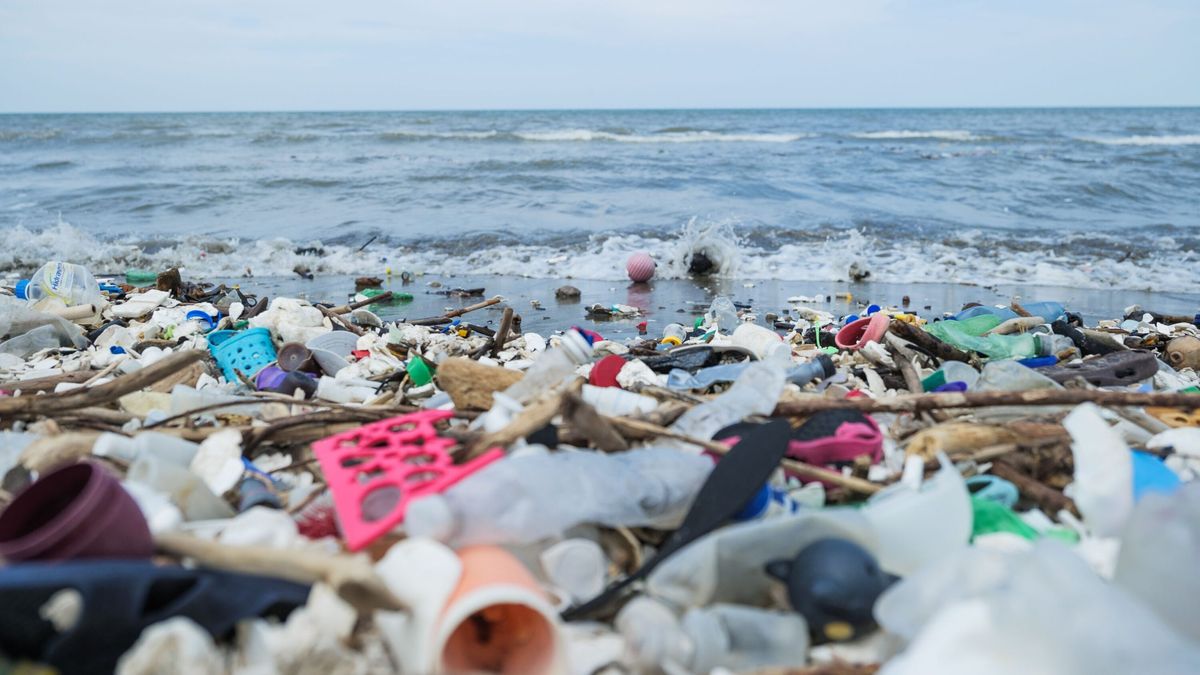
The tweet from the World Economic Forum yesterday was not a warning. It was a repositioning. As the Environmental Research Group at Imperial College points out, the link between climate change and plastic pollution is no longer a peripheral concern for ESG committees. It is a core structural risk for the global energy sector. Institutional capital is fleeing upstream oil. It is landing in downstream polymers. This is the petrochemical pivot. As electric vehicle adoption erodes gasoline demand, the industry is doubling down on plastics to preserve the value of its reserves.
Crude oil is changing shape. It is no longer just fuel for internal combustion. It is the building block for a global plastic surge that threatens to offset every carbon gain made in the transport sector. Per recent market data on refinery margins, the spread on ethylene remains a critical lifeline for integrated oil majors. They are not exiting the fossil fuel business. They are simply moving the carbon from the tailpipe to the incinerator.
The Imperial Feedback Loop
Researchers at Imperial College London have identified a feedback loop that the market has largely ignored. Plastic is a thermal blanket in two stages. First, the production phase is energy intensive, relying on high-heat cracking processes that emit massive quantities of methane and CO2. Second, as plastic degrades in the environment, it releases greenhouse gases and interferes with the ocean’s ability to sequester carbon. The microplastic saturation of the surface microlayer is potentially altering the gas exchange between the atmosphere and the deep ocean.
The numbers are stark. By the end of this quarter, global plastic production is expected to hit record highs. The industry is betting on a 4 percent annual growth rate despite increasing regulatory pressure. This is a collision course with the Paris Agreement. You cannot solve for net zero while scaling a product that is 99 percent fossil fuel by weight. The narrative of ‘circularity’ is a convenient fiction used to justify capacity expansion.
Visualizing the Production Surge
The following data represents the projected trajectory of global plastic production through the current year. The gap between recycling capacity and virgin plastic production is widening, not narrowing.
Global Plastic Production Forecast (Million Tonnes) 2023-2026
The Carbon Intensity of Polymers
Not all plastics are created equal in the eyes of the carbon market. The energy required to crack naphtha into ethylene and then polymerize it into polyethylene varies significantly. According to reports from the United Nations Environment Programme, the lifecycle emissions of common plastics are often underestimated by 30 percent because they exclude the methane leakage from the initial extraction of the feedstock.
| Polymer Type | Carbon Intensity (kg CO2e / kg) | Market Share (2026 Est.) |
|---|---|---|
| LDPE (Low-Density Polyethylene) | 2.52 | 18% |
| PET (Polyethylene Terephthalate) | 3.15 | 13% |
| PVC (Polyvinyl Chloride) | 2.98 | 14% |
| PP (Polypropylene) | 2.41 | 22% |
The table above highlights the danger. The most widely used polymers, PP and LDPE, have lower direct carbon intensities but the sheer volume of their production overwhelms the gains. The market is currently pricing in a ‘plastic tax’ in several European jurisdictions, but the global south remains a growth engine for virgin resin. This creates a regulatory arbitrage that multinationals are exploiting to maintain top-line growth.
The Treaty Deadlock
Negotiations for the Global Plastic Treaty have reached a critical juncture. The tension lies between the ‘High Ambition Coalition’ and the ‘Like-Minded Countries’ which are primarily petrostates. The former wants a cap on virgin plastic production. The latter wants to focus exclusively on waste management. The WEF’s intervention suggests that the financial elite are beginning to realize that waste management is a losing game. You cannot bail out a sinking boat if you refuse to plug the hole.
As of February 13, the consensus is fracturing. The cost of environmental remediation is starting to appear on sovereign balance sheets. This is no longer an externality. It is a liability. The Imperial College research suggests that the health costs associated with endocrine disruptors in microplastics could reach 1 percent of global GDP by the end of the decade. This is the ‘hidden’ inflation that central banks are not yet tracking.
The next major milestone is the June 2026 UNEP session in Nairobi. Watch the ‘Production Cap’ clause. If it is stripped from the final draft of the treaty, the petrochemical pivot will be complete. The industry will have successfully decoupled its survival from the internal combustion engine. The carbon will stay in the system. It will just be wrapped around your groceries.