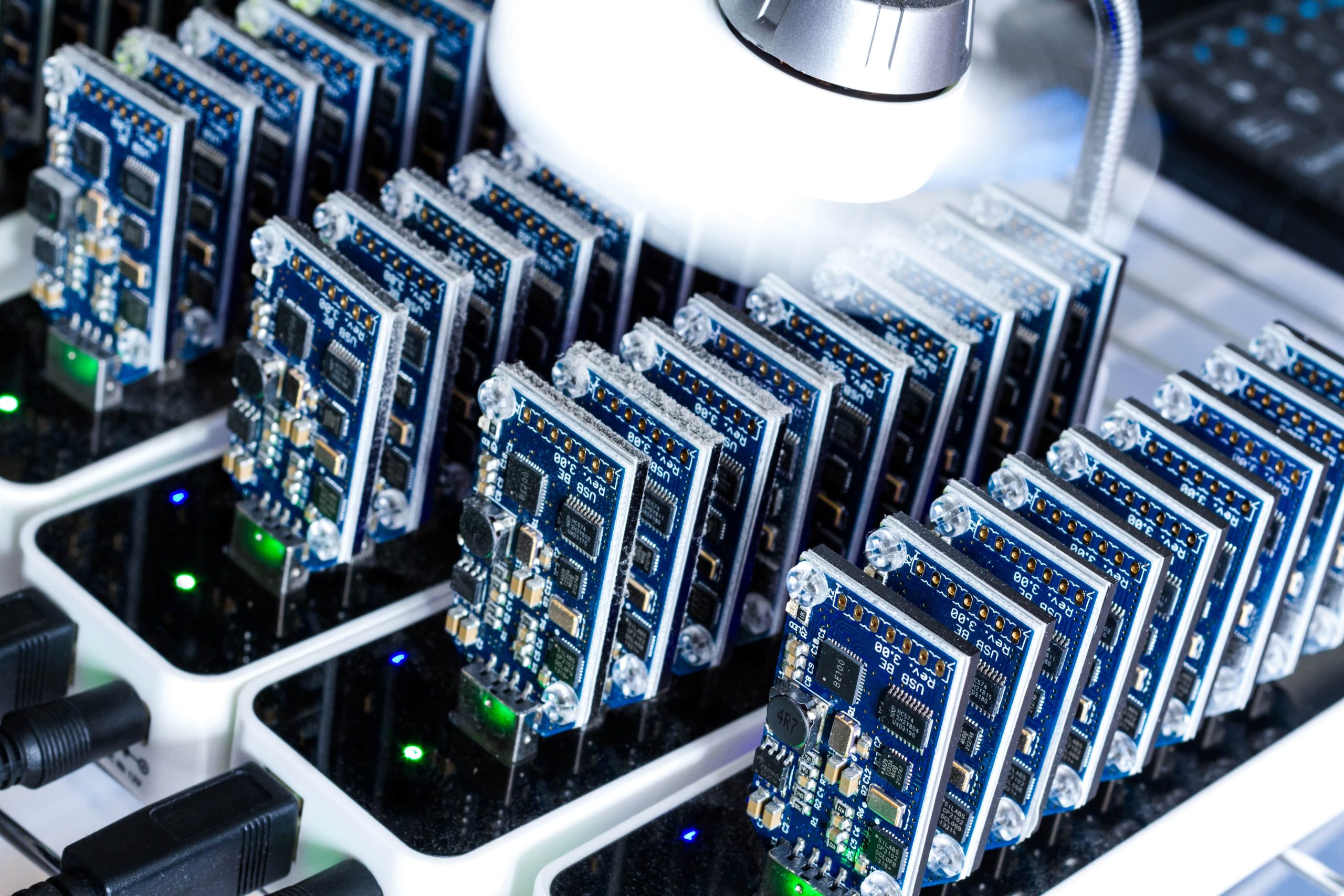
The era of the asset-light tech giant is dead. It was buried under a mountain of H200s and Blackwell Ultra clusters. Last week in San Francisco, the Morgan Stanley TMT conference served as a wake for the cash-rich balance sheets of old. The narrative has shifted from software margins to industrial-scale hardware financing. The numbers are no longer just large. They are existential.
The $690 Billion Reckoning
Hyperscalers are burning the furniture to keep the furnace hot. According to data discussed at the Morgan Stanley TMT conference, the big five, Amazon, Alphabet, Meta, Microsoft, and Oracle, are projected to spend nearly $690 billion on capital expenditures this year. This represents a 71 percent surge from 2025. It is a staggering allocation of resources. For the first time in a decade, these companies are consuming nearly 100 percent of their operating cash flow just to stay in the race. The safety net of massive buybacks is fraying. Alphabet recently priced a $20 billion bond offering, including a 100-year sterling bond. It is a desperate reach for duration in a market that is increasingly cynical about the timing of AI returns.
Projected 2026 Hyperscaler Capital Expenditure Surge
The Physics of the Bottleneck
Demand is not the problem. Electricity is. Microsoft currently holds an $80 billion backlog for Azure services. The chips are ready. The customers are waiting. The grid is not. Power transformer lead times have stretched to 128 weeks, per Reuters reporting on the industrial supply chain. We are seeing a collision between the digital speed of Moore’s Law and the physical reality of the utility sector. Jensen Huang noted during the conference that the industry is shifting from agentic AI to physical AI. This means robots and factories. It also means a massive increase in power density. A single gigawatt site now costs more than $10 billion to stand up. Half of that cost is silicon. The other half is concrete, cooling, and copper.
The 2026 Capex Breakdown
| Company | 2026 Projected Capex (Low) | 2026 Projected Capex (High) | Primary Focus |
|---|---|---|---|
| Amazon (AWS) | $190 Billion | $210 Billion | Global Infrastructure & Logistics AI |
| Alphabet (Google) | $175 Billion | $185 Billion | Custom TPUs & Data Center Real Estate |
| Meta Platforms | $115 Billion | $135 Billion | Llama 4 Training Clusters |
| Microsoft | $110 Billion | $125 Billion | Azure Power Grid Integration |
| Oracle | $45 Billion | $55 Billion | GPU Cloud Capacity |
The Rise of Private Credit
Traditional banks cannot handle this volume. The capital requirements for a global AI buildout are estimated to reach $3 trillion by 2030. This has opened the door for private credit. Firms are now underwriting liquidity for 12-year horizons to fund subsea cables and fiber networks. They are repricing risk. The cost of debt for tech companies is no longer decoupled from the reality of infrastructure. Per the latest market data, NVIDIA closed at $177.82 on March 6, with a market capitalization of $4.3 trillion. The market is pricing in perfection, but the financing complexity suggests a more volatile path. We are seeing the emergence of sovereign AI clouds in the Middle East and East Asia. These are state-funded initiatives designed to bypass the balance sheet constraints of US hyperscalers. They are not looking for quarterly ROI. They are looking for strategic autonomy.
The Margin Compression Trap
Software analysts at the conference were quick to point out internal efficiencies. Coding assistants and automated customer service are saving billions in OpEx. This is a distraction. The savings in OpEx are being dwarfed by the explosion in Capex. It is a classic margin compression trap. You spend more to earn the same, or you spend nothing and lose everything. The incumbents have no choice but to build. This is a war of attrition where the only winners are the ones with the lowest cost of capital. The dividend yields of the 2010s are a memory. The cash is being recycled into liquid cooling systems and high-voltage direct current systems. It is the industrialization of the internet.
The next data point to watch is the NVIDIA Q1 2027 fiscal earnings on May 20. Analysts will be looking for the first signs of shipment delays due to power constraints at major sites. If the grid cannot take the chips, the revenue cannot hit the tape.