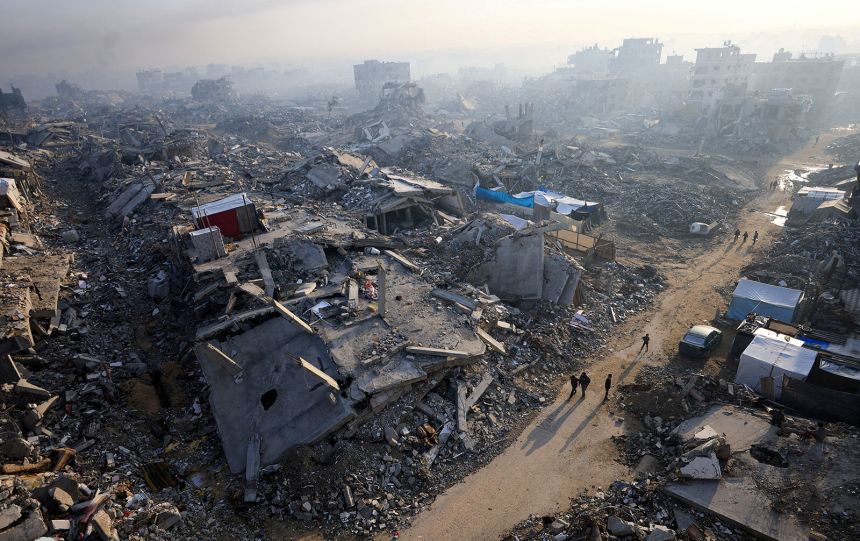
The Ghost Economy
The market is dead. Capital has fled. Only aid remains. In the ruins of Gaza, the traditional mechanics of supply and demand have been replaced by a state of forced de-development. The latest data from the United Nations Development Programme (UNDP) suggests a desperate attempt to maintain a pulse in a labor market where 80 percent of the population is effectively idle. This is not a standard recovery. It is a survival subsidy. The UNDP is currently underwriting the existence of medical professionals through emergency employment contracts. It is a stopgap for a system that has seen its GDP contract by 87 percent over the last two years. The technical term for this is a human-made abyss.
The Professional Subsidy
Skilled labor is the last remaining asset. While the private sector has evaporated, the demand for healthcare is at an all-time high. The UNDP has created roughly 15,000 jobs over the last six years, but nearly 6,000 of those were emergency roles triggered by the recent conflict. At Al Shifa Hospital, 610 staff members are currently on life-support contracts. These are not careers. They are temporary injections of liquidity into a professional class that would otherwise join the ranks of the displaced. Per reports from Reuters, the cost of keeping this skeleton crew operational is a fraction of the total reconstruction bill, yet it is the only thing preventing a total societal collapse.
The math is brutal. Gaza’s GDP per capita has plummeted to approximately $161. This places the enclave among the lowest economic tiers globally. When a surgeon’s wage is paid via an emergency grant, the local multiplier effect is negligible. There are no shops to buy from. There is no infrastructure to support secondary commerce. The economy has become a closed loop of aid and subsistence.
The Reconstruction Math
The numbers do not add up. Current estimates for rebuilding Gaza range from $70 billion to $112 billion. This is a staggering sum for a territory that contributed only 17 percent of the Palestinian GDP before the conflict. Investors are circling, but the risk profile is radioactive. A recent Guardian investigation revealed that some US contractors are pitching logistics plans with projected profit margins of 300 percent. This is not reconstruction. It is an extraction play. The proposed Board of Peace, chaired by the US administration, aims to turn Gaza into a high-tech hub. They envision skyscrapers and data centers. The ground reality is a sea of makeshift tents and a 15 percent commission fee just to withdraw cash from a functioning ATM.
Gaza Economic Indicators February 2026
| Indicator | Current Value | Pre-Conflict Baseline |
|---|---|---|
| Unemployment Rate | 80% | 45% |
| GDP Per Capita | $161 | $1,257 |
| Reconstruction Cost | $112B | N/A |
| Cashout Commission | 13-15% | <1% |
Visualizing the Abyss
The disparity between Gaza and its regional peers is no longer a gap. It is a canyon. The following data visualizes the collapse of GDP per capita, illustrating the scale of the economic erasure.
The Liquidity Trap
Money is a physical burden in Gaza. The banking system is paralyzed by a lack of shekel-to-dollar conversion waivers. Banks have become cash warehouses for currency that cannot be moved. This has created a secondary market for liquidity where desperate residents trade aid ID cards for access to cash. According to Bloomberg, the lack of a permanent banking solution is the single greatest hurdle to any private sector resurgence. Without a functioning central bank or predictable currency flow, the emergency employment programs of the UNDP remain the only reliable source of income for the enclave’s remaining professionals.
The reopening of the Rafah crossing on February 1 provided a psychological boost. However, the movement of people is strictly limited. The movement of capital is non-existent. The “New Gaza” plan discussed in Davos relies on a total disarmament that has yet to materialize. Until then, the economy exists only in the form of these emergency contracts. It is a managed decline. The next milestone to watch is the Washington investment conference scheduled for late February. If the $112 billion in pledges does not materialize with a concrete management framework, the emergency employment phase will transition from a temporary fix to a permanent, aid-dependent status quo.