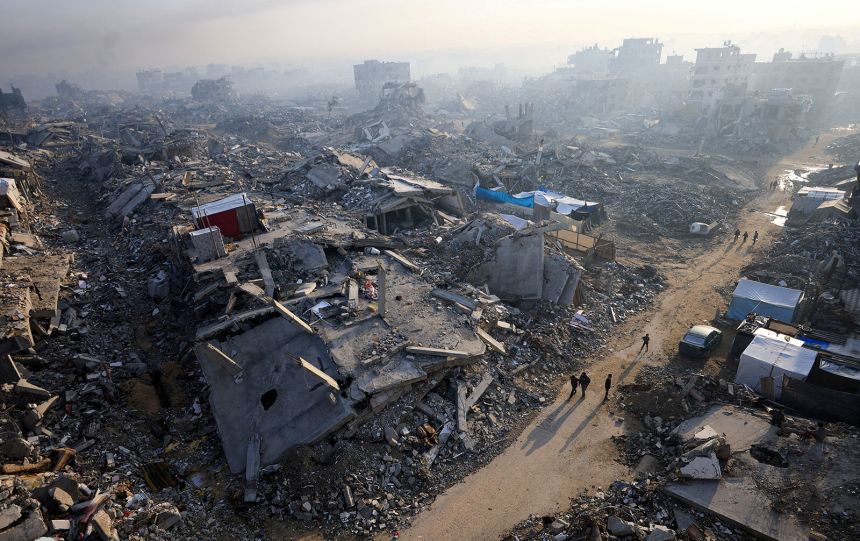
The taps are dry. Riyadh is paying. This is the new reality of regional hydro-politics. While global markets fixate on the volatility of Brent Crude, a different kind of commodity crisis is unfolding in the Levant. The King Salman Humanitarian Aid and Relief Centre (KSRelief) has finalized a partnership with the United Nations Development Programme (UNDP) to address the systemic collapse of water infrastructure in the Gaza Strip. The numbers are staggering. Over 300,500 people now depend on this specific external lifeline for daily survival. This is not merely a humanitarian gesture. It is a massive fiscal intervention in a territory where the municipal tax base has effectively evaporated. The structural rot of the local utility sector has reached its terminal phase.
The Cost of Desalination and Soft Power
Saudi Arabia is leveraging its budget surplus to stabilize a collapsing periphery. According to data released by the Reuters news agency earlier this week, regional aid commitments for 2026 have shifted toward sustainable infrastructure rather than short-term food security. The KSRelief project focuses on sustainable solutions. This is code for high-capital expenditure desalination and solar-powered pumping stations. These systems are expensive to build and even more expensive to maintain in a conflict zone. The unit cost of water in Gaza is now estimated to be four times higher than the regional average due to energy scarcity and the destruction of the Coastal Aquifer. The aquifer itself is a victim of over-extraction and seawater intrusion. It is a dying asset.
The UNDP Fiscal Intermediary Model
The UNDP acts as the risk-mitigation layer for Saudi capital. Direct investment in Gaza is impossible for sovereign states due to political sanctions and banking restrictions. By routing funds through the UNDP, KSRelief bypasses the traditional bottlenecks of the local administration. This creates a parallel economy. One where infrastructure is built by international contractors and managed by non-governmental entities. The technical complexity of these projects is immense. We are talking about reverse osmosis plants that require constant chemical inputs and specialized membranes. These are not local products. They are imported through controlled crossings, adding a layer of logistical friction that inflates project costs by 30 percent or more.
Market Implications of Water Scarcity
Water is the ultimate hedge against regional instability. The Bloomberg commodity index has seen a quiet rise in the valuation of water-tech firms operating in the Middle East. As the Coastal Aquifer becomes unusable, the demand for modular desalination units has spiked. This is a captive market. The 300,500 people served by the KSRelief project represent only a fraction of the total need. The fiscal reality is that the Palestinian Authority lacks the credit rating to finance these projects through the bond market. Consequently, the region is becoming a laboratory for aid-funded infrastructure. This model is precarious. It depends entirely on the continued benevolence of the GCC states and the operational integrity of the UN.
| Infrastructure Type | Estimated Cost (USD) | Population Served | Funding Source |
|---|---|---|---|
| Desalination Units | $12.5M | 150,000 | KSRelief |
| Solar Pump Arrays | $4.2M | 85,000 | UNDP / KSA |
| Network Rehabilitation | $8.9M | 65,500 | KSRelief |
The technical specifications of these projects reveal a focus on resilience. Solar arrays are being decentralized to prevent a single point of failure in the power grid. This is a smart move. The Gaza power plant has been a frequent casualty of fuel shortages and kinetic strikes. By decoupling water production from the central grid, KSRelief is ensuring that the 300,500 beneficiaries have a higher probability of consistent access. However, the maintenance cycles for these solar panels in a dusty, high-salinity environment are aggressive. Without a dedicated sinking fund for repairs, these assets will depreciate to zero within five years. The current agreement does not clearly outline who will bear the long-term operational expenditure once the initial Saudi grant is exhausted.
Institutional investors are watching the development of the Middle East Green Initiative very closely. Saudi Arabia is positioning itself as the primary provider of public goods in the region. This is a strategic pivot away from purely oil-based diplomacy. By securing the water supply for nearly a third of a million people, Riyadh is buying more than just goodwill. It is buying stability on its northern flank. The United Nations has signaled that similar models may be deployed in Yemen and Libya. The monetization of humanitarian aid is the next frontier. We are seeing the birth of a new asset class: sovereign-backed humanitarian infrastructure.
The immediate focus for the first quarter of the year will be the completion of the secondary distribution networks. Watch the tender announcements from the UNDP for the next phase of the Gaza water project. If the contract awards go to Saudi-based engineering firms, it will confirm a closed-loop aid cycle where Riyadh provides the capital and the expertise while the UN provides the legal shield. The next data point to monitor is the salinity level of the Gaza municipal wells on March 1. If those levels continue to rise, the pressure on KSRelief to double its commitment will become a fiscal certainty.