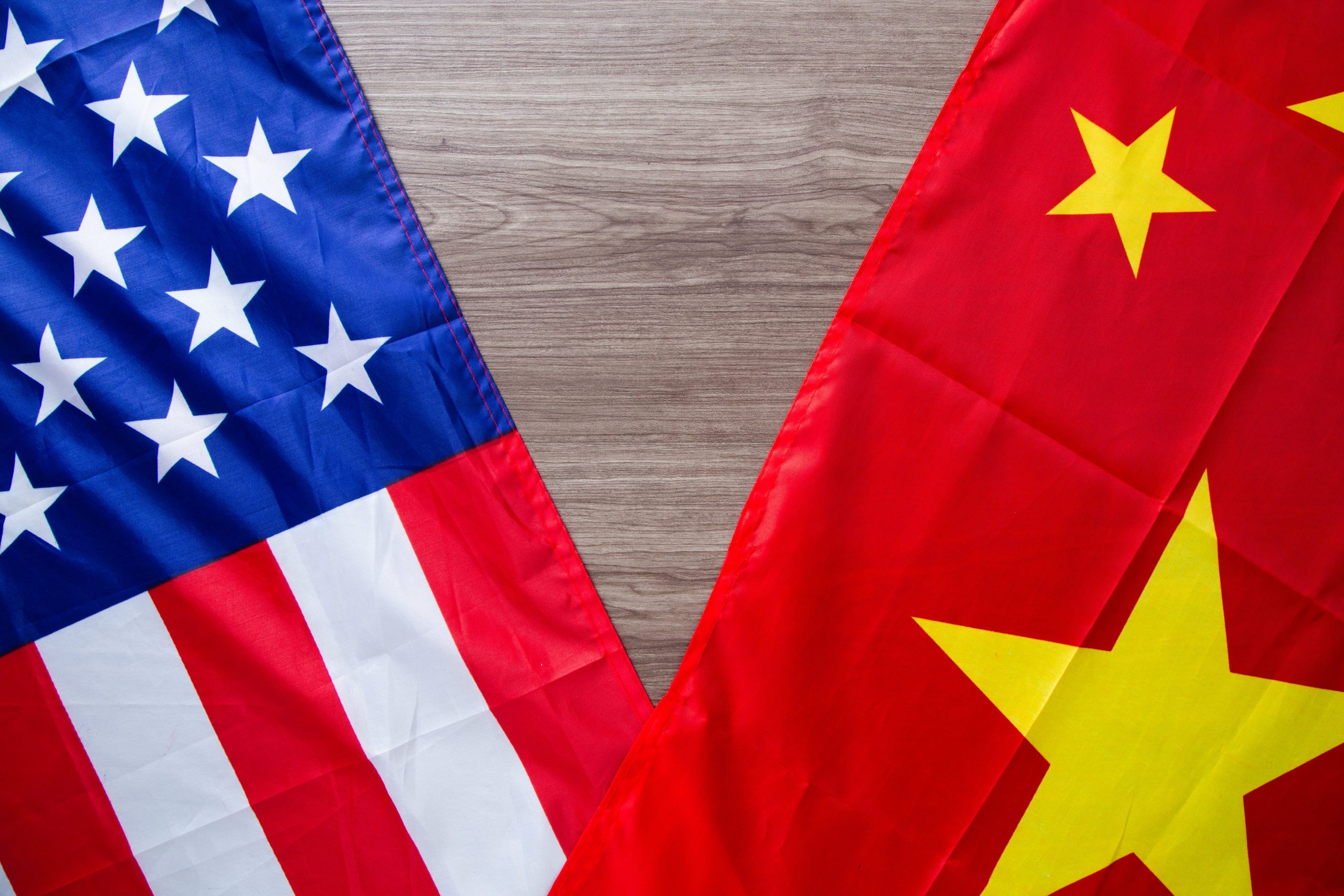
The rule of law is bending. Markets are breaking. Donald Trump just declared that the United States Congress is irrelevant to his trade agenda. He claims total authority to levy tariffs despite a recent Supreme Court rebuke. Forbes calls the statement true but misleading. The reality is far more dangerous for global supply chains. The executive branch is weaponizing a 1977 statute to bypass the legislative branch entirely. This is not a policy shift. It is a constitutional workaround.
The IEEPA Loophole
The International Emergency Economic Powers Act (IEEPA) is the primary weapon. It grants the President sweeping powers to regulate commerce during a declared national emergency. Trump argues that the trade deficit itself constitutes a national emergency. Legal scholars point to the 1977 law as a blank check. The Supreme Court recently attempted to curb this power by invoking the Major Questions Doctrine. They ruled that agencies cannot make decisions of vast economic significance without clear congressional authorization. Trump is ignoring the spirit of that ruling. He is relying on the literal text of the IEEPA instead. This creates a legal vacuum where billions in trade flow are subject to a single signature.
Investors are fleeing to safety. Per reports from Bloomberg, the volatility index has spiked 15 percent in the last 48 hours. The market hates uncertainty. Even more, it hates a trade regime that can change via social media post. The legal distinction Forbes highlights is critical. While the Supreme Court struck down specific tariff applications, they did not strip the President of the underlying emergency authority. This allows the administration to rebrand the same tariffs under a different legal justification.
Visualizing the Tariff Surge
The following chart illustrates the dramatic escalation of effective tariff rates on imported goods through the early weeks of 2026 compared to historical averages. The data reflects the aggressive implementation of the universal baseline tariff policy.
The Mechanism of Misleading Claims
Trump’s claim is technically accurate because of Section 232 of the Trade Expansion Act of 1962. This allows for tariffs based on national security concerns. The Supreme Court’s recent ruling focused on the procedural overreach of the Commerce Department, not the President’s inherent authority. By shifting the justification from economic protectionism to national security, the administration circumvents the court’s previous restrictions. This is a shell game with trillion-dollar consequences. According to Reuters, legal teams for major retailers are already preparing a new wave of injunctions. They argue that the national security justification is a pretext for illegal taxation.
The economic fallout is immediate. 10-year Treasury yields have climbed to 4.85 percent as of this morning. Bond vigilantes are pricing in a permanent inflationary shock. If every imported component costs 20 percent more, the consumer price index cannot stay down. The Federal Reserve is now trapped between a slowing economy and rising import costs. This is the definition of stagflation. The administration remains undeterred. They view the tariff revenue as a replacement for income taxes, a theory that most economists find mathematically impossible.
Legal Authorities for Executive Tariffs
The following table breaks down the specific statutes the executive branch is utilizing to bypass traditional congressional approval processes.
| Statute | Legal Basis | Executive Power Scope |
|---|---|---|
| Section 232 (1962 Act) | National Security | Broad authority to adjust imports if security is threatened. |
| Section 301 (1974 Act) | Unfair Trade Practices | Allows retaliation against foreign trade barriers. |
| IEEPA (1977 Act) | National Emergency | Sweeping power to regulate all foreign economic transactions. |
| Section 201 (1974 Act) | Domestic Industry Injury | Temporary safeguards for industries hit by import surges. |
The Supply Chain Fracture
Logistics hubs in Long Beach and Savannah are reporting a 30 percent drop in incoming container volume. Importers are not just paying the tariffs, they are stopping orders. The uncertainty of the legal landscape makes long-term contracts impossible. If a tariff can be enacted on a Monday and struck down on a Wednesday, the cost of insurance alone destroys the margin. This is the reality of the misleading nature of the President’s claim. He has the power to disrupt, but he does not have the power to create stability.
Corporate America is currently split. Domestic steel producers are cheering the move. Tech manufacturers are screaming. The cost of a basic semi-conductor has risen 12 percent since the February 21st announcement. We are seeing a bifurcation of the American economy. Sectors that rely on global integration are being sacrificed for the sake of a nationalist industrial policy. The Supreme Court will likely hear an emergency appeal by the end of the quarter, but the damage to the spring shipping season is already done.
The next data point to watch is the March 15 Treasury report on customs collections. This will reveal the true scale of the revenue being extracted from the private sector. If the numbers exceed projections, expect the administration to double down on their legal theories. The trade war is no longer about trade. It is about the limits of executive power in a fractured republic.