The greenback is bleeding. Policy makers cheer. They are wrong.
The US dollar is undergoing a managed descent that many in Washington view as a victory for the American manufacturing base. This optimism is misplaced. Rob Kaplan, vice chairman at Goldman Sachs, recently signaled a warning from the Global Macro Conference APAC. He questioned whether the marginal gains in export competitiveness are worth the structural instability currently rattling global markets. The narrative that a weaker currency acts as a magic wand for trade deficits is a relic of 20th-century economic theory. It ignores the modern reality of globalized supply chains and the immediate inflationary shock of imported components.
Currency devaluation is a double-edged sword that usually cuts the wielder first. When the dollar weakens, the cost of every barrel of oil and every semiconductor imported into the United States rises instantly. This is the J-Curve effect in its most brutal form. Initially, the trade balance worsens because the value of imports rises before the volume of exports has time to adjust. According to recent data from Bloomberg Markets, the dollar has slipped 4 percent against a basket of major currencies since the start of January. For a nation that remains a net importer of high-value goods, this is an immediate tax on the American consumer disguised as industrial policy.
The Japanese Contagion and the Carry Trade Collapse
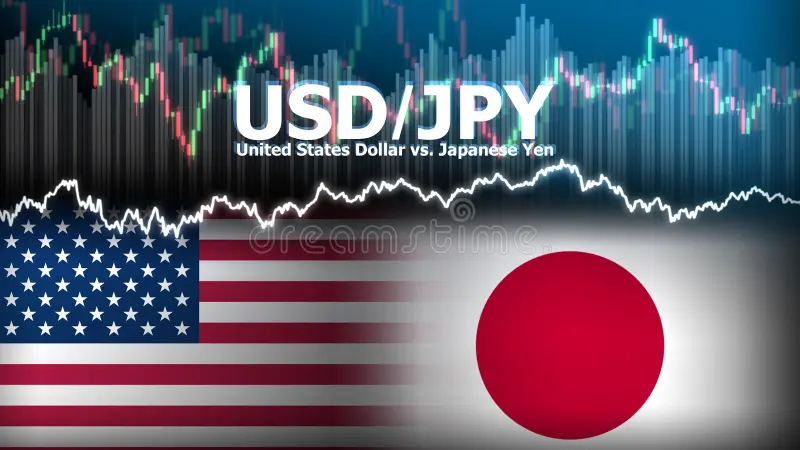
The volatility is not confined to the Atlantic. Japan is the epicenter of the current tremor. For decades, the Yen carry trade served as the world’s primary source of cheap liquidity. Investors borrowed in Yen at near-zero rates to fund bets on higher-yielding assets globally. That era is ending. Recent spikes in Japanese Government Bond yields have sent shockwaves through the APAC region. As the Bank of Japan moves toward normalization, the sudden repatriation of capital is sucking the air out of global equity markets. Per reporting from Reuters Finance, the Yen has seen its highest three-day volatility since the late nineties. This is the “Japanese rates volatility” Kaplan referenced. It is not a localized event. It is a fundamental repricing of global risk.
When the Yen strengthens and the Dollar weakens simultaneously, the carry trade unwinds with violent speed. This forced deleveraging creates a feedback loop. Hedge funds are forced to sell their most liquid winners, often US tech stocks, to cover margins on their Yen-denominated debt. The result is a paradoxical environment where a weaker dollar, intended to help the domestic economy, actually triggers a massive sell-off in the domestic stock market. The volatility is the price of the transition away from a dollar-centric world.
The Marshall Lerner Condition and Modern Realities
The technical justification for a weaker currency rests on the Marshall-Lerner condition. This theory suggests that a currency devaluation will improve a country’s trade balance only if the sum of the price elasticities of demand for imports and exports is greater than one. In the current environment, this is a dangerous gamble. US exports are increasingly dominated by services and high-tech capital goods which are relatively price-inelastic. Foreign buyers do not purchase a Boeing jet or a specialized medical device simply because the dollar dropped 5 percent. They buy them because of technical necessity. Conversely, US demand for consumer electronics and energy is also inelastic. We pay the higher price because there are no immediate domestic substitutes. The result is not a manufacturing boom but a persistent inflationary pulse.
Visualizing the Currency Shift
US Dollar Index (DXY) Performance: January to February 2026
Comparative Market Dynamics
To understand the breadth of this shift, one must look at the divergence between G7 interest rate paths and currency valuations. The following table illustrates the pressure building within the system as of early February.
| Currency Pair | Spot Rate (Feb 3) | Monthly Change | Central Bank Policy Bias |
|---|---|---|---|
| USD/JPY | 132.45 | -6.2% | Hawkish (BoJ) |
| EUR/USD | 1.1240 | +3.1% | Neutral (ECB) |
| GBP/USD | 1.3150 | +2.8% | Dovish (BoE) |
| DXY Index | 101.20 | -3.1% | Dovish (Fed) |
The data suggests a coordinated retreat from the dollar. While the Federal Reserve hints at further easing to support a cooling labor market, the Bank of Japan is finally reclaiming its sovereignty over interest rates. This divergence is the primary driver of the volatility Kaplan highlighted. It is a structural realignment that will define the rest of the year. Investors who are still operating on the 2024 playbook are being caught in the crossfire of this transition.
The export gains being touted by proponents of a weaker dollar are largely illusory. In a world of just-in-time manufacturing, the cost of logistics and raw materials is the dominant factor. A 5 percent drop in the dollar is easily offset by a 10 percent rise in the cost of imported fuel or a spike in shipping insurance due to geopolitical instability. The true risk is that the US loses its role as the ultimate safe haven. If the dollar is no longer a reliable store of value, the “exorbitant privilege” that allows the US to fund its massive deficits at low cost will vanish. That is a price no amount of export growth can justify.
The market is now looking toward the February 12th Consumer Price Index (CPI) release. This data point will be the ultimate arbiter of whether the weaker dollar is already feeding back into domestic inflation. If the print comes in above 3.4 percent, the Fed will be trapped between a slowing economy and a devaluing currency. Watch the 10-year Treasury yield. If it fails to drop alongside the dollar, it signals that the market is demanding a higher risk premium for holding American debt. The era of the easy dollar is over.