The Greenback Is Bleeding
The consensus is wrong. It usually is. Market commentators are currently cheering the recent slide of the US Dollar as a boon for American exports. They see a cheaper currency and imagine a manufacturing renaissance. This is a dangerous simplification. A weaker dollar is not a gift. It is a symptom of structural decay and a precursor to imported inflation that the Federal Reserve is ill equipped to handle.
Rob Kaplan, Vice Chairman at Goldman Sachs, recently signaled this shift during the Global Macro Conference APAC. His assessment of US monetary policy and Japanese rate volatility suggests a much more precarious environment than the surface data indicates. The yen is no longer a passive observer. It has become the primary driver of global liquidity shifts. When Japan sneezes, the US Treasury market catches a fever.
The Kaplan Doctrine and the Export Fallacy
Kaplan questioned whether short term export gains are worth the long term cost of a debased currency. He is right to be skeptical. The traditional economic theory suggests that a weaker dollar makes American goods cheaper abroad. This is the J-Curve effect in its most optimistic form. However, in a globalized supply chain, most American manufacturers rely on imported components. When the dollar falls, the cost of these inputs rises. The theoretical margin gain is evaporated by the reality of rising producer price indices.
Per recent data from Bloomberg, the US Dollar Index (DXY) has faced significant downward pressure over the last three weeks. This is not merely a result of cooling inflation. It is a response to the narrowing interest rate differential between the Fed and the Bank of Japan. The carry trade is unwinding. This is not an orderly exit. It is a frantic scramble for the doors.
Visualizing the Dollar Index Decline
DXY Index Performance (February 2026)
The Japanese Volatility Engine
Japanese rates are the hidden gear in the global financial machine. For years, the Bank of Japan maintained a policy of yield curve control that essentially subsidized global risk taking. That era is over. Recent volatility in Japanese government bonds (JGBs) has forced institutional investors to hedge their US exposures more aggressively. This hedging is expensive. It drains liquidity from the system.
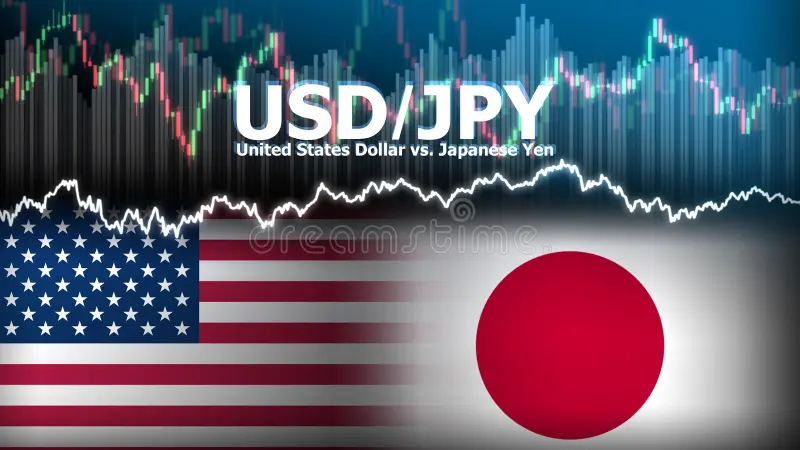
As reported by Reuters, the volatility in the USD/JPY pair has reached levels not seen since the previous decade. This is not just a currency story. It is a collateral story. US Treasuries are the world’s primary collateral. If the yen becomes too volatile, the cost of holding Treasuries for Japanese banks becomes prohibitive. They stop buying. Or worse, they start selling. We are seeing the early stages of this repatriation.
Currency Volatility Comparison
| Currency Pair | 30-Day Change | Volatility Index (VIX-Equivalent) | Impact Level |
|---|---|---|---|
| USD/JPY | -4.2% | 18.5 | Critical |
| EUR/USD | +2.1% | 12.2 | Moderate |
| GBP/USD | +1.8% | 13.1 | Moderate |
| AUD/USD | +0.9% | 15.4 | High |
The Monetary Policy Deadlock
The Federal Reserve is in a corner. If they cut rates to support a slowing economy, the dollar collapses further. This fuels inflation. If they hold rates high to protect the dollar, they risk a hard landing in the domestic credit markets. Kaplan’s comments at the APAC conference suggest that Goldman Sachs is bracing for a period of “uncomfortable choices.” The market is currently pricing in a soft landing, but the bond market is screaming otherwise.
Inflation is not dead. It is merely hiding in the service sector. A weaker dollar will eventually filter through to the price of consumer goods. This is the second wave that many analysts are ignoring. The cost of crude oil, priced in dollars, becomes more expensive for the rest of the world, but the domestic cost of shipping and refining those goods remains tethered to a weakening currency. The math does not add up for the American consumer.
The Hidden Mechanics of Rate Volatility
Volatility is often misunderstood as simple price movement. In reality, it is the measurement of uncertainty. When Kaplan speaks about Japanese rate volatility, he is referring to the breakdown of the correlation between different asset classes. Historically, when stocks went down, bonds went up. This relationship is fracturing. In the current environment, we are seeing periods where both sell off simultaneously. This is the nightmare scenario for 60/40 portfolios.
The liquidity in the Treasury market is thinning. The primary dealers, the large banks that facilitate trading, are less willing to hold inventory on their balance sheets due to post-2008 regulatory constraints. This means that even small shifts in sentiment can lead to outsized moves in yields. We saw this in late 2025, and the trend is accelerating in early 2026. The dollar’s weakness is exacerbating this liquidity vacuum.
The Path Ahead
The market is currently fixated on the next FOMC meeting. They are looking for a signal. They should be looking at the Bank of Japan instead. The real story is not what Jerome Powell says, but what Kazuo Ueda does. If the Bank of Japan continues to allow JGB yields to rise, the pressure on the US Dollar will become unbearable. The export gains that the optimists are touting will be revealed as a mirage, swallowed by the rising cost of capital and the erosion of purchasing power.
Investors should watch the 10-year Treasury yield relative to the 10-year JGB. The spread is narrowing at a pace that suggests a major technical breakout is imminent. If the spread drops below 250 basis points, expect a massive liquidation of dollar-denominated assets. The next milestone to watch is the March 12 Treasury auction. If demand from foreign central banks continues to wane, the floor for the dollar may be much lower than the current 101.9 level suggests.