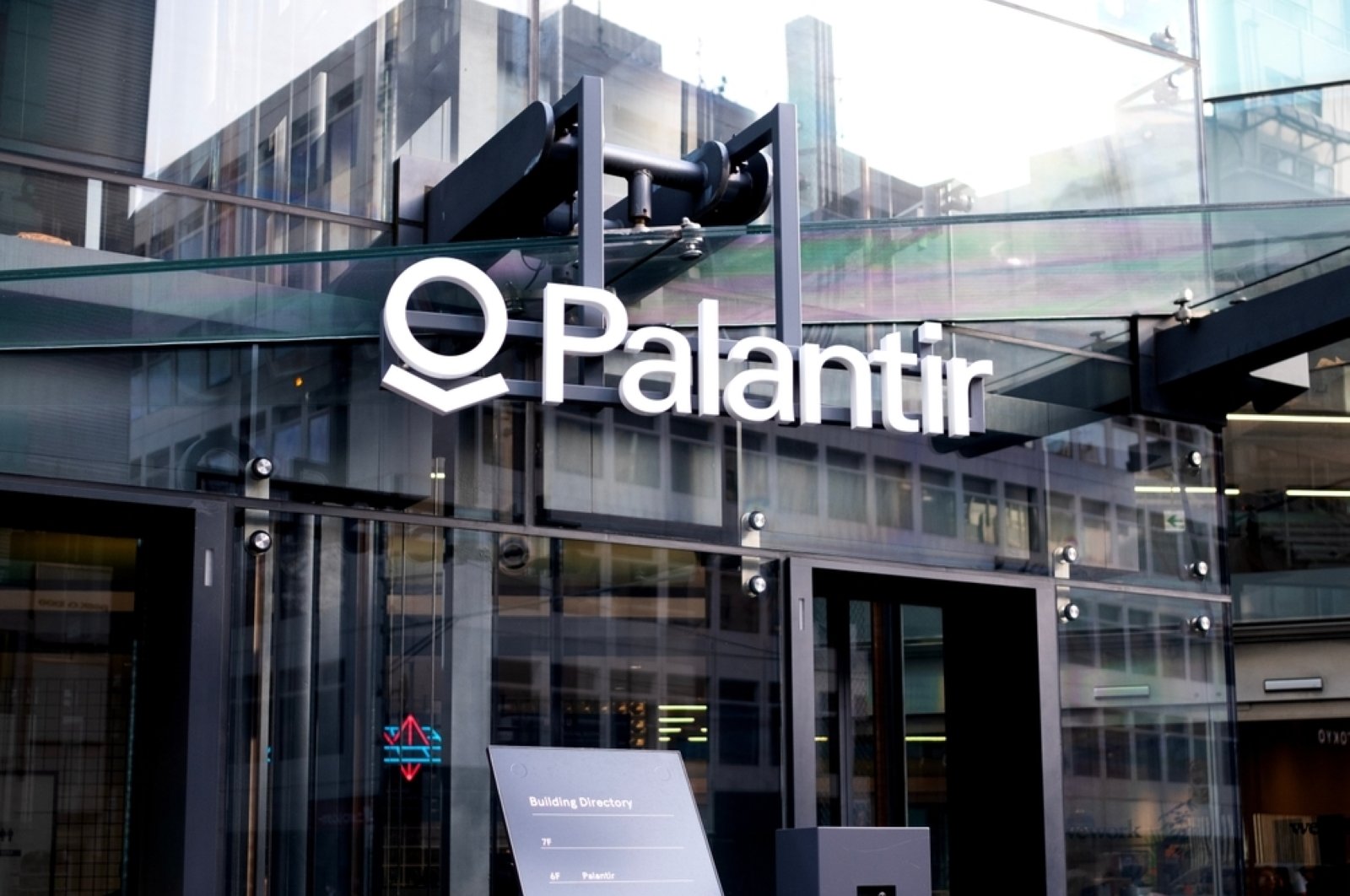
The Era of Theoretical AI is Over
For three years, the bears called Palantir Technologies (NYSE: PLTR) a glorified consultancy. They pointed to the lumpy government contracts and the high stock-based compensation as evidence of a business that could not scale. On November 3, 2025, those arguments were effectively dismantled. The Q3 2025 earnings report did not just beat expectations; it fundamentally redefined the ceiling for enterprise software growth in the age of artificial intelligence. With a Rule of 40 score reaching a staggering 114%, Palantir is no longer just a participant in the AI trade. It is the architect of the infrastructure.
The headline figure of $1.181 billion in quarterly revenue, a 63% increase year over year, only tells half the story. The real engine of this growth is the U.S. commercial sector, which exploded by 121% to $397 million. This is the direct result of the Artificial Intelligence Platform (AIP) bootcamps, which have compressed the traditional enterprise sales cycle from nine months to just five days. According to the official Q3 2025 release, the company closed 204 deals of at least $1 million during the quarter, including 53 deals exceeding $10 million. The industrialization of AI is no longer a forecast (it is a realized balance sheet event).
The Rule of 114 and the New Efficiency Frontier
In the software world, the Rule of 40 (the sum of revenue growth and profit margin) is the gold standard for health. Most high-growth firms struggle to stay above 50%. Palantir’s leap to 114% is an anomaly that suggests extreme operational leverage. By decoupling headcount growth from revenue expansion through automated deployment pipelines, Palantir achieved a GAAP operating margin of 33% and an adjusted operating margin of 51%. This level of efficiency has forced Wall Street to scrap its traditional valuation models. This is not Snowflake (NYSE: SNOW) or Datadog (NYSE: DDOG) territory anymore. This is a proprietary ecosystem play that mirrors the early explosive growth of the cloud era.
Dissecting the $2.7 Billion Total Contract Value
Total Contract Value (TCV) is the leading indicator that skeptical analysts ignored throughout late 2024. In the most recent 48 hours of trading, the market has finally priced in the $2.76 billion TCV reported for Q3. This represents a 151% increase year over year. Unlike competitors who sell seat-based licenses, Palantir sells outcomes. When Walgreens (NASDAQ: WBA) deployed AI-powered workflows to 4,000 stores in eight months, they weren’t just buying software; they were buying a radical reduction in logistics latency. This is why remaining deal value (RDV) surged to $3.63 billion. The backlog is now growing faster than the current revenue, suggesting that the Q4 guidance of $1.33 billion may actually be conservative.
| Metric | Q3 2024 (Actual) | Q3 2025 (Actual) | Year-over-Year Change |
|---|---|---|---|
| Total Revenue | $726 Million | $1,181 Million | +63% |
| U.S. Commercial Revenue | $179 Million | $397 Million | +121% |
| U.S. Government Revenue | $320 Million | $486 Million | +52% |
| Adjusted Operating Margin | 38% | 51% | +1,300 bps |
| Rule of 40 Score | 68% | 114% | +4,600 bps |
While the commercial side provides the velocity, the government sector provides the floor. The U.S. Government revenue grew by 52% to $486 million, bolstered by the expansion of the Maven Smart System contract across all military branches. Per the latest SEC 10-Q filing, Palantir’s role in modernizing the Department of Defense’s data fabric has become non-negotiable. This is a structural advantage that high-level analytics firms like Tableau or Salesforce simply cannot replicate due to the lack of IL6 security clearances and edge-computing capabilities.
The Great Valuation Schism
As of November 14, 2025, the investment community remains violently divided. On one side, Bank of America analyst Mariana Perez Mora recently raised her price target to $255, citing the “unrelenting AI demand that shows no signs of saturation.” On the other, Mizuho maintains a more cautious $205 target, warning that the stock’s forward price-to-sales multiple of nearly 80x leaves no room for error. The bears point to the history of software bubbles, noting that stocks trading above 100x sales typically face a 65% drawdown eventually. However, the counter-argument is the unique nature of AIP. Most SaaS companies sell tools; Palantir sells a functioning digital nervous system for the enterprise. As long as the Net Dollar Retention remains at 134%, the premium valuation is supported by the sheer stickiness of the platform.
Institutional investors are also watching the upcoming S&P 500 re-weighting. With a market capitalization now exceeding $56 billion and consistent GAAP profitability (this was the eighth consecutive quarter of net income), Palantir is expected to see a significant increase in passive inflows by year-end. This technical tailwind, combined with the $2.1 billion in projected free cash flow for the full year, provides a liquidity cushion that most of its peers lack.
Looking Toward the 2026 Milestone
The next critical data point for the market arrives in February 2026 with the release of the Q4 2025 audited results. All eyes will be on the conversion rate of the 1,500+ bootcamps conducted throughout the second half of this year. If the conversion rate holds at the current 92%, Palantir will likely breach the $5 billion annual revenue run rate ahead of schedule. Watch the U.S. Commercial Remaining Deal Value (RDV) specifically; any figure above $4.2 billion in the next report would signal that the AIP supercycle is not just a peak, but a new plateau of performance.