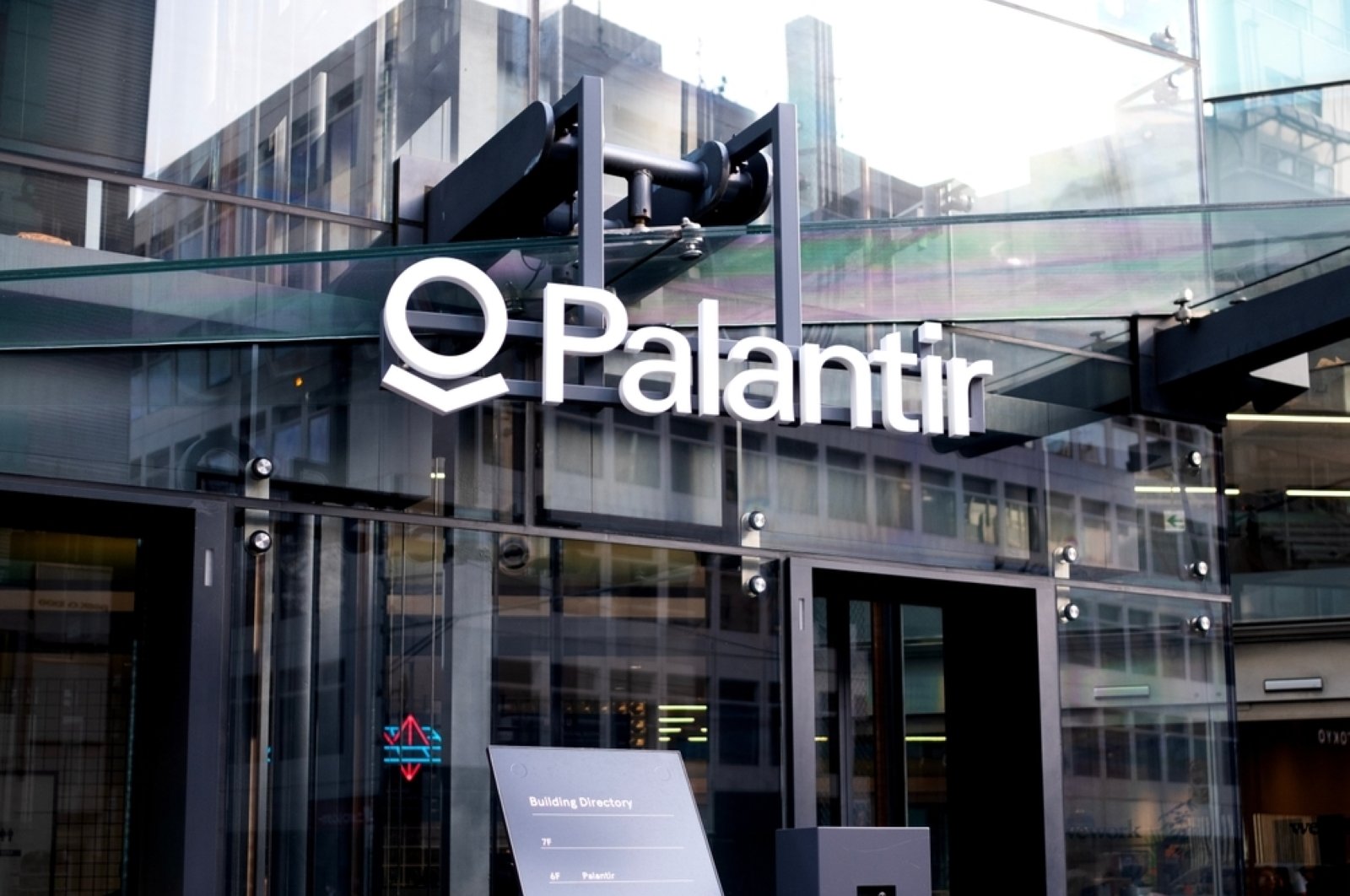
The Black Friday half-day session is typically a quiet affair, but for Palantir (PLTR) shareholders, it has become a theater of clinical wealth destruction. As the closing bell approaches on this November 28, 2025, the stock is struggling to maintain a foothold above the $57 mark, representing a staggering 24% retreat from its October highs. The narrative of ‘infinite scaling’ through its Artificial Intelligence Platform (AIP) is finally meeting the cold, hard math of a 115x forward price-to-earnings multiple.
The Bootcamp Conversion Crisis
Palantir’s growth engine relies on its ‘bootcamp’ strategy. They bring in potential clients, let them play with the software for five days, and hope for a multi-million dollar contract. But the data from the 48 hours leading into this holiday break suggests the conversion rate is hitting a saturation point. Per reports from Reuters, mid-market enterprise adoption of high-cost AI platforms has slowed as CFOs pivot toward open-source alternatives that don’t require Palantir’s specialized ‘Forward Deployed Engineers’ to maintain.
The problem is the margin profile. When Palantir lands a contract, it isn’t pure software margin. It is a labor-intensive integration process. We are seeing a shift where the ‘AI Alpha’ promised to investors is being eaten by the operational overhead of implementation. This isn’t a software company; it is an elite consultancy masquerading as a SaaS platform to maintain its tech-sector valuation.
Institutional Exit Patterns
Smart money is moving. Large-scale block trades observed on Wednesday afternoon indicate that institutional desks are rotating out of high-beta AI names and into defensive cyclicals. This isn’t just a ‘market retreat’ as the generic headlines suggest. It is a targeted extraction of capital from companies that have failed to show a clear path to GAAP-profitable sustainability without relying on stock-based compensation to pad the books.
Visualizing the November Correction
Comparing the Giants: Valuation Reality Check
To understand the ‘Palantir Premia,’ one must look at how the market is pricing its peers. While Nvidia and Microsoft have tangible, massive hardware and cloud revenue respectively, Palantir’s valuation is built almost entirely on the ‘mystique’ of its government contracts and the charisma of Alex Karp. As seen in the SEC 10-Q filings from earlier this month, the growth in government revenue has decelerated to a modest 14% year-over-year, hardly justifying a triple-digit multiple.
| Metric | Palantir (PLTR) | C3.ai (AI) | Snowflake (SNOW) |
|---|---|---|---|
| Forward P/E Ratio | 115.4x | 42.1x | 68.2x |
| Q3 Revenue Growth (YoY) | 27% | 19% | 31% |
| Operating Margin (GAAP) | -2.1% | -18.4% | -5.2% |
| S&P 500 Weighting | 0.18% | N/A | 0.24% |
The table above paints a grim picture for those betting on a quick rebound. Palantir is the most expensive name in its class while showing signs of the same ‘labor-heavy’ drag that has plagued C3.ai for years. The market is finally correcting for the fact that Palantir’s software is not ‘plug and play.’ It is a deep-tissue transplant for an organization’s data architecture, and those transplants are getting rejected by price-sensitive corporate clients.
The Catch in the ‘Unstructured Data’ Narrative
Palantir bulls often point to the company’s ability to process unstructured data as its ‘moat.’ However, the rise of localized Large Language Models (LLMs) that can run on-premise without a $50 million Palantir license is the quiet threat no one is talking about. When a firm can use an open-source model to parse its internal documents for a fraction of the cost, the ‘Foundry’ ecosystem begins to look like a gilded cage. Market data from Bloomberg suggests that venture capital is now flooding into ‘Palantir-killers’—lean startups that offer 80% of Palantir’s functionality for 10% of the price.
The Momentum Trap
Retail investors are currently holding the bag. Over the last 48 hours, social media sentiment has shifted from ‘diamond hands’ to ‘forced liquidation.’ On a low-volume day like today, a few large sell orders can trigger a cascade. We are seeing the 50-day moving average being tested for the first time in months. If that floor breaks, there is no significant technical support until the $48 level.
Watch the January 15, 2026 contract renewal deadline for the UK’s NHS data project. If Palantir fails to secure the expanded scope they have promised investors, or if the pricing is negotiated down, the current ‘retreat’ will look like a minor dip compared to the correction ahead. The next 60 days will determine if Palantir is a permanent fixture of the S&P 500 or just the most expensive data consultancy in history.