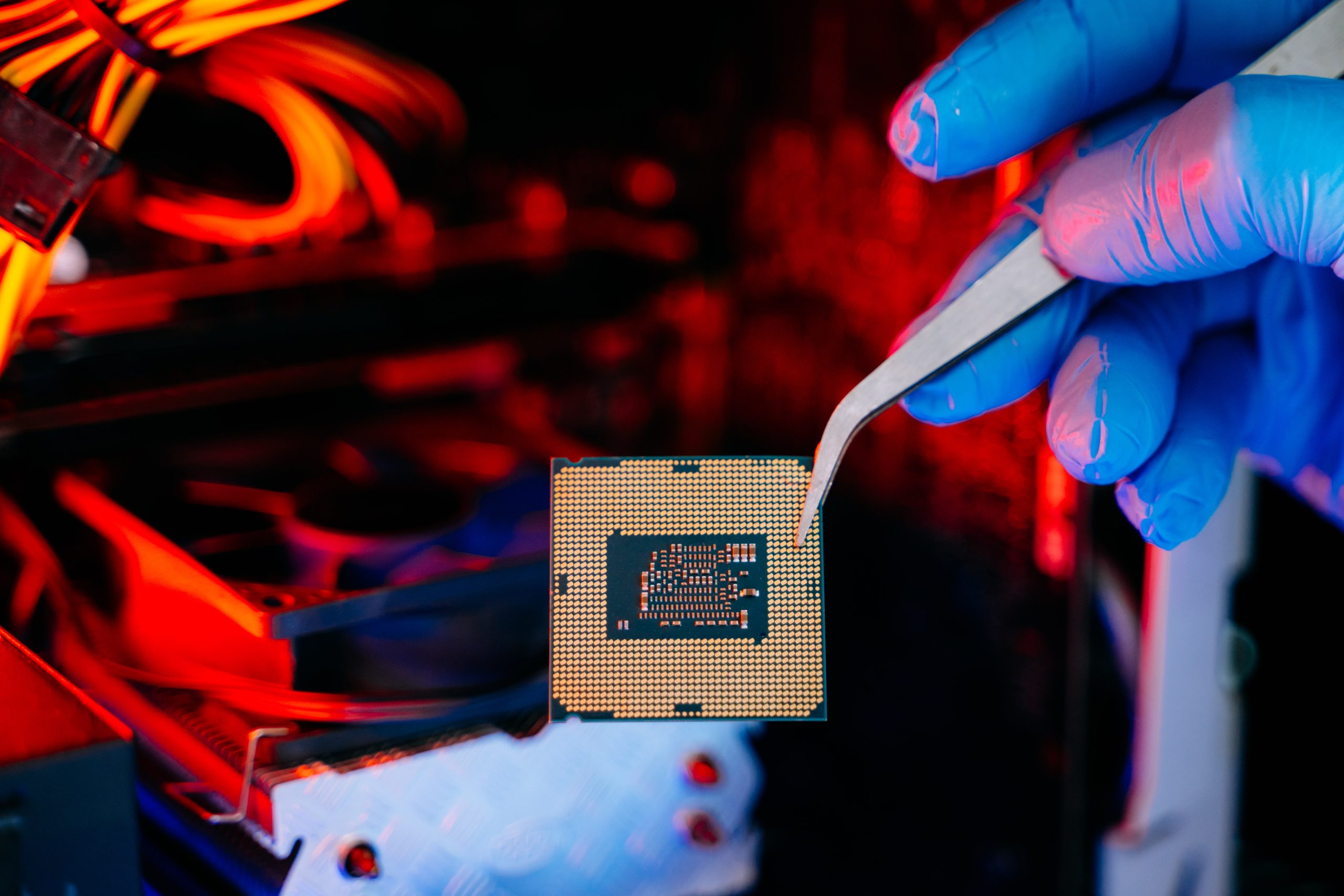
Silicon Valley has a new gravity well. On October 29, 2025, Nvidia crossed the $5.03 trillion market capitalization threshold, a figure so vast it defies traditional valuation metrics. As of today, November 02, 2025, the stock is hovering near $202.49, having surged nearly 10% in October alone. This is not just a rally; it is an addiction. The global economy is currently being reshaped by a single architecture: Blackwell.
Follow the money and you will find it pooling at the feet of Jensen Huang. The market is currently pricing in a reality where Nvidia is the sole provider of the oxygen required for the artificial intelligence era. But as we approach the November 19 earnings call, the narrative is shifting from pure growth to the brutal mechanics of supply chains and geopolitical tolls.
The Blackwell Production Bottleneck
Demand is vertical. Supply is horizontal. Despite the euphoric price action, the reality inside the foundries tells a more complicated story. Reports from Reuters indicate that Nvidia has recently petitioned Taiwan Semiconductor Manufacturing Co. (TSMC) to aggressively expand its 3nm and 4nm capacity. The issue is no longer just about design; it is about physical throughput. The GB200 NVL72 cabinets, which are the current gold standard for large-scale inference, are backordered through the middle of next year.
Visibility into revenue is now stretching toward $500 billion in cumulative orders through 2026. This isn’t speculation; it’s a logjam. Every major cloud provider is locked in a frantic scramble for allocation. If you aren’t on the list for Blackwell silicon today, you are effectively opting out of the 2026 AI compute race. This scarcity has created a secondary market for legacy Hopper H100 and H200 chips, which remain the workhorses of the industry even as the “Blackwell Ultra” enters the conversation.
The Transactional Diplomacy of China
The most provocative development in the last 48 hours is the emerging framework of “Transactional Diplomacy” regarding Chinese exports. According to reports from Bloomberg, the current U.S. administration is weighing a policy that would allow Nvidia to resume high-end H200 shipments to Chinese tech giants, but with a significant catch: a 25% surcharge on all sales, payable directly to the U.S. Treasury.
This is a radical shift in trade policy. It transforms national security concerns into a revenue-generating mechanism. For Nvidia, this represents a potential unlock of billions in previously restricted revenue, albeit at a lower margin for the Chinese buyers. For the market, it introduces a new variable. How much of Nvidia’s valuation is now tied to its ability to navigate these unique diplomatic toll booths? The company is effectively being treated as a sovereign-level entity, negotiating its own trade corridors with the blessing of Washington.
The Hyperscaler Capex Explosion
The four pillars of Nvidia’s dominance remain Amazon, Microsoft, Google, and Meta. These hyperscalers are spending at a rate that would have been unthinkable two years ago. In 2025, their aggregate capital expenditure is projected to hit $315 billion, a 40% increase over the previous year. They are building a new digital backbone, and Nvidia is the only architect they trust.
The chart above illustrates the sheer scale of the investment. Amazon has crossed the $100 billion annual capex mark, while Microsoft and Google are trailing close behind. This isn’t just maintenance; it’s an arms race. Investors are watching for any sign that these companies are getting “Capex Fatigue.” However, the latest earnings reports from Amazon and Apple suggest that the ROI on AI infrastructure is finally beginning to manifest in cloud growth rates, which accelerated to their fastest pace since 2022.
Risk vs Reward: The 70% Margin Wall
Nvidia’s gross margins have consistently held above 74%, a level of profitability that usually invites aggressive competition. Yet, Advanced Micro Devices (AMD) currently captures only about 7% to 8% of the discrete GPU market. Intel is virtually non-existent in the high-end accelerator space. The risk is not coming from a competitor; it is coming from the law of large numbers.
To maintain its $5 trillion valuation, Nvidia must not only beat earnings expectations on November 19, but it must also raise its Q4 guidance toward the $62 billion mark. Any hint of production delays in the Blackwell B200 line or a slight compression in margins due to the ramp-up costs at TSMC could trigger a massive rotation. The options market is currently pricing in a staggering 7% move post-earnings, representing a potential $350 billion swing in market value.
The real story isn’t the number on the screen; it’s the physical movement of silicon across the Pacific. The global economy is now synchronized to the production schedule of a single company in Santa Clara. We are watching the consolidation of digital power into a few square inches of high-bandwidth memory and logic gates.
Watch the Blackwell production yields coming out of TSMC in December. If the 3nm ramp hits its internal target of 80% efficiency, Nvidia will have the leverage to push its fiscal year 2026 revenue targets beyond the $140 billion consensus. The first full quarter of Blackwell-dominated revenue in early 2026 will be the definitive proof of whether this $5 trillion peak is a new plateau or a dangerous summit.