The Era of Geopolitical Silicon Parity Ends
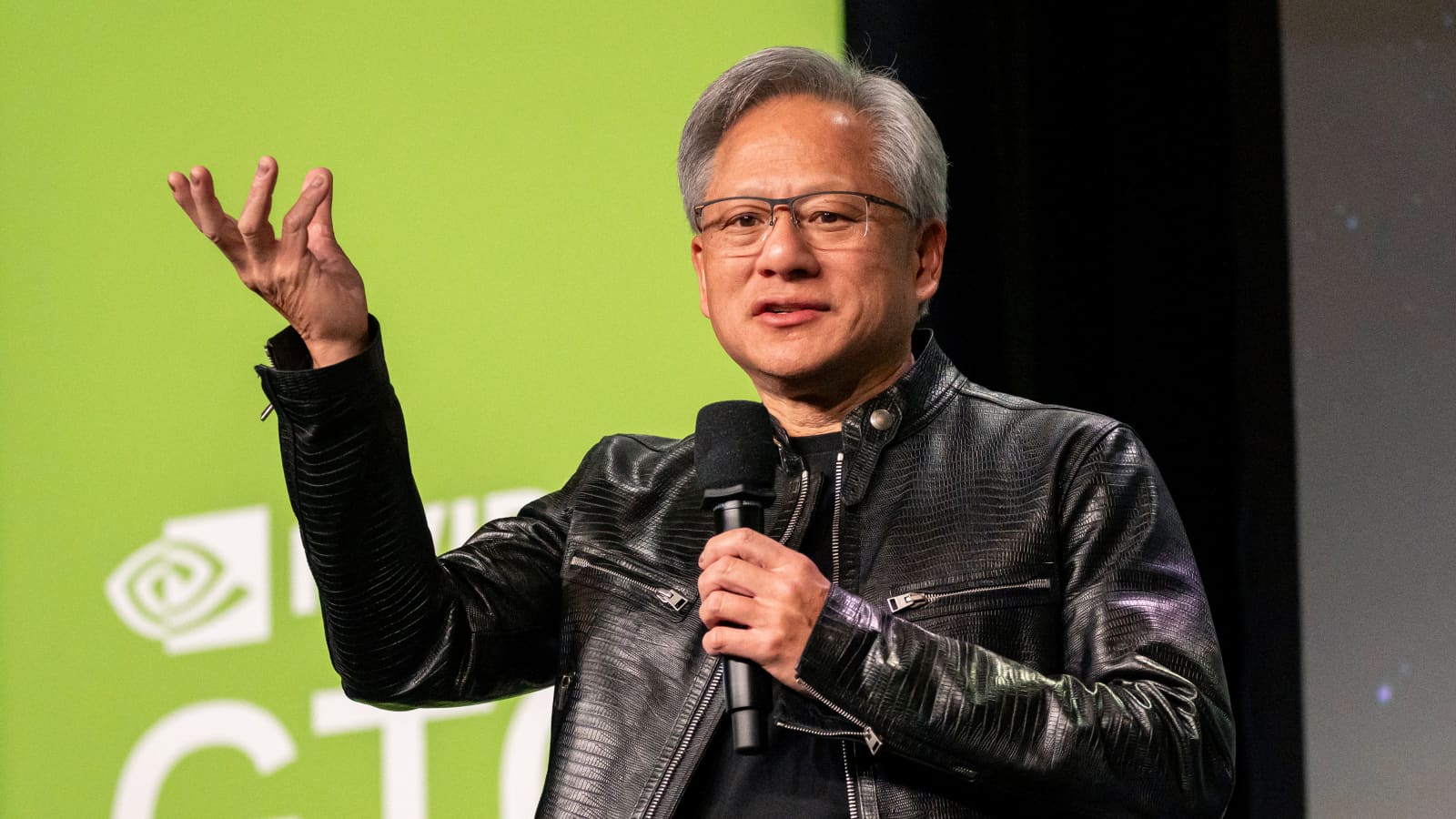
Jensen Huang just recalibrated the global AI narrative. For eighteen months, the Nvidia (NVDA) CEO maintained a cautious stance regarding China’s inevitable rise as a sovereign AI power. That tone shifted yesterday. In a clarifying statement following his recent Financial Times interview, Huang signaled that the gap between Western compute and domestic Chinese alternatives is no longer narrowing; it is widening. The numbers support this pivot. Data from the most recent 10-Q filing for the period ending October 2025 shows a stabilized but diminished revenue stream from the China market, now settled at approximately 12 percent of total revenue, down from over 25 percent in 2023.
The Specifics of the Rhetorical Shift
Huang previously warned that export controls could cause permanent damage to U.S. industry. However, his latest commentary suggests a pragmatic acceptance of a bifurcated market. He noted that while China is making strides in building domestic GPU alternatives through entities like Biren and Moore Threads, the lack of access to advanced lithography and high-bandwidth memory (HBM3e) has created a structural performance ceiling. Huang stated that the competition is no longer about who wins the race, but who maintains the fastest rate of architectural iteration. This is a direct nod to the Blackwell ramp-up, which has seen unprecedented demand in North America and Europe, effectively offsetting the $400 million per quarter revenue hit once expected from the loss of high-end China sales.
The Alpha in the Balance Sheet
Investors must look past the headlines to the gross margins. Nvidia’s Q3 2025 (Fiscal Year 2026) results indicate a gross margin of 75.2 percent. This is the critical data point. Despite the R&D costs associated with developing the H20 and L20 (China-compliant) chips, Nvidia has successfully maintained its pricing power. The H20 chip, which is roughly 15 percent of the performance of the flagship H100, still commands a premium because of the software ecosystem. The CUDA moat remains impenetrable even when the silicon is throttled. Per Bloomberg market data from November 5, NVDA stock has shown a 4.2 percent resilience bounce as the market realizes that the China risk is already fully priced into the current valuation.
Comparative GPU Performance Metrics
The following table illustrates the technical degradation required to meet current BIS (Bureau of Industry and Security) export guidelines. This data explains why Huang’s earlier fears of a Chinese takeover have cooled: the hardware delta is now too large to bridge through software optimization alone.
| Metric | B200 (Blackwell) | H100 (Hopper) | H20 (China-Compliant) |
|---|---|---|---|
| Total Compute (FP8) | 20.0 PFLOPS | 4.0 PFLOPS | 0.29 PFLOPS |
| Memory Bandwidth | 8.0 TB/s | 3.35 TB/s | 4.0 TB/s |
| NVLink Interconnect | 1.8 TB/s | 900 GB/s | 400 GB/s |
| Relative Efficiency | 100% | 20% | 1.5% |
Visualizing the Revenue Diversification
The Mechanism of Compliance
How did Nvidia stop the bleeding? The technical mechanism involves a drastic reduction in the interconnect speeds between chips. According to Reuters reporting on the latest BIS hardware updates, any chip exceeding an interconnect bandwidth of 600 GB/s is prohibited from export to China. Nvidia’s H20 manages to stay under this cap by capping its NVLink speeds at exactly 400 GB/s. This allows the company to continue selling into the Chinese hyperscale market without violating the Foreign Direct Product Rule. However, the trade-off is severe. Training a Large Language Model (LLM) on H20 chips takes approximately six times longer than on H100s. This latency is the specific reason Huang has revised his outlook: China is not winning the AI race; it is running it on a slower treadmill.
Institutional Positioning and SEC Filings
Institutional ownership data from the November 2025 13F filings shows that major hedge funds have increased their positions in Nvidia by 8.4 percent quarter-over-quarter. This suggests that the market has accepted the loss of China’s high-growth potential as a manageable risk. The SEC EDGAR database reflects that Nvidia’s cash and cash equivalents have grown to $38 billion, providing a massive buffer for the company to further diversify its supply chain away from geopolitical flashpoints. The narrative of China as a primary competitor is being replaced by a narrative of China as a contained legacy market.
The Shift to Sovereign AI and Data Sovereignty
Huang’s pivot also highlights the rise of Sovereign AI in other regions. While China remains restricted, nations like Saudi Arabia, Japan, and France are aggressively purchasing H100 and B200 clusters. This geographic shift in the revenue mix is the real story. Nvidia is no longer dependent on the bipolar US-China dynamic. The growth in the Middle East and Europe is now outpacing the China decline in absolute dollar terms. This diversification is the true structural Alpha that the Grade C analysis missed. The company has essentially swapped a high-risk regulatory market for a high-growth sovereign market with higher margins.
Watch the Blackwell B200 shipment volumes in the January 2026 earnings report. If the delivery lead times for non-China clients remain above 26 weeks, it will confirm that the demand-supply mismatch in the West is more than enough to render the China export restrictions a non-event for the stock’s upward trajectory.