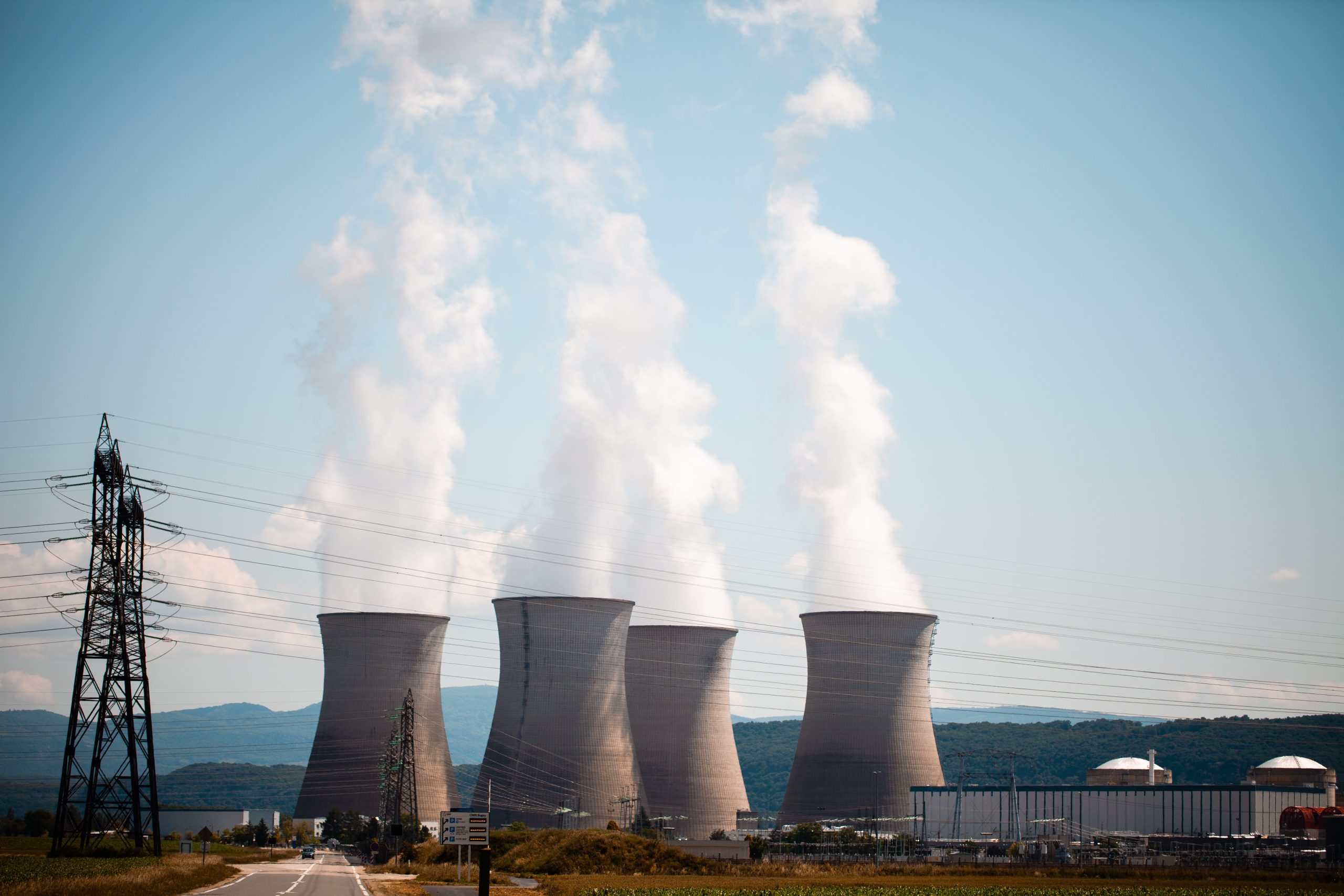
The Grid is Gasping
Data centers are no longer just consumers of electricity. They are the primary drivers of an industrial pivot that has turned nuclear energy from a pariah into a blue-chip darling. On Friday, October 17, 2025, Constellation Energy (CEG) closed at a staggering $314.12, marking a trajectory that few analysts predicted two years ago. The narrative has shifted from green idealism to the cold, hard physics of uptime. Artificial Intelligence requires 24/7 baseload power, and solar panels cannot provide it at 3:00 AM without battery storage that does not yet exist at scale. This reality has forced a marriage of convenience between Silicon Valley cash and Cold War infrastructure.
Hyperscalers Are the New Utilities
The deal flow in the last 48 hours confirms that the era of ‘buying credits’ is over. Companies are now buying reactors. According to the SEC 10-Q filing from October 17, 2025, the capital expenditure dedicated to the refurbishment of the Crane Clean Energy Center (formerly Three Mile Island Unit 1) has accelerated. Microsoft is not just a customer; they are effectively the bank. This trend is mirrored by Google’s recent commitment to Kairos Power for Small Modular Reactors (SMRs), a move designed to de-risk the licensing process by providing a guaranteed first-mover advantage. The market is pricing in a future where the largest tech companies in the world own their energy supply chains to bypass a fragile national grid.
The Uranium Supply Squeeze is Here
Uranium spot prices reached $102.40 per pound as reported by Reuters late yesterday, driven by a persistent production shortfall from Kazatomprom. The supply-demand gap is no longer a theoretical projection for the 2030s. It is a present-day bottleneck. While the 2023 consensus suggested that secondary supplies would bridge the gap, the 2025 reality is much more constrained. Cameco (CCJ) has reported that their Cigar Lake operations are running at maximum capacity, yet they still cannot meet the surge in long-term contracting demand from European utilities seeking to decouple from Russian fuel cycles. This has created a price floor that makes even the most expensive nuclear projects look economically viable on a 20-year horizon.
Valuation Metrics and Market Leaders
The following table breaks down the core financial health of the sector leaders as of the market close on October 17, 2025. Note the disconnect between traditional utility P/E ratios and the current ‘Nuclear-Tech’ premiums. Investors are treating Vistra (VST) more like a semiconductor firm than a power generator because of its exposure to the ERCOT market and its rapid nuclear expansion.
| Ticker | Price (Oct 17, 2025) | P/E Ratio (TTM) | Dividend Yield | Nuclear Capacity (MW) |
|---|---|---|---|---|
| Constellation (CEG) | $314.12 | 38.4 | 0.52% | 21,000 |
| Vistra Corp (VST) | $148.55 | 44.1 | 0.61% | 6,400 |
| Cameco (CCJ) | $64.20 | 72.2 | 0.23% | Supply Chain Lead |
| Southern Co (SO) | $92.15 | 21.5 | 3.10% | Vogtle 3 & 4 Active |
The HALEU Bottleneck
The most significant technical hurdle facing the sector is the availability of High-Assay Low-Enriched Uranium (HALEU). Most advanced Small Modular Reactors require fuel enriched to between 5% and 20%, which is currently produced in commercial quantities almost exclusively by Russia. Big Tech energy hunger, per Bloomberg’s October 18 analysis, has triggered a massive capital injection into domestic enrichment facilities. Centrus Energy (LEU) is currently the primary beneficiary of this panic, as the U.S. Department of Energy seeks to build a domestic supply chain that bypasses geopolitical risks. For investors, the play is no longer about who builds the plant, but who owns the fuel enrichment process that makes the plant functional.
Regulatory Friction is the New Alpha
In 2023, the biggest risk to nuclear was public opinion. In 2025, the risk is the Nuclear Regulatory Commission (NRC) backlog. As of this weekend, there are over 14 pending applications for reactor life extensions and new SMR site permits. The speed at which the NRC can process these applications will determine which stocks survive the inevitable ‘expectation correction.’ Companies like Southern Company (SO) have already proven they can bring new units online, as seen with the successful full-year operation of Vogtle Units 3 and 4, which are now providing a template for the industry’s revival. The market is rewarding ‘done deals’ over ‘memorandums of understanding,’ a shift that marks the maturation of the nuclear investment cycle.
Watch the upcoming January 14, 2026, deadline for the NRC final environmental impact statement on the TerraPower Kemmerer project. This will be the first definitive signal of whether the regulatory apparatus can actually keep pace with the capital flowing into the sector. If the NRC misses this milestone, the current 40 plus P/E multiples on nuclear utilities will face their first real test of gravity.