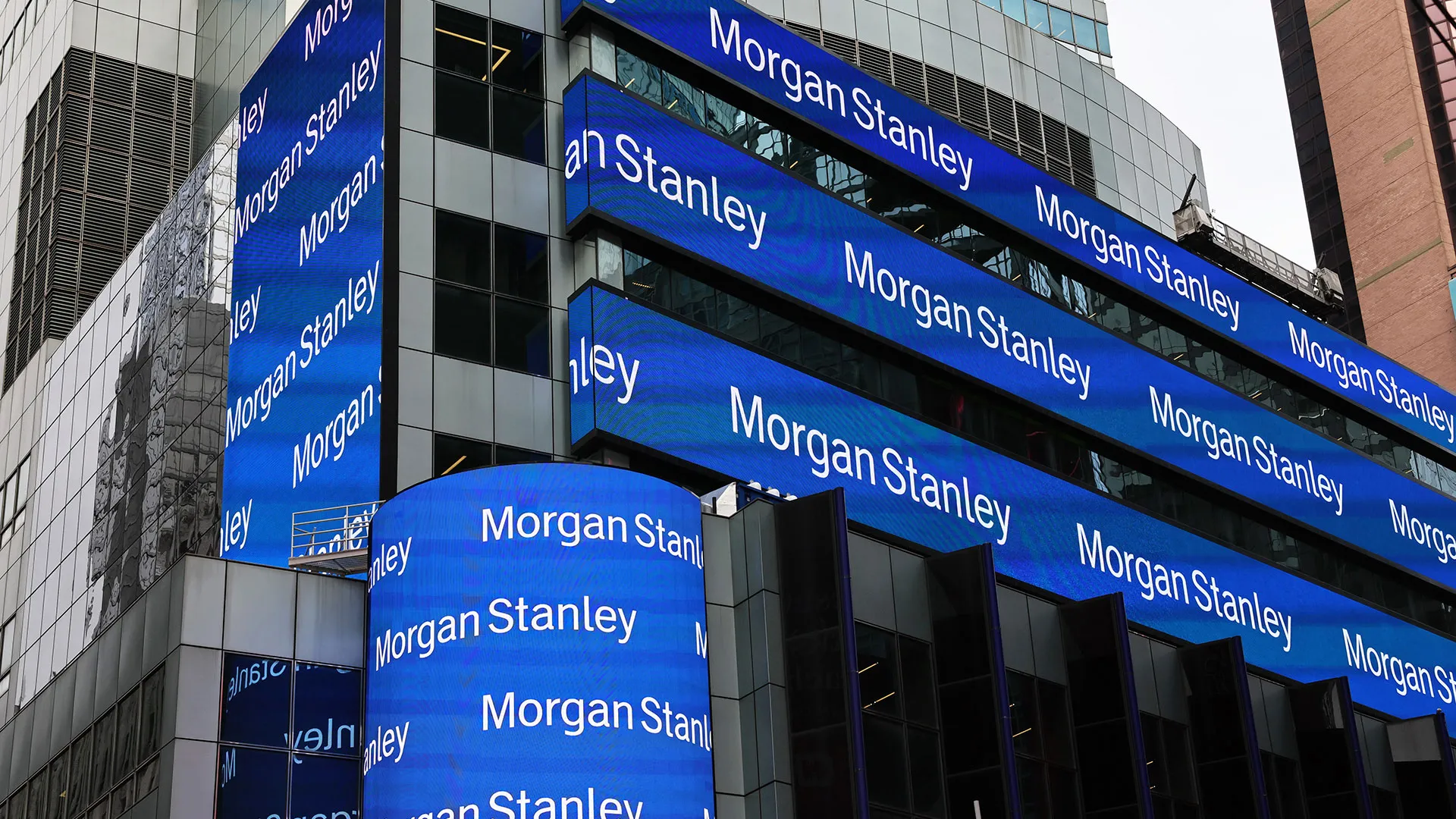
The Institutional Reality Behind the Festive Veneer
Capital is no longer a free commodity. As the markets close for the final week of 2025, the superficiality of corporate holiday greetings from 1585 Broadway masks a clinical institutional transformation. While the social media presence of Morgan Stanley broadcasts seasonal warmth, the firm is actually deep in the process of re-engineering its balance sheet for a post-pivot world. The era of cheap liquidity has been replaced by a regime of structural volatility where the cost of equity remains stubbornly high despite the Federal Reserve’s tentative easing cycle throughout the past twelve months.
The institutional focus has shifted from the frantic deal-making of the early 2020s to a defensive, fee-based fortress. Morgan Stanley’s push toward $10 trillion in assets under management (AUM) is not a marketing goal but a survival strategy designed to insulate the firm from the erratic nature of investment banking revenues. By Dec 26, 2025, the market has realized that the "Wealth Management" engine is the only variable that provides a predictable floor for the stock price in a landscape where the 10-year Treasury yield refuses to settle below 3.8%.
The Yield Curve and the Liquidity Trap
The yield curve remains the primary arbiter of institutional sentiment. Throughout 2025, we observed a slow and painful de-inversion that has left many regional lenders exposed to duration risk. According to recent data from Reuters Market Analysis, the spread between the 2-year and 10-year Treasury notes has finally moved into positive territory, yet the economic celebratory mood is dampened by the realization that this normalization often precedes a cyclical downturn. The Federal Reserve, having kept the terminal rate at 4.25% in its December 17 meeting, is signaling a "wait and see" approach that has frustrated those looking for a more aggressive liquidity injection.
Federal Funds Rate Progression: 2025 Target Range
This chart illustrates the controlled descent of the Fed Funds rate over the last year. It is a managed retreat from the inflation-fighting stance of 2024. For Morgan Stanley, this environment is a double-edged sword. Lower rates typically stimulate the Institutional Securities division by encouraging M&A activity and IPOs. However, the compression of net interest margins (NIM) puts pressure on the lending arm of the Wealth Management division. The firm is currently navigating this narrow corridor by increasing its reliance on technology-driven advisory services and alternative investment vehicles.
Deconstructing the Wealth Management Pivot
The strategic move by Ted Pick and his executive committee to prioritize the wealth management segment is a direct response to the volatility seen in the global equity markets. As of Dec 26, 2025, the S&P 500 has seen a 14% year-to-date gain, but the breadth of this rally remains thin. A handful of technology giants continue to carry the index, while the average constituent faces stagnant earnings growth. By capturing client assets in a recurring fee structure, Morgan Stanley decouples its profitability from the success of individual trades.
| Metric | Q4 2024 Actual | Q4 2025 Projected | YoY Change |
|---|---|---|---|
| Total AUM (Trillions) | $6.8 | $7.9 | +16.1% |
| Net Interest Margin | 2.15% | 1.92% | -23 bps |
| Wealth Management Revenue | $6.6B | $7.4B | +12.1% |
| Institutional Securities Rev | $5.2B | $5.8B | +11.5% |
The table above highlights the shift. While institutional securities have recovered slightly due to a late-year surge in debt underwriting, the growth in AUM and the corresponding revenue from advisory fees remain the primary drivers of the firm’s valuation premium over peers like Goldman Sachs. This is the "Alpha" that institutional investors are paying for: stability in an era where traditional market cycles have been disrupted by massive fiscal intervention and geopolitical realignment.
The Geopolitical Risk Premium
We cannot analyze Morgan Stanley’s year-end position without addressing the risk premium associated with the current geopolitical climate. The fracturing of global supply chains and the ongoing trade disputes in East Asia have forced a re-evaluation of valuation models. Per recent reports on Bloomberg Market Terminals, the volatility index (VIX) has remained above its historical mean for 60% of the trading days in 2025. This persistent "noise" has led to a flight to quality, where large-cap financial institutions are viewed as quasi-utilities.
The festive greetings shared on social media are a tactical component of this "utility" branding. In a world of high-frequency trading and algorithmic execution, the human element becomes a premium service. Morgan Stanley is betting that its high-net-worth clients will value the perceived security of a legacy institution over the lower costs of fintech disruptors. This is particularly relevant as we witness the continued fallout from the mid-2025 crypto-custody scandals, which drove billions of dollars back into traditional brokerage accounts.
The 2026 Milestone: The PCE Threshold
The market is currently pricing in a soft landing, but the margin for error is razor-thin. The next critical milestone for investors is the January 15, 2026, release of the Personal Consumption Expenditures (PCE) price index. This single data point will dictate whether the Federal Reserve continues its descent toward a 3.5% neutral rate or if the "inflation embers" of late 2025 force a premature pause in the easing cycle. Morgan Stanley’s internal models suggest that a PCE print above 2.4% would trigger a significant sell-off in duration-sensitive assets, potentially ending the holiday rally before the first quarter of the new year is even underway. Investors should keep a close eye on the 10-year yield; if it breaks 4.1% in the first week of January, the festive optimism of December will be proven a hollow sentiment.