Nepal is currently drowning in a surplus of electricity, yet the last mile remains fundamentally broken. As of October 29, 2025, the Nepal Electricity Authority (NEA) reports an average daily export of 1,000 MW to India and Bangladesh, generating approximately NPR 15 billion in revenue since mid-July. However, the capital expenditure (CAPEX) required to extend the national grid to high-altitude districts like Humla and Dolpa has reached a prohibitive $18,000 per kilometer. This fiscal reality has pivoted the conversation from humanitarian energy access to a hard-nosed Internal Rate of Return (IRR) analysis of micro-hydropower plants (MHPs).
The CAPEX Barrier and Maintenance Realities
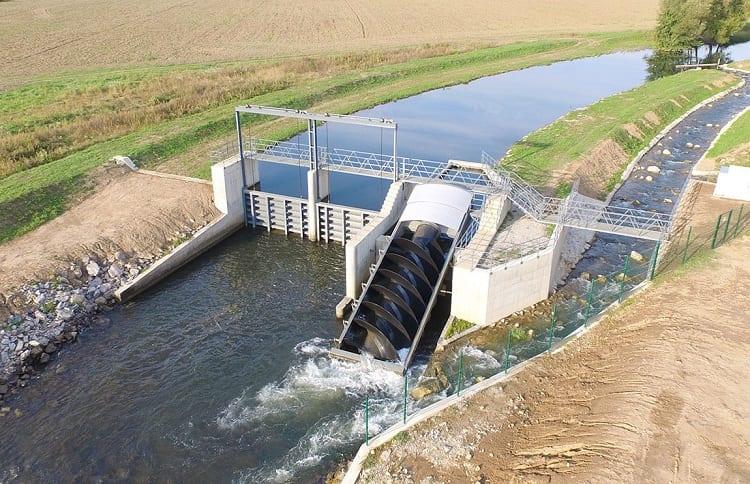
Micro-hydropower is no longer a low-cost solution. Recent data from the Alternative Energy Promotion Centre (AEPC) indicates that the average CAPEX for a 50kW plant in Nepal now sits at $2,950 per kW. This increase is driven by the volatility of the Nepalese Rupee, which Nepal Rastra Bank fixed at NPR 140.86 per USD this week. For a standard 100kW project, the total investment exceeds $295,000, excluding the 20% contingency required for geological instability in the mid-hills.
Maintenance remains the primary killer of project ROI. Investigative audits of 450 UNDP-supported projects show a 32% failure rate within the first five years. The technical cause is rarely the turbine itself but the desilting basins. Poorly managed sedimentation leads to runner blade erosion, dropping water-to-wire efficiency from the design standard of 60% to a dismal 35% within 24 months. For a community-owned project, this efficiency drop extends the payback period from 8 years to never.
The Productive Use Multiplier
Simple household lighting cannot sustain a micro-hydro balance sheet. To achieve an IRR above 14%, projects must integrate “productive end-use” (PEU). Financial modeling shows that if 40% of the daytime load is diverted to agro-processing units, such as oil expellers or cold storage, the Levelized Cost of Energy (LCOE) drops to $0.07 per kWh. Without PEU, the LCOE balloons to $0.22 per kWh, making it more expensive than the current NEA industrial tariff.
- Industrial Milling: Increases daytime load factor from 12% to 45%.
- Cold Storage: Reduces post-harvest loss by 30% in high-value spice corridors.
- Electric Cooking: Offsets imported LPG, saving households an average of NPR 4,500 monthly.
Geopolitical Risk and the Export Paradox
While remote villages struggle for 50kW, the central government is focused on the $73.74 billion required to meet its NDC mitigation targets by 2035. The risk for micro-hydro investors is “grid encroachment.” If the national grid reaches a micro-hydro village within three years of commissioning, the local plant often becomes redundant unless it can be synchronized with the grid. Current NEA policy allows for grid-synchronization of MHPs, but the technical costs of upgrading to grid-standard protection relays can add 15% to the total CAPEX.
Technical efficiency remains a bottleneck. Investigative findings confirm that Pelton turbines in Nepal are currently operating at a water-to-wire efficiency of 59.8%, well below the 80% seen in Alpine micro-hydro systems. This 20% gap represents lost revenue. The shift toward Crossflow turbines has improved reliability in low-head sites, but the lack of standardized local manufacturing means spare parts for speed governors still face a 4-week lead time from China or India.
The 2026 Milestone
Market observers are tracking the January 2026 deadline for the first 400kV cross-border transmission link to reach full capacity. This milestone will dictate whether the NEA continues to subsidize rural off-grid projects or if the fiscal focus shifts entirely toward large-scale export infrastructure. Investors should watch the December 2025 NEA tariff review for the first signs of a decentralized energy buy-back rate, which currently stands at a stagnant NPR 4.80 for the dry season.