The Industrial Deficit Meets the Hard Asset Rotation
Capital is fleeing the uncertainty of the Treasury market for the tangible security of the silver pits. This morning, December 1, 2025, spot silver prices touched $48.52 per ounce, a level that was considered a radical outlier in early 2024. This is not a speculative bubble driven by retail fervor. It is a structural supply-side crisis. According to data tracked by the Reuters commodities desk, the global silver deficit has widened to 215 million ounces, largely driven by the exponential scale-up of bifacial solar panel production in the Pacific Northwest and Southeast Asia. The industrial consumption of silver now accounts for 62 percent of total annual demand, leaving a razor-thin margin for investment grade bullion. Unlike the 2011 peak, which was fueled by a collapsing US dollar, the current rally is occurring alongside a resilient DXY index, suggesting a fundamental decoupling of silver from traditional currency inverse correlations.
The Sticky Core PCE Reality and the Last Powell Stand
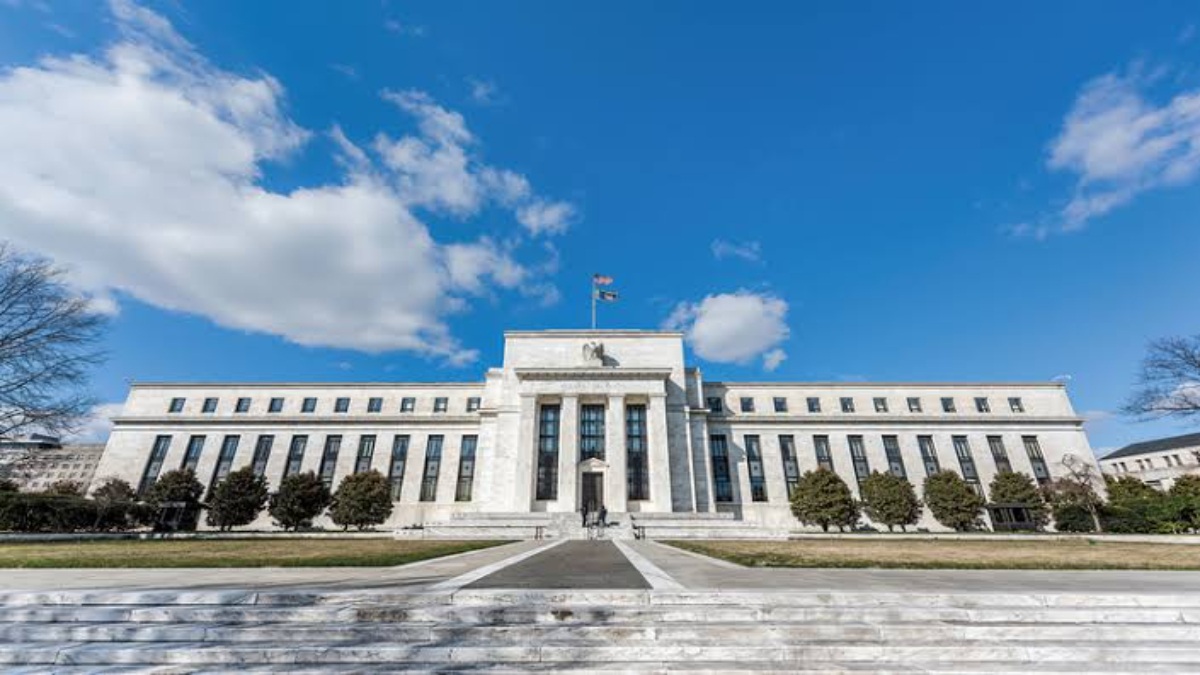
The Bureau of Economic Analysis released the October Core Personal Consumption Expenditures (PCE) report last Wednesday, showing a 2.9 percent year-over-year increase. This figure effectively killed the narrative of a return to the 2 percent target by year-end. Jerome Powell’s upcoming speech at the Economic Club of Washington on Wednesday will be his most critical performance since the 2025 inauguration. Market participants are no longer listening for ‘higher for longer’ rhetoric. They are looking for signs of institutional capitulation. The 10-year Treasury yield is currently hovering at 4.87 percent, reflecting a market that has priced in the ‘Trump Trade’ 2.0 and the accompanying tariff-induced inflationary pressures. The Fed is boxed in. If Powell signals a pivot toward easing despite the 2.9 percent PCE print, he risks a total breakdown in bond market discipline. If he remains hawkish, he faces the political wrath of an administration that has made lower borrowing costs a central tenet of its domestic policy.
The Shadow Fed and the Succession Game
Speculation regarding the next Chair of the Federal Reserve is no longer a matter of academic debate. With Jerome Powell’s term expiring in May 2026, the shortlist has narrowed to two names: Kevin Warsh and Scott Bessent. Institutional desks are already pricing in the ‘Warsh Doctrine,’ which would likely involve a more aggressive contraction of the Fed’s balance sheet paired with a deregulatory stance on Tier 1 capital requirements for major banks. This potential shift is creating a ‘Shadow Fed’ effect, where market participants are front-running the policy changes expected in the second half of 2026. As noted in a recent Bloomberg analysis, the transition of power is expected to be the most contentious in the history of the central bank, with the executive branch seeking to integrate the Fed more closely with Treasury’s fiscal objectives. This erosion of central bank independence is exactly why gold and silver are being bid up as the ultimate insurance policies against institutional volatility.
Fed Funds Rate Probability (Dec 17 Meeting)
Source: CME FedWatch Tool Data as of Dec 01, 2025
Asset Class Performance and Inflation Sensitivity
The divergence between paper assets and hard commodities has reached an extreme. While the S&P 500 has struggled to maintain its momentum above the 6,000 level, silver and copper have outperformed every major equity index on a risk-adjusted basis. The mechanism is simple: the market is discounting a future of fiscal dominance. When the government’s interest expense exceeds its defense budget, as it is projected to do in the coming fiscal year, the only mathematical resolution is currency debasement. Institutional allocators are moving out of the 60/40 portfolio model and into a 40/30/30 split, with a significant 30 percent allocation to alternative stores of value and private credit. This shift is visible in the physical premiums being paid for silver eagles and gold maples, which currently sit at 15 percent over spot, the highest premium since the regional banking crisis of early 2023.
Comparative Market Data (Year-to-Date Performance)
| Asset Class | YTD Return (Dec 1, 2025) | Inflation Hedge Rating |
|---|---|---|
| Spot Silver | +42.8% | Critical |
| Spot Gold | +26.4% | High |
| S&P 500 Index | +11.2% | Moderate |
| 10-Year Treasury (Total Return) | -4.1% | Negative |
| Bitcoin (BTC) | +68.5% | Extreme |
The Liquidity Trap of 2026
The current volatility is a precursor to a liquidity trap that will define the first quarter of 2026. As the Federal Reserve’s PCE indicators continue to run hot, the ability of the central bank to provide a backstop for the repo market is diminishing. We are witnessing a slow-motion collision between a fiscal authority that demands expansion and a monetary authority that is running out of credibility. The technical mechanism of the silver squeeze is the final signal. When the industrial demand for a metal exceeds the available COMEX inventory, the paper market loses its ability to suppress prices. This happened in palladium in 2019, and it is happening in silver today. The silver-to-gold ratio has compressed from 85:1 to 58:1 in the span of six months, a move that typically precedes a massive inflationary wave.
As we approach the final FOMC meeting of the year on December 17, the focus is not on whether the Fed will cut by 25 basis points. The focus is on the January 14 CPI release. That single data point will determine whether the new administration enters 2026 with a cooperative central bank or a hostile one that is forced to raise rates in the face of a slowing economy. Watch the 5-year breakeven inflation rate; if it crosses the 3.2 percent threshold before New Year’s Eve, the silver rally is just getting started.