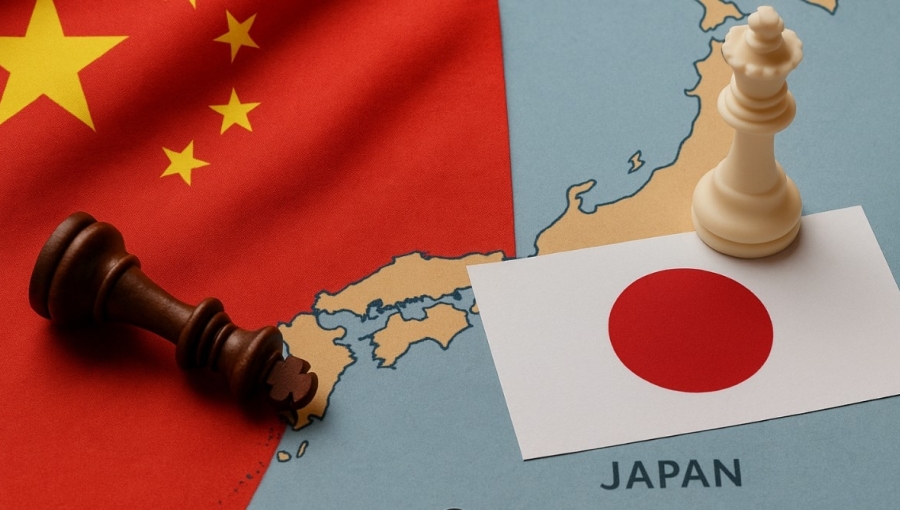
The Takaichi Doctrine and the End of Strategic Ambiguity
Diplomacy is often just a mask for economic warfare. In Tokyo, the mask is slipping. Prime Minister Sanae Takaichi’s recent dismissal of Chinese claims regarding Taiwan as baseless is not just a rhetorical flourish. It marks the definitive end of Japan’s decades-long policy of strategic ambiguity. For investors, this is the red flag that has been waving since the November 20, 2025, trade data release from the Ministry of Finance. Japan is no longer trying to balance its security alliance with Washington against its trade dependence on Beijing. It has chosen a side.
The skepticism here is warranted. While the official line emphasizes stability, the underlying numbers suggest a controlled burn of the bilateral trade relationship. According to the latest Reuters briefing on Asian trade balances, Japanese exports to China fell by 4.2 percent in the last quarter, while shipments to the United States and the Eurozone rose by 7.1 percent. This is not a natural market shift. It is a state-directed decoupling hidden in plain sight.
Hard Data Behind the Decoupling
The friction is centered on high-end technology. Japan’s decision to align its export controls with the U.S. Chip Act has effectively neutered China’s ability to source advanced lithography equipment from Japanese giants like Tokyo Electron. Beijing’s retaliatory claims about Japan’s Taiwan stance are a desperate attempt to leverage diplomatic pressure where economic leverage is failing.
Look at the capital flight. In the 48 hours leading up to November 22, 2025, capital outflows from Japanese firms operating in the Guangdong province reached a three year high. The catch is that these companies are not bringing the money back to Tokyo. They are diverting it to the ‘ASEAN Plus Three’ corridor, specifically Vietnam and Malaysia. This geographic arbitrage is expensive and inefficient, yet it is being treated as a mandatory insurance policy against a Taiwan Strait blockade.
The Corporate Casualty List
The market is currently mispricing the risk to Japan’s legacy blue chips. Companies like Toyota and Sony are being cheered for their diversification efforts, but the reality is more grim. Toyota’s joint ventures in China are facing a double whammy: rising nationalist boycotts and the aggressive expansion of domestic Chinese EV brands like BYD. The idea that dialogue will save these market shares is a fantasy. For the first time since the 1990s, Japanese automakers are looking at a net loss in the Chinese domestic market.
Critical Exposure Levels as of Nov 2025
| Company | Revenue Percentage from China | Risk Outlook |
|---|---|---|
| Tokyo Electron | 28% | High (Export Bans) |
| Fanuc Corp | 22% | Moderate (Automation Shift) |
| Toyota Motor | 18% | Critical (Market Share Erosion) |
| Sony Group | 12% | Low (Entertainment Hedging) |
Investors should look at the real-time Bloomberg Terminal data for the JPY/CNY cross-rate. The Yen has been used as a tool for competitive devaluation, but it is now hitting a ceiling. If Takaichi continues to push the Taiwan narrative, expect Beijing to weaponize its holdings of Japanese Government Bonds (JGBs). China remains one of the largest foreign holders of Japanese debt. A coordinated sell-off would spike yields at a time when the Bank of Japan is already struggling with a fragile recovery.
Finding Alpha in the Friction
Where is the profit? It is not in the manufacturing giants. The real Alpha for 2026 lies in Japan’s burgeoning defense sector. Under the Takaichi administration, the 2025 defense budget reached a record 2.2 percent of GDP. Companies like Mitsubishi Heavy Industries and Kawasaki Heavy Industries are no longer just industrial plays. They are the primary beneficiaries of a permanent state of tension. Their order books are filled through 2028, largely insulated from the consumer-driven volatility of the Chinese market.
Furthermore, the semiconductor ‘onshoring’ trend in Kumamoto is creating a secondary real estate and infrastructure boom. As Japan seeks to replace Chinese supply chains, it is building a fortress economy. This is a high-conviction play, but it requires ignoring the ‘dialogue’ headlines and focusing on the physical movement of assets. The talk of peace is cheap. The cost of building new fabs is measured in the trillions of Yen.
The skepticism remains regarding the Bank of Japan’s ability to keep interest rates low while financing this massive pivot. If the JGB market cracks under Chinese selling pressure, the Takaichi Doctrine will face its first true stress test. Retail investors should be cautious of the ‘Buy Japan’ narrative being pushed by major investment banks. The geopolitical premium is currently too low. A single incident in the Taiwan Strait would wipe out the 2025 gains in the Nikkei 225 overnight.
The Milestone to Watch
The next major pivot point occurs on March 15, 2026. This is the deadline for the tri-national review of the ‘Chip 4’ alliance export protocols. Watch for the specific language regarding legacy nodes. If Japan agrees to restrict older 28nm equipment to China, it will signal a total economic divorce. For now, keep a close eye on the weekly portfolio flow data from the Ministry of Finance. If Chinese institutional investors continue to shed JGBs throughout December, the diplomatic ‘dialogue’ is officially over.