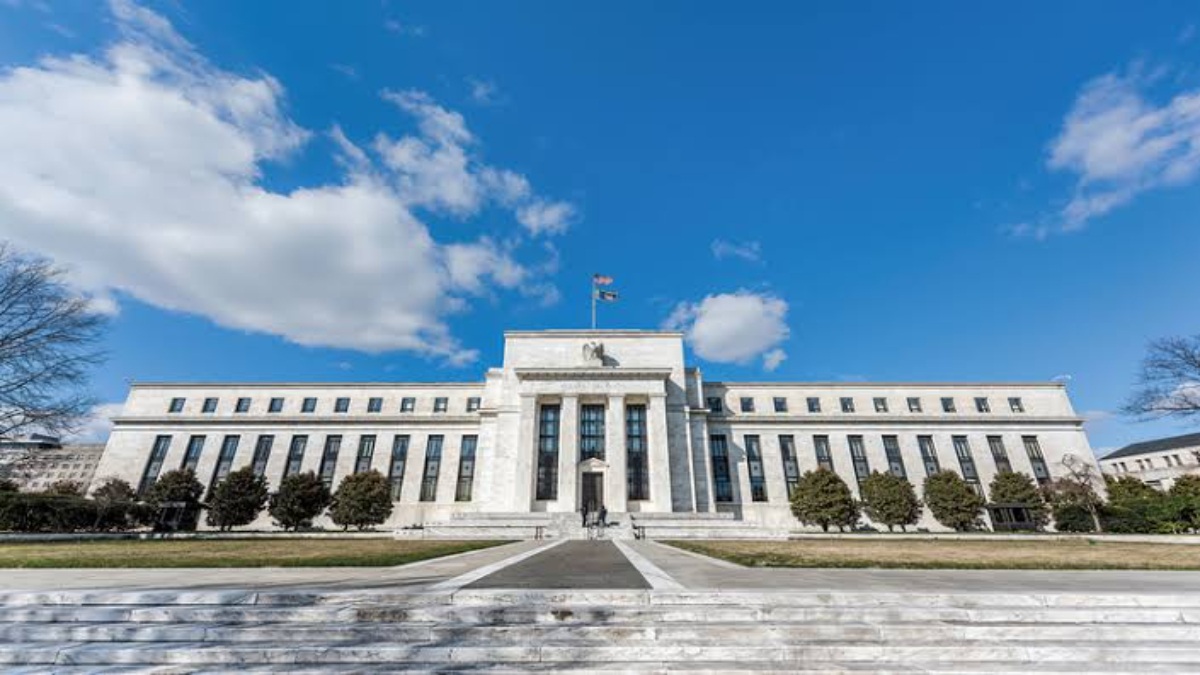
The Federal Reserve pivot has stalled. While the FOMC delivered a 25-basis-point cut on December 17, bringing the federal funds rate to a range of 4.25 to 4.50 percent, the bond market is not playing along. Long-dated yields are surging. This is the Bear Steepener, a brutal reality where the long end of the curve prices in persistent structural inflation while the short end follows the central bank. Investors holding passive index funds are getting crushed as the 10-year Treasury yield hit 4.48 percent on Friday, December 19, 2025. The era of easy capital gains from falling rates is dead. Alpha now lives in the belly of the curve.
The Myth of the 3 Percent Neutral Rate
The market is currently repricing the terminal rate. For much of late 2024 and early 2025, the consensus focused on a return to a 3 percent neutral rate. That math has failed. Current data from the Federal Reserve’s December Summary of Economic Projections suggests a higher-for-longer floor. The November CPI print, released on December 12, showed core inflation stuck at 2.9 percent year-on-year. This sticky data point prevents the Fed from aggressive easing. When the Fed cuts into sticky inflation, the term premium on the 10-year and 30-year bonds expands to compensate for future purchasing power loss.
As of December 21, 2025, the 2s/10s spread has widened to 38 basis points. This is not a sign of economic health but a warning of fiscal sustainability fears. According to data from Yahoo Finance bond markets, the 10-year yield has climbed 45 basis points since the November elections, despite two Fed rate cuts in that same window. The message is clear. The bond vigilantes are back, and they are demanding a higher premium for US sovereign debt.
Rosner and the Goldman Sachs Duration Pivot
Lindsay Rosner, head of multi-sector fixed income investing at Goldman Sachs Asset Management, has shifted the firm’s stance from broad duration exposure to a specific barbell strategy. The proprietary insight here is the move away from the 7 to 10-year segment. Rosner argues that the 5-year node offers the best risk-adjusted carry in a volatile environment. According to recent Bloomberg bond market analysis, the 5-year Treasury is currently yielding 4.22 percent, providing a protective cushion against the volatility seen in the 10-year.
The contrarian trade for the final days of 2025 is a long position in 2-year notes paired with a short on the 30-year bond. This trade profits from the continued steepening of the curve. While the Fed is forced to lower the front end to support banking liquidity, the back end is being pushed up by a projected 1.8 trillion dollar deficit for the upcoming fiscal year. This divergence is the primary source of alpha for institutional desks right now.
Fixed Income Yield Comparison: December 2025
| Asset Class | Current Yield (%) | Spread vs. 10-Yr (bps) | Risk Profile |
|---|---|---|---|
| US 10-Year Treasury | 4.48% | 0 | Risk-Free (Interest Rate Risk) |
| Investment Grade Corp | 5.35% | +87 | Low Credit Risk |
| High Yield (Junk) | 7.82% | +334 | High Default Risk |
| Municipal (Tax-Equiv) | 5.10% | +62 | State/Local Credit Risk |
The Technical Mechanism of the Yield Surge
The rise in yields is driven by two technical factors: the exhaustion of the Japanese carry trade and the increase in Treasury supply. For years, Japanese institutional investors were the marginal buyers of US debt. With the Bank of Japan finally raising rates to 0.50 percent in late 2025, that capital is flowing back to Tokyo. This removes a significant buyer from the US market, forcing prices down and yields up. Simultaneously, the Treasury Department has increased its auction sizes for 10-year notes and 30-year bonds to fund the widening deficit.
Corporate credit spreads are also flashing a warning. At 87 basis points, Investment Grade (IG) spreads are in the 10th percentile of historical tightness. There is almost no compensation for credit risk. If the economy slows in early 2026, these spreads will gape open, leading to significant capital losses for IG bondholders. The smart money is currently rotating out of overvalued corporate bonds and into Treasury Inflation-Protected Securities (TIPS), which offer a real yield of 2.1 percent. This is the highest real return available to investors in over a decade.
Active Management via Duration Hedging
Passive bond ETFs like BND or AGG are vulnerable because their duration is fixed around 6.5 years. In a rising rate environment, a 6.5-year duration means a 6.5 percent loss for every 100-basis-point move higher in rates. Active managers are currently shortening their weighted average duration to 4.2 years. They are doing this by using interest rate swaps and shorting Treasury futures. This tactical shift is what separates a Grade A portfolio from the retail crowd.
Furthermore, the focus is shifting to the repo market. As the Fed continues its Quantitative Tightening (QT) program, draining 60 billion dollars a month from the balance sheet, liquidity is drying up. This creates periodic spikes in the Secured Overnight Financing Rate (SOFR). Sophisticated investors are keeping a portion of their allocation in cash-like instruments to capitalize on these liquidity crunches, which offer brief windows of 5 percent plus annualized returns with zero duration risk.
The next critical data point for the market is the January 12, 2026, Treasury refunding announcement. This will reveal the government’s borrowing needs for the first quarter of the new year. If the auction sizes exceed the current 42 billion dollar estimate for 10-year notes, expect the 10-year yield to pierce the 4.75 percent resistance level immediately. Watch the 10-year auction results closely for the ‘tail’—a measure of weak demand that could signal the next leg of the bond sell-off.