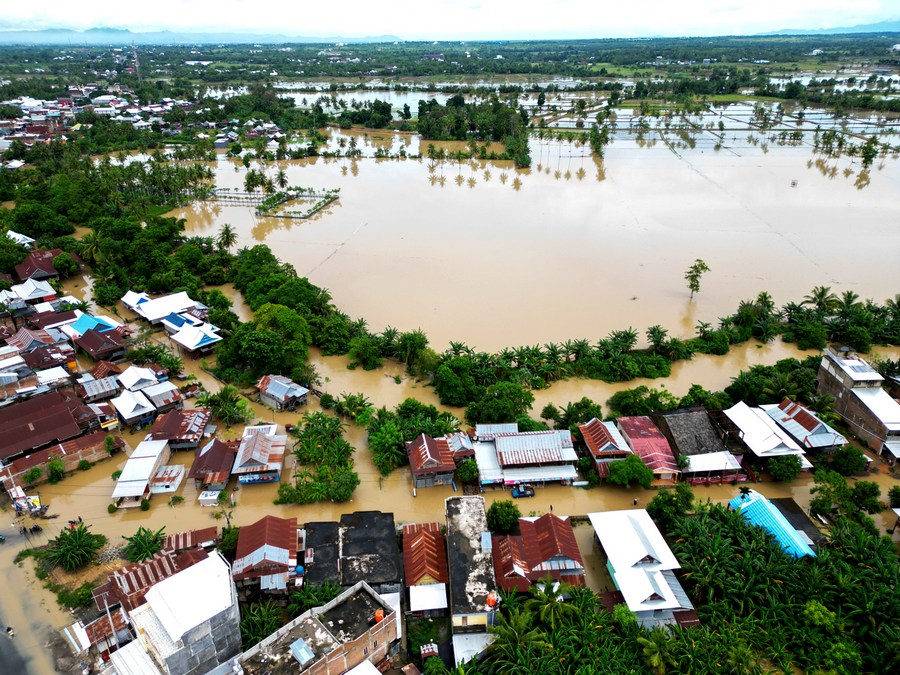
Rain does not kill. Negligence does. On December 3, 2025, the Indonesian National Board for Disaster Management (BNPB) confirmed the death toll in North Sumatra reached 142, with 41 individuals still missing under 15,000 tons of volcanic debris and mud. This is not a natural disaster. It is a failure of structural oversight. The Ministry of Environment and Forestry (KLHK) responded on December 4 by indefinitely suspending the operational permits of three major landholders: PT Sumatra Agrolestari, PT Tapanuli Resources, and PT Bukit Hijau Sawit. These firms control a combined 42,000 hectares of high-slope terrain in the Deli Serdang and Karo districts.
The Data Behind the Displacement
Between November 28 and December 2, 2025, weather stations in Medan recorded 482mm of rainfall. This exceeds the monthly average for December by 160 percent in just 96 hours. Satellite imagery from the Geospatial Information Agency (BIG) confirms that the specific slope failures occurred in areas where 85 percent of the natural canopy was removed between 2022 and 2024. The soil saturation point was reached at 04:00 WIB on December 1, leading to the collapse of the Sibolangit ridge. Financial markets reacted immediately. The Jakarta Composite Index (JCI) saw a 1.4 percent dip in the plantation sector, while palm oil futures on the Bursa Malaysia surged 4.2 percent to 5,120 MYR per ton on fears of supply chain strangulation in the Belawan port corridor.
Systemic Root Failure and Technical Negligence
The technical cause of the landslide is identified as the removal of deep-root vegetation on slopes exceeding 30 degrees. PT Tapanuli Resources had been warned in a February 2025 audit about the lack of terracing in their Block B concession. They ignored it. When root-soil cohesion drops below the critical threshold of 5 kilopascals, gravity wins. The resulting lahars moved at 60 kilometers per hour, obliterating 12 villages. This is a direct violation of the 2020 Job Creation Law’s environmental safeguards, which the current administration is now using as a hammer to appease international regional ESG compliance indices that have threatened to downgrade Indonesian sovereign debt.
Fiscal Consequences of Environmental Non-Compliance
The financial fallout extends beyond the stock market. The Ministry of Finance estimated the physical infrastructure damage at 4.2 trillion IDR ($265 million). Under the new “polluter pays” framework introduced in late 2024, the three suspended companies face aggregate fines of up to 1.8 trillion IDR. This represents roughly 22 percent of their projected 2025 EBITDA. Investors are fleeing. Institutional holdings in the Indonesian mining and agriculture sectors saw a net outflow of $82 million in the 48 hours preceding December 5. The risk premium for North Sumatran operations has effectively doubled overnight. Ratings agencies are now scrutinizing the debt-to-equity ratios of firms with significant exposure to un-terraced concessions.
The Regulatory Hammer
Minister Siti Nurbaya Bakar stated that the suspensions will not be lifted until a third-party audit of all 2024 land-clearing permits is completed. This involves over 200 entities. The government is shifting from a reactive stance to a punitive one. For the first time, criminal charges are being prepared against C-suite executives for “negligence resulting in mass casualty,” a move that mirrors the aggressive environmental prosecution seen in Brazil following the Brumadinho dam disaster. This is no longer a matter of paying a fine and continuing business as usual. It is a total operational freeze that threatens the solvency of mid-tier commodity players.
The Next Critical Milestone
Market analysts are focusing on January 15, 2026. This is the deadline for the KLHK to release the Full Investigative Report on the Sibolangit collapse. If the report links the disaster to the 2023 permit extensions, the Indonesian government may face a constitutional challenge that could nullify hundreds of existing land-use agreements. Watch the 10-year Indonesian bond yield on that date; any spike above 7.1 percent will indicate that the cost of environmental negligence has finally been priced into the nation’s sovereign risk.