The Ghost Fleet Paradox
The Suez Canal remains a hollowed-out artery. For twenty-four months, the maritime world has adjusted to a jagged reality where the Cape of Good Hope is the primary thoroughfare for global trade. According to recent data from the Suez Canal Authority, transit volumes remain 64 percent below their 2023 peaks. However, as of December 02, 2025, the narrative has shifted from how to bypass the Bab al-Mandab to the systemic shock that will occur when the fleet inevitably returns. This is not a story of recovery, but of a massive capacity bottleneck that threatens to paralyze European logistics terminals.
The Gemini Pivot and the MSC Divergence
The dissolution of the 2M alliance has left Maersk and MSC on diametrically opposed trajectories. Maersk, now operating within the Gemini Cooperation framework, has bet heavily on a hub-and-spoke model designed for reliability over raw scale. This strategy relies on high-frequency shuttles and owned terminals to bypass the very congestion that a Suez reopening would trigger. Conversely, MSC has continued its aggressive acquisition of second-hand tonnage, betting on a return to traditional long-haul loops. Per Bloomberg intelligence reports circulating this morning, MSC’s exposure to the spot market makes it uniquely vulnerable to the volatility of war risk premiums, which have stabilized at a staggering 0.85 percent of hull value—nearly seventeen times the pre-crisis norm.
The Bunching Effect: Why Reopening Breeds Chaos
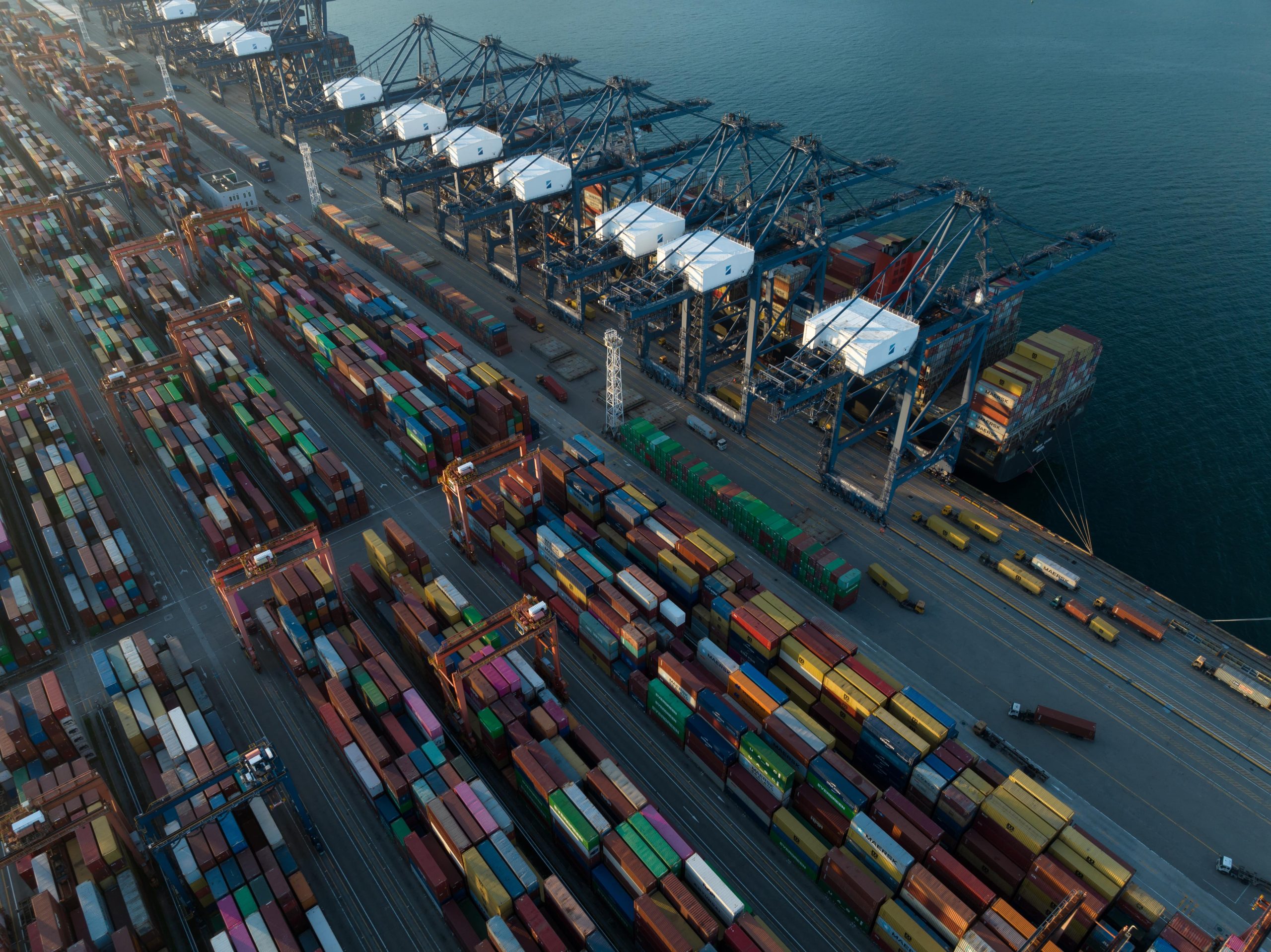
Market consensus often erroneously assumes that a return to the Red Sea will alleviate global inflationary pressures. The reality is counter-intuitive. Maritime analysts at Reuters have flagged the ‘Vessel Bunching’ phenomenon as the primary threat for early 2026. Because ships are currently staggered across the 14,000-mile Cape route, a sudden shift back to the 8,500-mile Suez route will compress schedules. Vessels that were supposed to arrive ten days apart will converge on Rotterdam and Antwerp simultaneously. This ‘bullwhip’ effect in port arrivals will likely spike wait times from the current 48 hours to upwards of 12 days, mirroring the pandemic-era gridlock.
The Houthi Risk Premium as a Permanent Cost
Institutional investors are no longer pricing the Red Sea conflict as a temporary disruption. The ‘Red Sea Surcharge’ has morphed into a structural line item. Current data from Lloyd’s List suggests that even if kinetic activity in the Gulf of Aden ceased tonight, the ‘security-cleared’ status for Tier-1 insurers would take six to nine months to recalibrate. This lag keeps the cost of capital high for smaller carriers who lack the balance sheets to self-insure. For the consumer, this means the deflationary tailwinds expected from lower fuel consumption are being cannibalized by insurance overheads.
Infrastructure Limits at the European Shore
Northern Range ports are not prepared for a 30 percent surge in weekly TEU (Twenty-foot Equivalent Unit) throughput. The inland infrastructure—rail, barge, and trucking—is currently optimized for the slower, predictable cadence of the Cape route. A return to the Red Sea would instantly invalidate these schedules. We are seeing a 12 percent year-over-year increase in warehouse vacancy in the hinterlands, but this is a false signal; it reflects a lack of goods in the pipeline, not an excess of capacity. When the pipeline shortens via Suez, the sudden ‘flush’ of inventory will hit a brick wall of labor shortages and rail bottlenecks.
The critical metric to watch over the next 60 days is the Shanghai Containerized Freight Index (SCFI) futures for February 2026. If these futures hold their current 15 percent premium despite talk of a de-escalation, it signals that the market has already priced in the ‘Congestion Trap’ of a Suez return. The next milestone occurs on January 15, 2026, when the first major carrier is expected to announce its ‘Peace-Time Transition’ schedule, providing the first definitive look at the volume of tonnage slated to re-enter the Red Sea corridor.