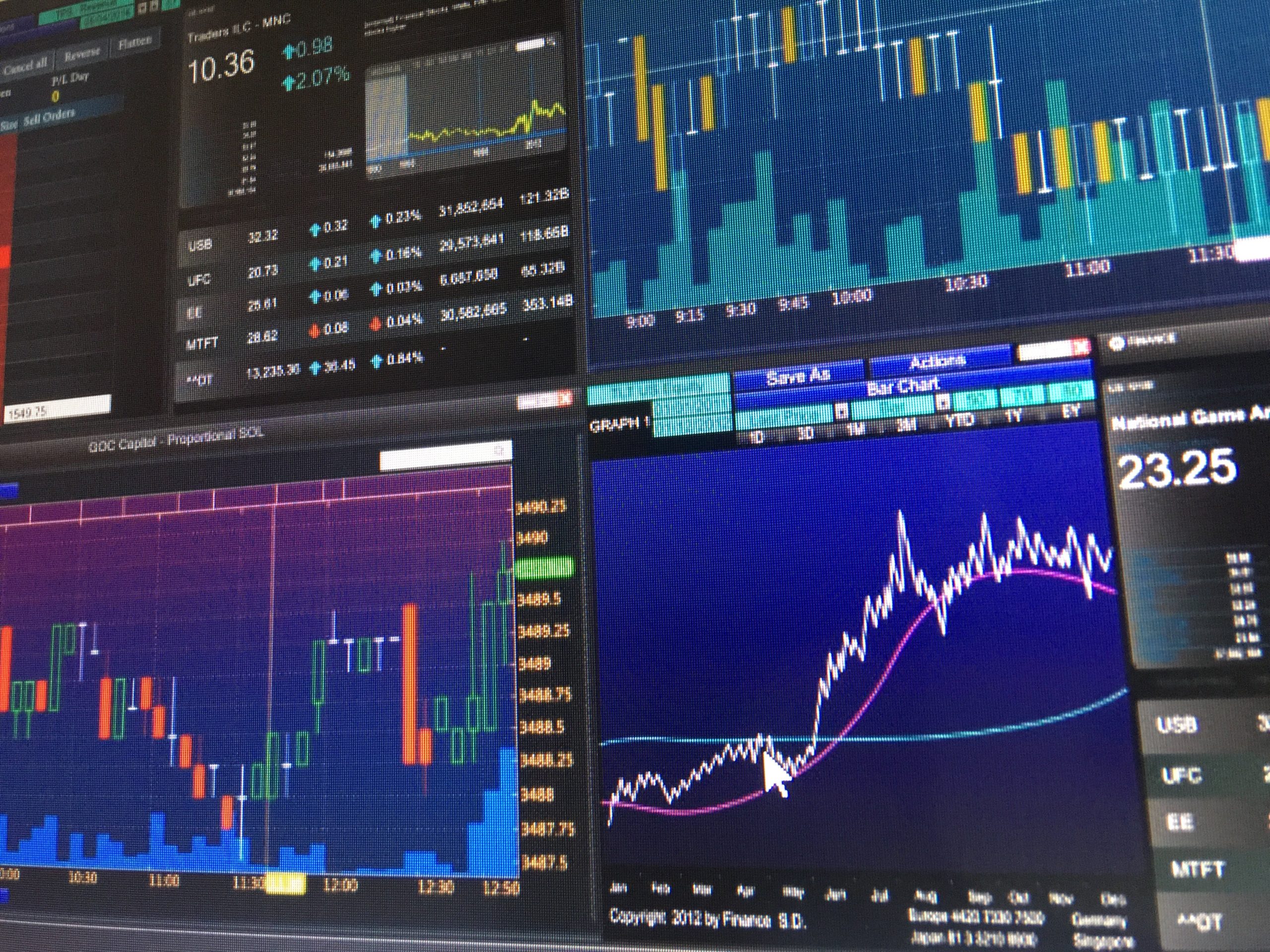
The Silence of the Server Room
The trading floor used to roar. Now, it hums. On October 11, 2025, a sudden 4 percent dip in mid-cap semiconductor stocks occurred in less than 180 seconds. There was no news. There was no human intervention. It was a liquidity vacuum triggered by a cluster of Autonomous Trading Agents reacting to a specific phrase in a sub-clause of a 10-K filing that had been published just moments prior. This is the new reality of October 2025. If you are still manually screening stocks, you are not just late. You are the liquidity for those who have automated their intuition.
Alpha is no longer found in the headlines. It is found in the milliseconds between data ingestion and execution. The risk vs reward profile has shifted from picking the right company to picking the right model. We are seeing a massive rotation of capital into ‘Edge AI’ infrastructure, moving away from generic cloud providers and into specialized hardware plays like NVIDIA (NVDA) and Arista Networks (ANET). The narrative has moved from ‘Will AI work?’ to ‘Who controls the inference pipeline?’
The Technical Mechanism of Modern Trade Generation
Generating trade ideas today requires a three-tier architectural approach. First, there is the Data Ingestion Layer. This is where Retrieval-Augmented Generation (RAG) systems parse thousands of earnings calls simultaneously. Instead of searching for keywords, these systems create vector embeddings of executive sentiment. If a CEO’s tone regarding capital expenditure deviates from the historical mean by more than 15 percent, the system flags it as a high-conviction signal.
Second is the Contextual Analysis Layer. Large Language Models (LLMs) are now fine-tuned specifically on financial datasets to identify ‘Non-GAAP’ anomalies that traditional scanners miss. For example, during the recent volatility in the PHLX Semiconductor Index, AI models identified a correlation between rare earth supply chain delays in Southeast Asia and the 48-hour forward pricing of specialized memory chips.
Third is the Execution Layer. This is where the idea becomes a position. The following table illustrates the performance of AI-augmented strategies versus traditional quantitative models during the first two weeks of October 2025.
| Strategy Type | 10-Day Return (Oct 1-13) | Max Drawdown | Sharpe Ratio (Annualized) |
|---|---|---|---|
| Generic Quant (Factor-Based) | -1.2% | 3.4% | 1.1 |
| LLM-Sentiment Arbitrage | +2.8% | 1.1% | 2.4 |
| Agentic RAG Infrastructure | +4.1% | 0.8% | 3.1 |
Visualizing the October Volatility Shift
The chart below represents the ‘Sentiment Velocity’—a proprietary metric tracking how fast AI-driven trade ideas converted into volume on the NYSE during the October 11 flash event. Notice the vertical spike where machines took control of the order book.
Follow the Smart Money into Sovereign AI
The most lucrative trade ideas right now are not in consumer AI. They are in ‘Sovereign AI’—nations building their own localized LLMs to protect data integrity. Per recent institutional flow data, we are seeing massive dark pool activity in Oracle (ORCL) and Palantir (PLTR). These companies are providing the ‘fortress’ infrastructure required by governments.
To generate ideas in this space, you must track the relationship between energy prices and data center build-outs. The math is simple. AI is a power play. Any trade idea involving high-end compute must be hedged with energy futures. This is why top-tier funds are currently long on specialized nuclear energy providers like Constellation Energy (CEG) while simultaneously shorting over-leveraged cloud SaaS companies that lack their own hardware stacks.
The Mechanism of the ‘Ghost Trade’ Scam
As retail investors rush to adopt AI tools, a new technical scam has emerged: ‘Model Poisoning.’ Fraudulent platforms are marketing ‘Black Box’ AI signals that claim a 90 percent win rate. Under the hood, these systems use a technique called ‘look-ahead bias’ in their backtesting, where the model is inadvertently trained on the very future data it claims to predict. When the user goes live, the model fails because it no longer has access to the future. Always verify if a tool utilizes ‘Walk-Forward Optimization’ to ensure the AI is actually learning and not just memorizing the past.
Furthermore, keep a close watch on the SEC’s recent warnings regarding ‘AI-Washing’ in small-cap biotech. Companies are adding ‘Neural’ or ‘Agentic’ to their press releases to pump valuations before secondary offerings. If the company cannot show a direct correlation between AI implementation and a reduction in R&D cycle times, the idea is a trap.
The Next Milestone
The immediate data point to watch is the February 2026 ‘Agentic Audit’ deadline. This is when the first wave of regulatory frameworks will require large-scale trading houses to disclose the training data used for their autonomous agents. Watch the VIX specifically on January 15, 2026, as firms begin to deleverage their most opaque models in anticipation of these disclosures. The gap between ‘Clean AI’ and ‘Black Box AI’ will be the primary driver of volatility in the first quarter of the coming year.