The Vertical Ascent of Hard Money
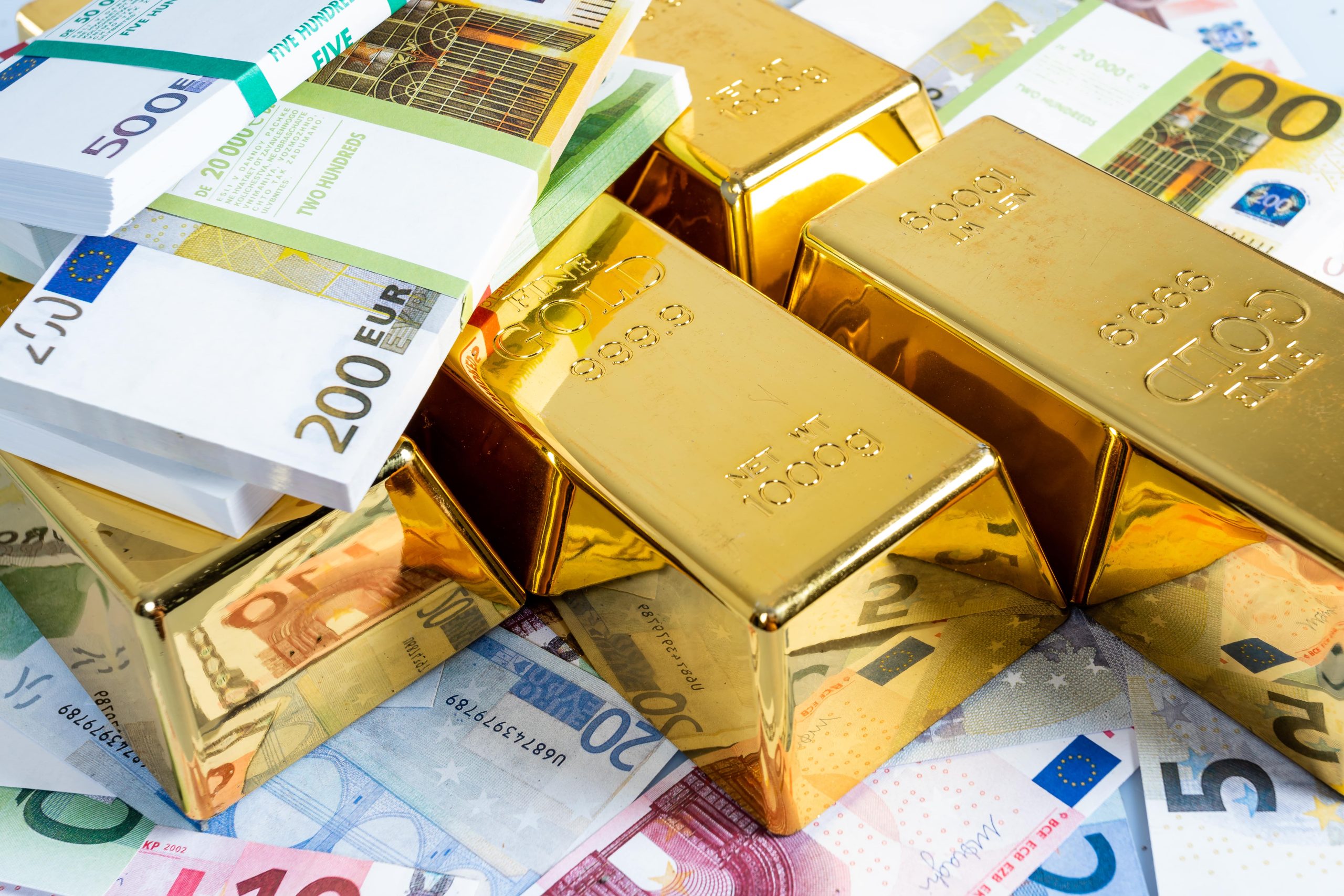
Yesterday, December 22, spot gold (XAU/USD) touched an intraday high of $4,426.50 per ounce. This is not a standard cyclical rally. It is a fundamental re-rating of the global monetary system. Since the start of 2025, gold has surged over 63 percent, marking its most aggressive annual performance since 1979. While the retail narrative focuses on a Federal Reserve pivot, the institutional data suggests a much deeper institutional rotation out of sovereign debt and into unencumbered assets. The sheer velocity of the move has left traditional valuation models like the real-yield correlation in total disarray.
According to data from Reuters, the current price action is being fueled by a historic breakdown in the inverse correlation between gold and the U.S. dollar. Typically, a rising dollar suppresses gold. In late 2025, we are seeing gold hit record highs even as the U.S. Dollar Index (DXY) holds a relatively firm floor near 98.25. This divergence indicates that the market is no longer pricing gold as a mere currency hedge, but as a primary reserve asset to rival the U.S. Treasury.
The Federal Reserve Surrender and the Miran Factor
The December 10, 2025, FOMC meeting was the final catalyst for this year-end breakout. The Committee lowered the benchmark interest rate by 25 basis points to a range of 3.50% to 3.75%. However, the real story was hidden in the Summary of Economic Projections. The updated dot plot reveals a median terminal rate of 3.25% for 2026, but the internal dispersion is wider than any period in the post-Volcker era. Newly appointed Fed Governor Stephen Miran has emerged as the leading dove, reportedly projecting up to 150 basis points of additional cuts in 2026 to combat the economic drag from the recent government shutdown.
Per the Federal Reserve’s latest release, policymakers are struggling to balance a cooling labor market with a persistent PCE inflation rate of 2.9 percent. The market sees this as a surrender. By cutting rates while inflation remains nearly a full percentage point above target, the Fed has signaled that it will prioritize debt serviceability over price stability. For investors, this is the definition of fiscal dominance. The $36 trillion national debt now requires lower rates regardless of what the CPI data dictates.
Geopolitical Risk as a Monetary Asset
Geopolitics are no longer just noise (they are now a priced-in fundamental variable). In the last 48 hours, the U.S. naval blockade of tankers linked to Venezuelan oil shipments and the escalation of strikes in Syria have compressed the risk premium in energy markets. Gold and silver are trading less like commodities and more like alternative monetary assets in this environment. As U.S. authorities pursue more aggressive enforcement of trade sanctions, emerging market central banks are accelerating their de-dollarization efforts to insulate their reserves from seizure risk.
Central bank gold purchases reached an estimated 1,000 tonnes in 2025, led by persistent accumulation from Poland, Brazil, and China. Institutional analysts at Goldman Sachs recently raised their December 2026 price target to $4,900 per ounce, citing the structural shift in how reserve managers perceive geopolitical tail risks. The freezing of Russia’s reserves in 2022 was the catalyst, but the aggressive fiscal policies of 2025 have confirmed the trend. Gold is the only asset that provides liquidity without counterparty or jurisdictional risk.
2025 Macro Indicators Comparison
| Metric | Q1 2025 (Actual) | Q4 2025 (Current) | Change (%) |
|---|---|---|---|
| Spot Gold (XAU/USD) | $2,630 | $4,426 | +68.2% |
| Fed Funds Rate | 4.75% | 3.50% | -26.3% |
| US Dollar Index (DXY) | 104.50 | 98.25 | -5.9% |
| 10Y Real Yield | 2.10% | 1.45% | -30.9% |
The Sovereign Debt Trap
The danger for 2026 is not a recession in the traditional sense, but a late-cycle trap where growth remains nominally positive while the purchasing power of the currency collapses. The U.S. government shutdown in late 2025 caused a massive data backlog, leaving the Fed flying blind on employment figures. This uncertainty has pushed investors toward the certainty of physical bullion. JPMorgan’s commodities team, led by Natasha Kaneva, now forecasts that gold will average $5,055 per ounce by the final quarter of 2026, suggesting that the current rally is only in its middle innings.
The technical mechanism of this rally is driven by a supply-demand mismatch. While jewelry demand has stabilized, the investment demand for gold-backed ETFs has surged as retail investors realize that the 10.7 percent average stock market return is being eroded by the 25 percent annual rise in the cost of living. When the cost of insurance (gold) rises faster than the value of the home (equities), the market is signaling a systemic failure in the underlying currency.
The next critical data point for the market arrives on January 15, 2026, with the release of the December CPI report. This will be the first clean reading of inflation post-shutdown. If that number prints above 3.1 percent, the Fed will face an impossible choice: hike into a slowing economy or watch gold break the $4,500 barrier before the first FOMC meeting of the new year.