The Great Pivot of December 2025
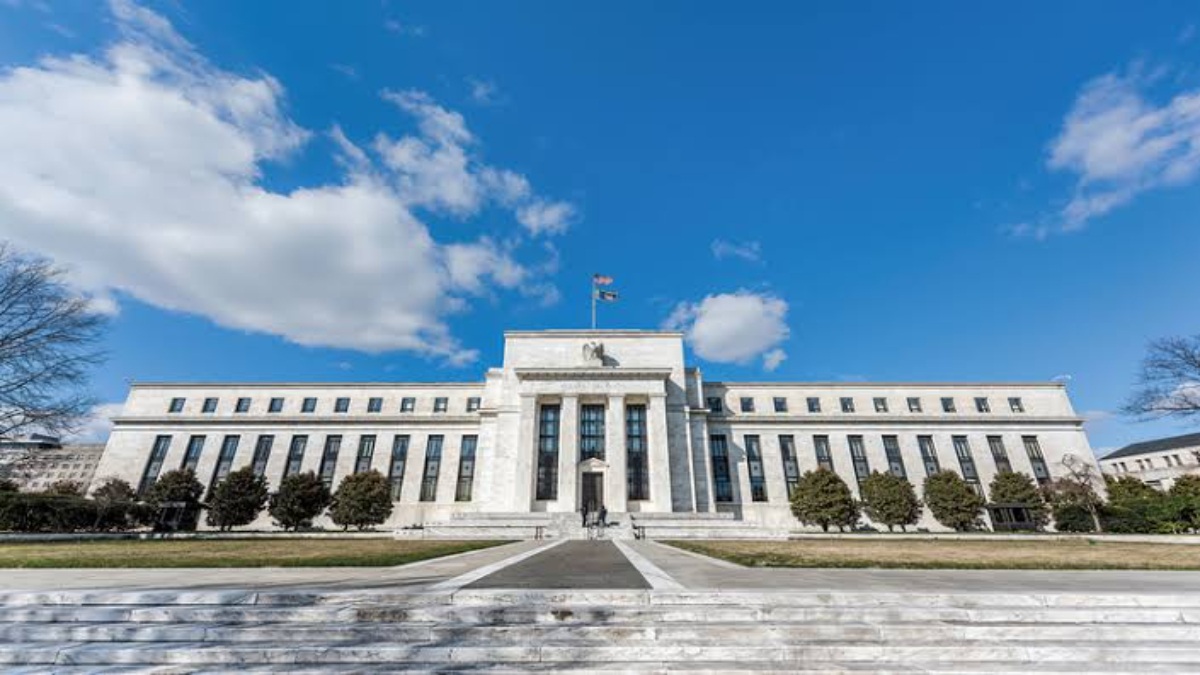
Jay Powell has finally blinked. This morning at the Eccles Building, the Federal Reserve delivered a 25 basis point cut that feels less like a victory lap over inflation and more like a desperate defensive maneuver against a fracturing labor market. My conversations with desk traders in New York suggests the market was already front-running this move, but the nuance lies in the language. The FOMC has transitioned from a stance of ‘higher for longer’ to one of ‘protection at all costs.’ By lowering the benchmark rate to a range of 4.25 percent to 4.50 percent, the Fed is tacitly admitting that the real interest rate had become too restrictive as price growth cooled faster than their models predicted.
The policy statement released at 2:00 PM ET today contains a subtle but tectonic shift in phrasing. Gone is the obsessive focus on ‘inflation risks.’ It has been replaced by a mandate to ‘support maximum employment.’ This is the third consecutive cut in as many meetings, a sequence we have not seen since the pre-pandemic era. The central bank is no longer fighting the last war against the 2022 price spikes. They are now staring down a manufacturing sector that has contracted for four straight months and a consumer whose credit card delinquency rates just hit a seven-year high, per the Reuters analysis of the December payroll data. The math is simple: if they did not cut today, they risked a hard landing in the first half of the coming year.
The Mechanical Reality of the 4.25 Percent Floor
Institutional capital is not reacting to the cut itself, which was 92 percent priced in by the OIS markets. Instead, the volatility stems from the dot plot. My analysis of the individual governor projections shows a widening schism between the hawks, who fear a rebound in service-sector inflation, and the doves, who see the 4.4 percent unemployment rate as a flashing red light. We are seeing a massive steepening of the yield curve as the 10-year Treasury yield climbed to 4.18 percent shortly after the announcement. This ‘bear steepener’ suggests that while the Fed is cutting the front end, the market is demanding a higher term premium for the long-term fiscal uncertainty that looms.
Dissecting the FOMC Economic Projections
To understand why this cut is different, one must look at the Summary of Economic Projections. The Fed has revised its 2025 GDP growth forecast downward from 2.1 percent to 1.8 percent. This is a significant admission that the ‘resilient consumer’ narrative is fraying at the edges. Small-cap stocks, tracked by the Russell 2000, surged 1.4 percent in the hour following the news. These companies are the most sensitive to the cost of floating-rate debt. For a mid-sized manufacturer in the Midwest, this 25 basis point reduction represents the difference between expanding a product line or implementing a hiring freeze. However, for the mega-cap tech sector, the move is largely academic, as their balance sheets are already fortress-like and insulated from the immediate cost of capital.
| Economic Indicator | Sept 2025 Projection | Dec 2025 Revised | Market Consensus |
|---|---|---|---|
| GDP Growth | 2.1% | 1.8% | 1.6% |
| Unemployment Rate | 4.1% | 4.4% | 4.6% |
| Core PCE Inflation | 2.4% | 2.2% | 2.3% |
| Fed Funds Rate (Year End) | 4.75% | 4.25% | 4.25% |
The Hidden Threat of the Weakening Dollar
The global implications are where the real danger resides. As the Fed cuts while the European Central Bank remains on hold due to stubborn wage growth in Germany, the U.S. Dollar Index (DXY) has slipped below the 100 level for the first time in eighteen months. This is a double-edged sword. While it provides relief to emerging markets burdened with dollar-denominated debt, it risks importing inflation back into the United States through higher costs for imported goods. We are seeing early signs of this in the Bloomberg currency dashboards, where the Japanese Yen has strengthened significantly, threatening to unwind the remaining vestiges of the global carry trade.
I am tracking a specific divergence in the credit markets. While high-yield spreads remain compressed, the demand for ‘protective’ assets like gold and short-duration Treasury bills has spiked. This suggests that while the equity market is cheering the liquidity injection, the smart money is hedging against a policy error. The Fed is trying to thread a needle in a windstorm. If they cut too slowly, they trigger a recession. If they cut too fast, they reignite the 2021-style price surges that they spent three years trying to extinguish.
Watching the January Data Prints
The next critical milestone is the January 12 release of the Consumer Price Index data. This will be the first clean look at whether the holiday spending season has kept the fire of inflation burning or if the cooling labor market has finally dampened demand. Investors should pay close attention to the ‘Supercore’ inflation metric, which strips out housing and energy. If that number remains above 3 percent, the Fed will be forced to pause in the first quarter, potentially sending a shockwave through an equity market that has already priced in a series of cuts through the middle of next year. The focus now shifts from the quantity of cuts to the duration of this easing cycle. We are looking for a stabilization of the unemployment rate at 4.5 percent as the ultimate signal that the Fed has successfully navigated this pivot.