The Great Reallocation of Maritime Capital
Capital is restless. As the COP30 summit in Belém approaches this month, the institutional lens has shifted from terrestrial decarbonization to the unpriced externalities of the high seas. For decades, the ocean was viewed through the reductive prism of extraction: tonnage of fish caught or barrels of Brent crude pumped. Today, the narrative has pivoted. We are witnessing a structural recalibration of maritime assets, where the value lies not in depletion, but in the sophisticated management of the blue biosphere. The $9.4 trillion liquidity pool often cited by the IMF is no longer a theoretical projection. It is a maturing market. Institutional investors are moving beyond experimental venture capital into utility-scale blue infrastructure.
This shift is driven by the convergence of sovereign debt crises in coastal nations and the desperate search for high-integrity carbon credits. As of November 4, 2025, the spreads on blue bonds have tightened significantly compared to traditional green bonds. According to data from Reuters, the cumulative issuance of blue-labeled debt instruments has reached a record $15.2 billion this year, a 74 percent increase over the 2024 fiscal period. This is not mere ESG signaling. It is a play for long-term resource security in an era of land-based scarcity.
The Macroeconomic Impact of Offshore Wind Volatility
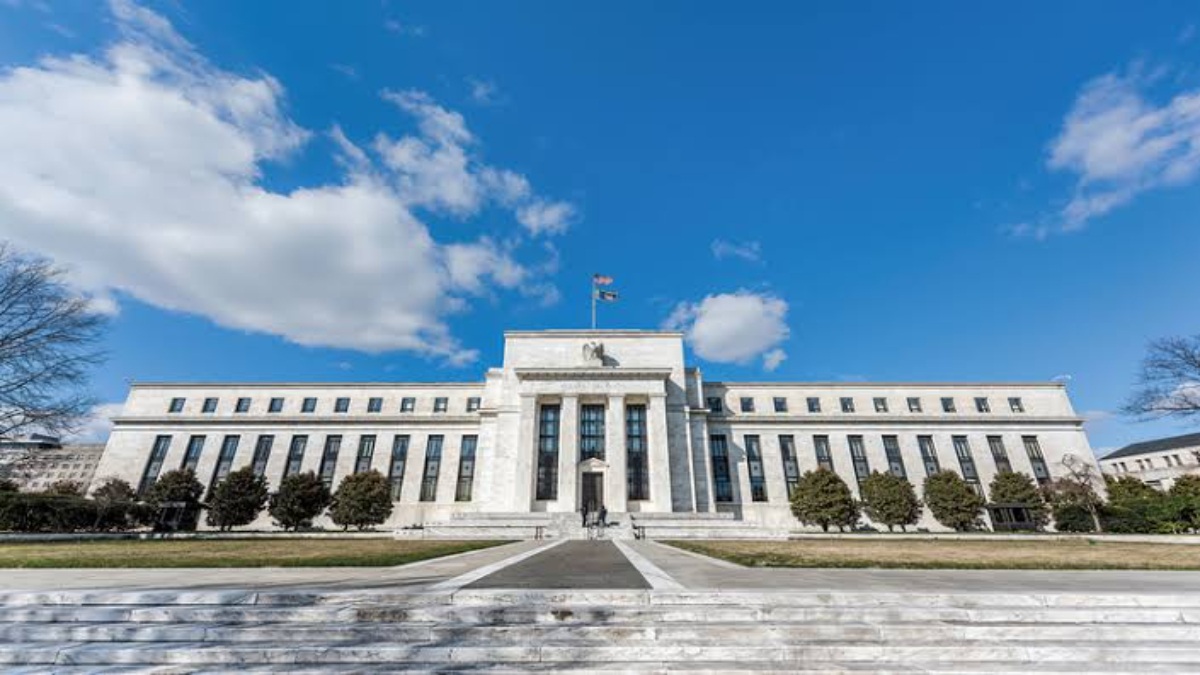
The offshore wind sector serves as a bellwether for the broader blue economy. Throughout 2024 and early 2025, the industry grappled with high-interest rates that crippled capital-intensive projects. However, the recent decision by the Federal Reserve to maintain a hawkish hold has forced a consolidation in the market. Only the most efficient players remain. We are seeing a move toward floating offshore wind (FOW) platforms, which bypass the environmental and depth constraints of traditional fixed-bottom turbines. The cost of capital for these projects remains high, but the internal rate of return (IRR) is beginning to stabilize as supply chains in East Asia and the North Sea synchronize.
The Technical Mechanism of Blue Carbon Credits
The most profound Alpha in the current market is found in the ocean’s capacity for carbon sequestration. Mangroves, seagrasses, and salt marshes sequester carbon at rates up to five times higher than tropical forests. The technical mechanism involves long-term sediment burial, which prevents carbon from re-entering the atmosphere for centuries. Investors are now utilizing satellite-based hyper-spectral imaging to verify these offsets in real-time. This eliminates the ‘greenwashing’ risk that plagued terrestrial forestry projects in 2023. Per the Bloomberg terminal data from late October, the spot price for high-integrity blue carbon offsets has surged to $42 per ton, a 30 percent premium over standard offsets.
| Sector | Annual Growth (YOY) | Estimated Market Cap (Nov 2025) | Primary Risk Factor |
|---|---|---|---|
| Marine Biotechnology | 14.2% | $840 Billion | Intellectual Property Rights |
| Deep-Sea Mining (Exploration) | 6.8% | $1.2 Trillion | Regulatory Moratoriums |
| Sustainable Aquaculture | 11.5% | $290 Billion | Pathogen Outbreaks |
| Oceanic Carbon Capture | 28.4% | $115 Billion | Verification Latency |
Deep-Sea Minerals and the Geopolitical Standoff
The scramble for polymetallic nodules on the ocean floor has reached a critical juncture. These nodules, rich in cobalt, nickel, and manganese, are essential for the next generation of solid-state batteries. However, the International Seabed Authority (ISA) remains deadlocked. While some nations push for immediate exploitation licenses, others advocate for a ‘precautionary pause.’ This regulatory uncertainty has created a bifurcated market. Junior miners are seeing their valuations slashed, while diversified conglomerates with deep-sea robotics divisions are hedging their bets. The technical challenge is not just extraction, but the mitigation of sediment plumes that threaten abyssal biodiversity. Recent trials in the Clarion-Clipperton Zone suggest that closed-loop extraction systems can reduce plume dispersion by 80 percent, but the CAPEX requirements remain prohibitive for all but the largest sovereign-backed firms.
Strategic Diversification in Marine Biotechnology
Beyond minerals and energy, the molecular diversity of the ocean is fueling a revolution in pharmaceuticals and materials science. Enzymes derived from extremophiles in hydrothermal vents are being used to develop more resilient synthetic polymers. This sector is less sensitive to interest rate fluctuations and more dependent on R&D cycles. Institutional portfolios are increasingly allocating 2 to 3 percent to specialized marine biotech funds, treating them as a hedge against the diminishing returns of traditional land-based pharma. The World Bank recently highlighted that marine-derived compounds currently account for 12 percent of the new oncology pipeline, a figure that was negligible a decade ago.
The immediate focus for the market is the upcoming release of the ISA’s consolidated mining code draft. This document, expected in late January, will determine the viability of deep-sea mineral extraction for the remainder of the decade. Analysts should monitor the 10-year yield of the Seychelles Blue Bond as a proxy for investor confidence in maritime sovereign debt. The next specific milestone is the February 12, 2026, deadline for the ratification of the BBNJ Treaty by the remaining G20 members, which will legally define the management of 60 percent of the world’s oceans.