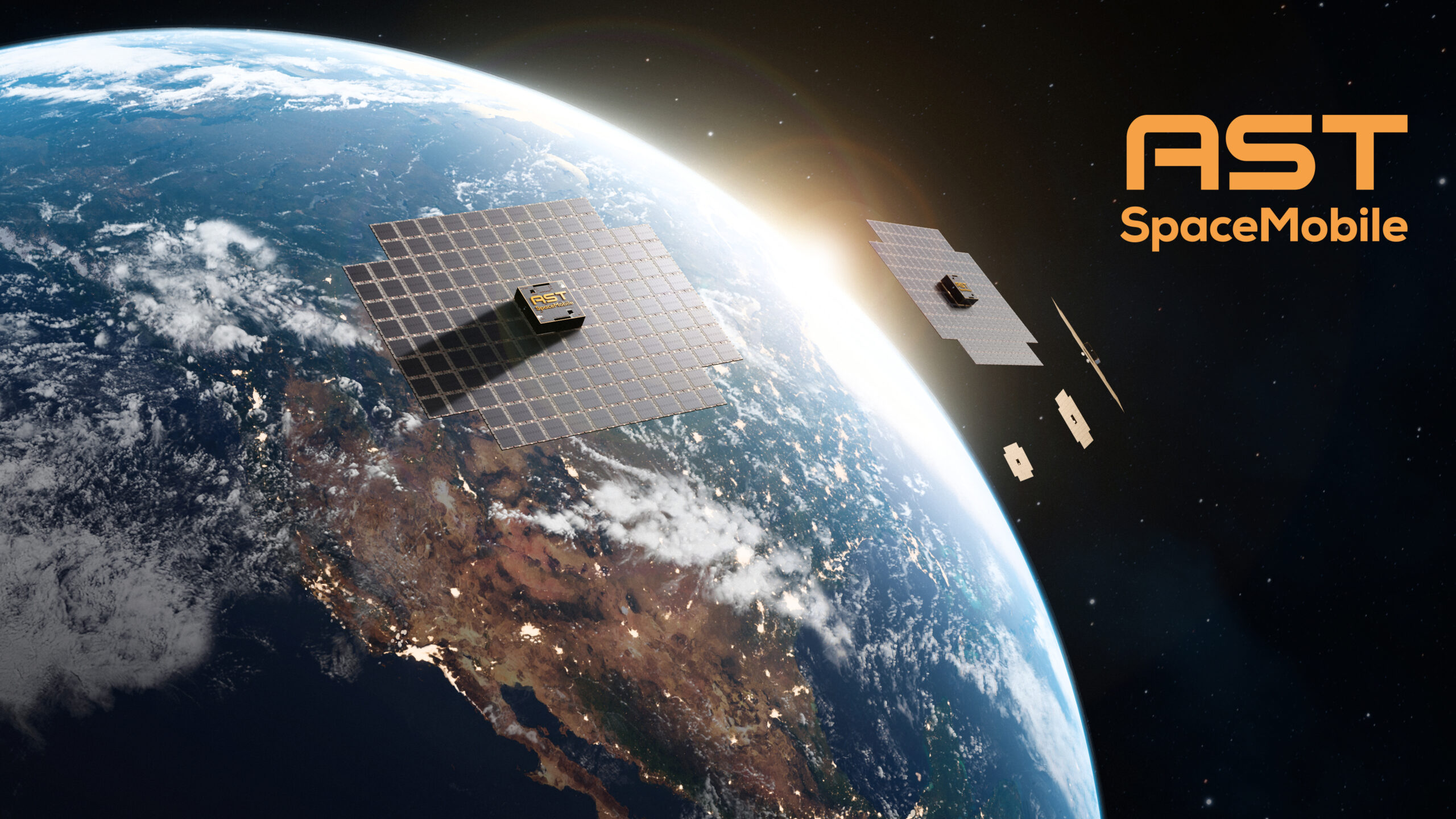
The market closed on December 26, 2025, with AST SpaceMobile ($ASTS) trading at $19.42, a 4.2 percent retracement from its mid-month peak. This price action reflects investor anxiety surrounding the projected January 2026 launch window for the remaining Block 2 BlueBird satellites. While the company has moved beyond the purely speculative ‘proof-of-concept’ phase that defined its 2023-2024 narrative, the financial burden of maintaining a low-earth orbit (LEO) constellation is now surfacing in the quarterly burn rates. The narrative has shifted from ‘Can they do it?’ to ‘Can they afford to stay there?’
The Capital Intensive Nature of LEO Constellations
AST SpaceMobile ended the third quarter of 2025 with approximately $380 million in cash and cash equivalents. Based on current manufacturing cycles for the 2,400 square foot BlueBird arrays, the company is burning roughly $45 million per month. This creates a hard ceiling for operations without further dilutive funding or a massive acceleration in commercial prepayments from partners like AT&T and Vodafone. Per the latest SEC filings, the debt-to-equity ratio has climbed as the company secures equipment-backed loans to finish the first phase of the constellation.
The technical hurdle is no longer the 5G signal from space, which was verified in early 2024. The hurdle is throughput. Each Block 2 satellite offers a tenfold increase in capacity over the original BlueWalker 3, but the network requires at least 45 satellites to provide continuous, non-intermittent service in the Northern Hemisphere. Currently, with only 17 satellites in active orbit as of December 28, 2025, the ‘service gap’ remains the primary friction point for mass-market adoption.
Visualizing the Cash Runway and Satellite Deployment
Competitive Pressure and Regulatory Headwinds
SpaceX remains the primary existential threat. On December 27, 2025, Reuters reported that Starlink successfully activated its ‘Direct to Cell’ service for 100 percent of its T-Mobile beta users. While AST SpaceMobile holds the advantage in patent-protected architecture for utilizing existing terrestrial cellular spectrum without modifications to the handset, SpaceX is winning the war of attrition. Starlink’s ability to launch satellites weekly using its own Falcon 9 fleet provides a vertical integration that AST SpaceMobile, which relies on external launch providers like Blue Origin and SpaceX itself, cannot match.
Furthermore, the FCC is currently reviewing a petition filed on December 24, 2025, regarding potential interference in the 700 MHz and 800 MHz bands. This regulatory friction could delay the activation of ASTS services in key metropolitan corridors. The company’s legal team is arguing that their beam-forming technology prevents ‘spillover’ into adjacent cells, but the burden of proof has shifted to ASTS as the incumbent carriers lobby for stricter power flux density limits.
The Institutional Shift
Institutional ownership data as of the December 15th filings shows a bifurcation in sentiment. Long-term holders like Vanguard have maintained their positions, but several mid-tier hedge funds have rotated into more stable telecommunications infrastructure. The ‘Alpha’ in ASTS is now tied to the operational uptime of the Block 2 units. If the January launch proceeds without technical anomalies, the path to EBITDA positive status by mid-2027 becomes mathematically viable. If a launch failure occurs, the remaining $290 million in projected year-end cash will not be sufficient to reach the next deployment window.
Quarterly Performance Metrics
- Total Revenue (Q3 2025): $2.1M (Pilot programs and government testing).
- Operating Expenses: $142.4M (Up 12% YoY).
- Satellite Unit Cost: $18M per BlueBird Block 2 unit.
- Backlog: 40+ Memorandums of Understanding with global MNOs.
The delta between the current share price and the 12-month analyst consensus of $31.00 is wide, reflecting a massive risk premium. Investors are pricing in a 30 percent probability of a capital raise in the first half of 2026. This dilution is the primary ‘bear case’ that keeps the stock from breaking its previous all-time high of $25.37. The technical chart shows strong support at the $17.50 level, which correlates with the net asset value of the current satellite constellation and ground infrastructure.
The next 72 hours are critical as the pre-launch checklists for the Cape Canaveral mission are finalized. Monitoring the telemetry data from the existing 17 units will provide the only objective signal for the network’s health. The market is no longer trading on promises; it is trading on the packets of data moving from a standard smartphone to a satellite 400 miles above the Earth. Watch the January 12 launch readiness report for the next volatility catalyst.