The $225 Billion Pivot from Dirt to Value
The honeymoon phase of green energy rhetoric is officially over. As of December 08, 2025, the Australian mining sector faces a brutal choice: evolve into a value-added green iron exporter or watch its primary export market vanish under the weight of global carbon tariffs. The era of simply digging up 62% Fe hematite and shipping it to Chinese blast furnaces is hitting a structural wall. With the European Union’s Carbon Border Adjustment Mechanism (CBAM) entering its definitive implementation phase in less than 30 days, the Australian government’s 2025 Green Iron Strategy is no longer a climate aspiration; it is a defensive economic maneuver.
The Technical Mechanism of Margin Protection
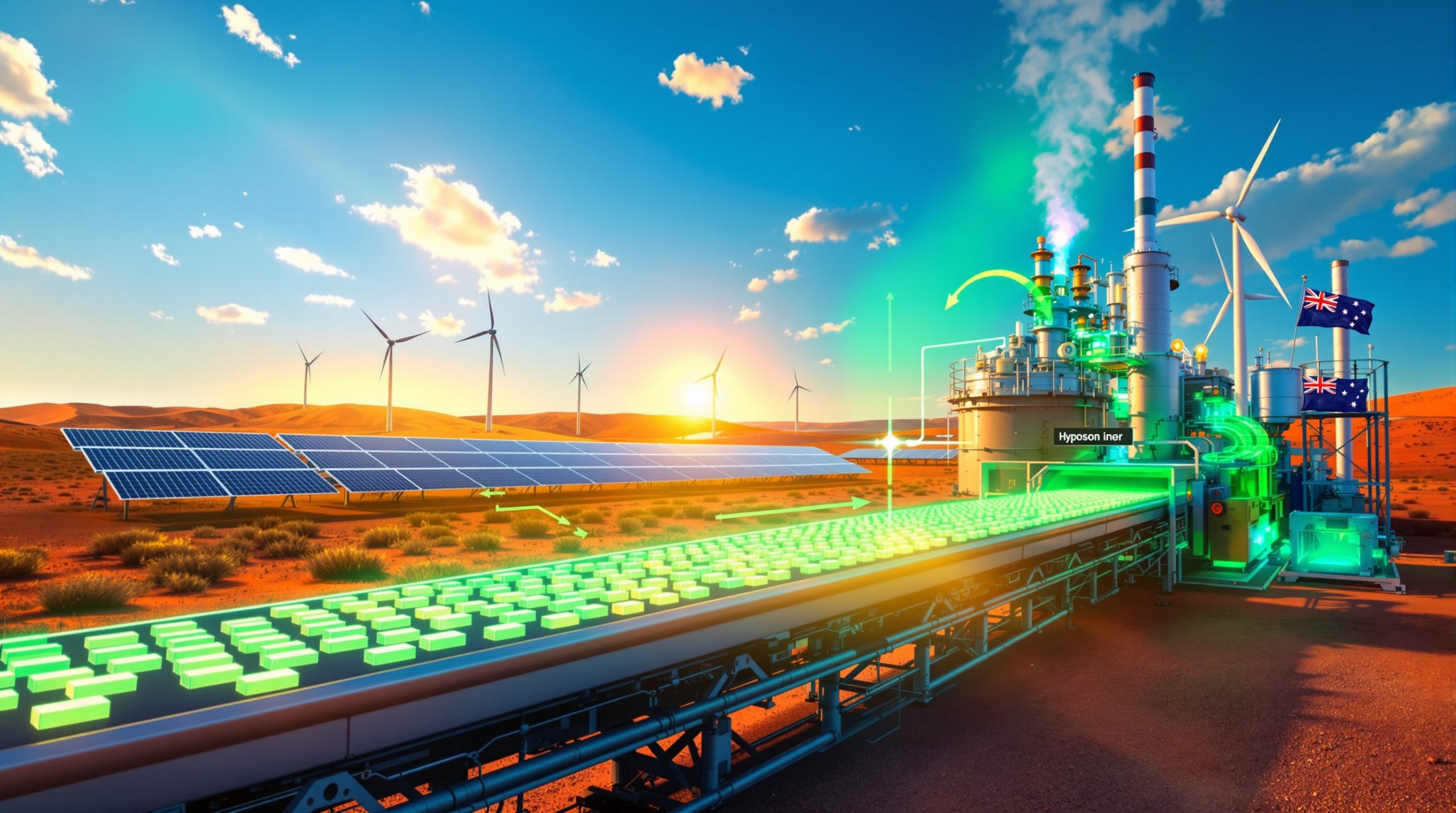
Traditional ironmaking is a carbon bomb. Blast furnaces rely on coking coal to strip oxygen from iron ore, releasing roughly two tonnes of CO2 for every tonne of steel produced. In contrast, the Green Iron transition focuses on Hydrogen-based Direct Reduced Iron (H-DRI) and Electric Smelting Furnaces (ESF). By replacing metallurgical coal with green hydrogen, producers can reduce the carbon intensity by over 95%. This is not just about ethics; it is about the price of admission. According to data from Reuters, the premium for low-carbon steel in the Asian market has surged to $145 per tonne this quarter, reflecting a desperate scramble by automakers to de-risk their supply chains.
The technical challenge lies in the ore itself. Most of Australia’s Pilbara ore is hematite, which historically required high-grade magnetite for DRI processes. However, the 2025 breakthroughs in Electric Smelting Furnace technology, championed by the BHP and Rio Tinto joint venture in Port Hedland, have proven that lower-grade Pilbara fines can be converted into high-purity green iron. This pivot protects the Earnings Per Share (EPS) of Australia’s ‘Big Three’ by ensuring their massive reserves do not become stranded assets in a decarbonizing world.
Fortescue and the Capex Squeeze
Fortescue Metals Group (FMG) remains the aggressive outlier. While BHP and Rio Tinto move with cautious, multi-stage pilots, Andrew Forrest’s outfit has committed billions to its Christmas Creek green iron plant. As of the latest quarterly filing, Fortescue’s capital expenditure on green energy initiatives has begun to compress short-term dividend yields, a point of contention for institutional investors. However, the strategic logic is sound: by 2026, the ‘Green Iron’ premium is expected to decouple from the standard 62% Fe index. If Fortescue can maintain its $2.00 per kg hydrogen production target, facilitated by the Australian government’s $2 per kg production tax credit, it will undercut traditional producers on a carbon-adjusted basis.
The Geopolitical Leverage in Asia
China and India are currently trapped in a high-carbon infrastructure cycle. Australia’s pivot to green iron provides these nations with an ‘out.’ Instead of importing iron ore and coal to produce steel domestically, they can import pre-reduced green iron bricks (HBI). This effectively ‘outsources’ the carbon-intensive stage of steelmaking back to Australia, where solar and wind resources are abundant. This shift would fundamentally alter the Australia-China trade dynamic, moving from a raw material provider to a semi-finished industrial powerhouse. According to the Bloomberg commodity desk, early-stage MOUs signed last week between Australian producers and Chinese state-owned steel mills suggest that up to 15% of current iron ore exports could be replaced by green iron products by 2030.
Institutional Risk and Infrastructure Hurdles
The primary risk is no longer technological; it is infrastructure. To achieve the 4% global emission abatement target, Australia requires a five-fold increase in its renewable energy grid capacity. The current bottleneck is the transmission build-out. Investors should monitor the ‘Future Made in Australia’ bond issuances slated for early next year, as these will fund the necessary common-user infrastructure in the Pilbara. Without these ‘energy highways,’ the green iron plants will remain expensive islanded assets, unable to achieve the scale required to compete with subsidized Chinese electric arc furnaces.
Comparative Landscape of Major Green Iron Pilots
The following table outlines the current operational status of the primary Australian green iron initiatives as of December 2025.
| Company | Project Name | Technology Type | Target Capacity (2026) | Status |
|---|---|---|---|---|
| Fortescue | Christmas Creek | Hydrogen-DRI | 1,500,000 tpa | Operational Pilot |
| Rio Tinto | BioIron | Biomass Reductant | 1,000,000 tpa | Testing Phase |
| BHP / Rio Tinto | Port Hedland ESF | Electric Smelting | 500,000 tpa | Construction |
| BlueScope | Port Kembla | Net Zero Lab | Pilot Scale | R&D Phase |
The Next Milestone
The immediate data point to watch is the January 15, 2026, release of the first mandatory CBAM reporting metrics from the European Commission. This report will reveal the exact ‘carbon penalty’ assigned to traditional Australian ore compared to processed green iron. Any gap wider than $35 per tonne will likely trigger an immediate re-rating of Australian mining equities. For the first time in history, the mining sector’s valuation is tied more to its electrons than its atoms.