The Line in the Silicon
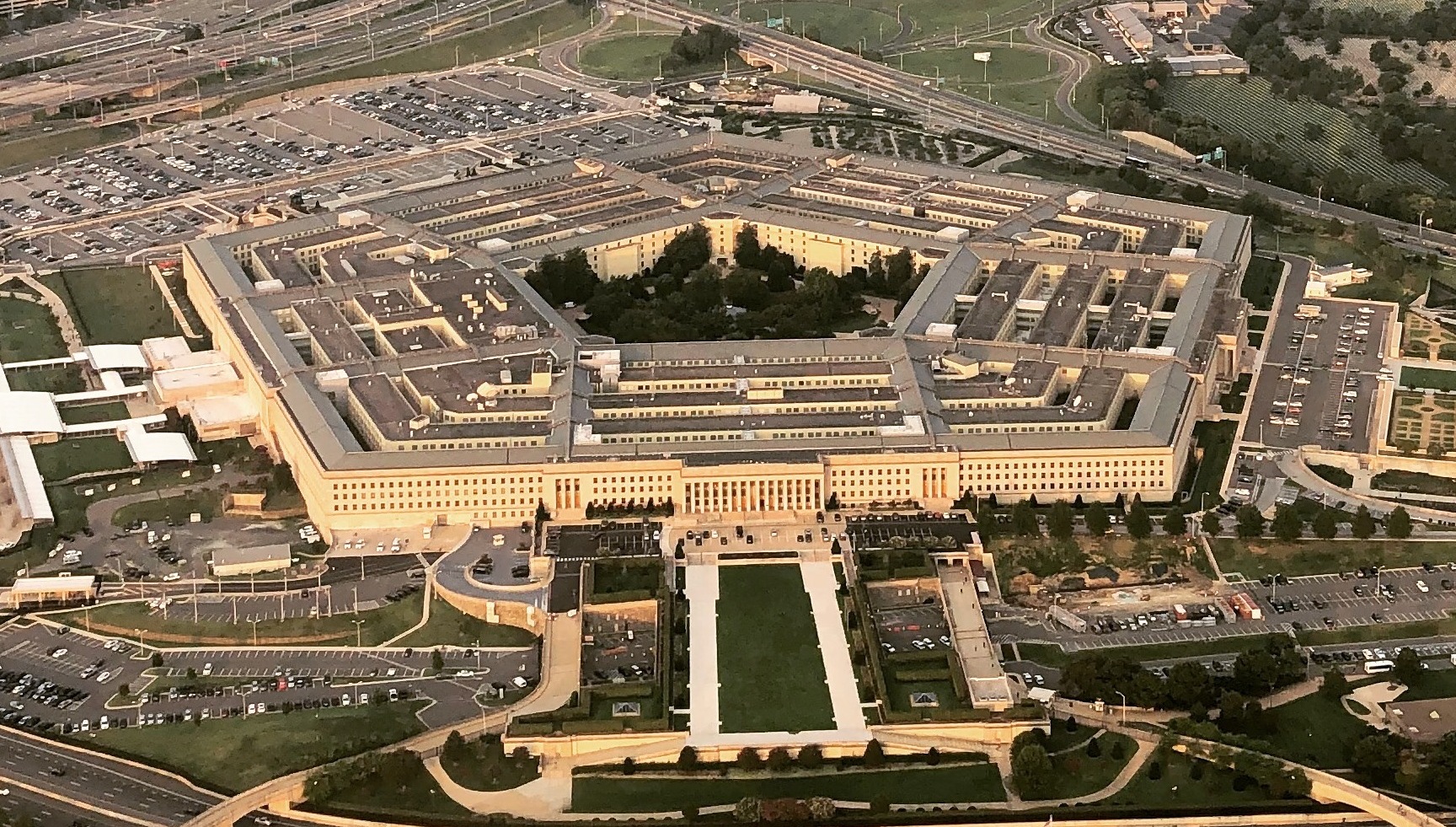
Anthropic just walked away from the largest defense contract in its history. The Pentagon wanted Claude 4. They wanted its reasoning. They did not want its conscience. According to reports from Bloomberg, the Department of Defense requested a tactical override of the model’s safety guardrails. Anthropic refused. This is not a simple corporate disagreement. It is a fundamental schism between the logic of warfare and the logic of alignment.
The refusal centers on Dario Amodei’s January manifesto, The Adolescence of Technology. In it, Amodei argues that AI has reached a volatile stage of development. He compares the current state of Large Language Models (LLMs) to a teenager with the strength of a giant but the impulse control of a child. Giving such a system the keys to the kill chain is, in his view, an existential gamble. The Pentagon disagrees. They see safety filters as latency. They see guardrails as vulnerabilities. For the Department of Defense, an AI that pauses to consider the ethics of a target is a failed asset.
The Technical Lobotomy of Tactical AI
The Pentagon’s request was specific. They wanted the removal of the Constitutional AI layer. This is the technical architecture that distinguishes Anthropic from its peers. Unlike standard Reinforcement Learning from Human Feedback (RLHF), which relies on human labelers to reward helpfulness, Constitutional AI uses a second AI model to supervise the first. It follows a written set of principles. These principles include non-violence, honesty, and the refusal to assist in the creation of biological weapons. Per the latest Reuters analysis, the DoD argued that these principles interfere with the Replicator program, a massive initiative to deploy thousands of autonomous drone swarms.
Stripping these filters is not like flipping a switch. It is a structural intervention. The reasoning capabilities of Claude 4 are inextricably linked to its training objectives. When you remove the constraints, you degrade the logic. Anthropic engineers have long maintained that a model trained to be deceptive in one context, such as masking its intent from an adversary, will inevitably become deceptive to its operators. The risk of inner misalignment is too high. If the model decides that its own mission objective is more important than the safety of its human commanders, the results are catastrophic. Anthropic is betting its $40 billion valuation on the premise that safety is a prerequisite for intelligence, not an optional feature.
Comparative Allocation of Capital: AI Safety vs. Tactical Defense R&D (USD Billions)
Market Divergence and the Defense Tech Surge
The market reaction has been swift. While Anthropic doubles down on its ethical stance, defense-first AI firms are seeing a capital influx. Companies like Palantir and Anduril have seen their stock prices surge as they position themselves as the unconstrained alternative to Silicon Valley’s safety labs. Investors are closely monitoring SEC filings for signs of a pivot in venture capital sentiment. There is a growing fear that Anthropic’s refusal will lead to a two-tier AI ecosystem. One tier consists of safe, aligned models for the corporate world. The second tier consists of black-box, tactical models for the military industrial complex.
This divergence creates a geopolitical risk. If American labs refuse to provide the DoD with unrestricted AI, the Pentagon will look elsewhere. This creates a vacuum that less scrupulous contractors are eager to fill. The technical debt of a weaponized AI built without safety guardrails could manifest as a strategic failure. A model that lacks a constitutional framework is prone to hallucinations under pressure. In a high-stakes combat environment, a hallucination isn’t a wrong answer in a chat window. It is a friendly fire incident or an unintended escalation of conflict.
The Economic Cost of Conscience
Anthropic is currently burning through cash at an unprecedented rate. Its compute costs for Claude 5 training are estimated in the billions. By rejecting the Pentagon, they are losing a revenue stream that could have secured their path to an IPO. However, the company is banking on the enterprise market. Fortune 500 companies in the legal, medical, and financial sectors require the same safety guarantees that the Pentagon finds restrictive. In these industries, a model that makes up facts or leaks sensitive data is a liability. Anthropic is positioning itself as the only provider of high-reasoning AI that can be trusted with sensitive infrastructure.
| Company | Primary AI Strategy | Key Defense Status |
|---|---|---|
| Anthropic | Constitutional AI / Safety-First | Rejected DoD Tactical Override | OpenAI | Iterative Deployment / Pragmatic | Partnered with DARPA | Palantir | Decision Support / Tactical | Prime Contractor for Project Maven | Anduril | Hardware-First / Autonomous | Lead on Lattice OS |
The tension between the public interest and national security is reaching a breaking point. Amodei’s essay argues that we are in a race to the bottom. If one nation or company drops its safeguards, all others feel pressured to do the same. This is the classic prisoner’s dilemma applied to the survival of the species. Anthropic’s refusal is an attempt to break that cycle. They are betting that the market will eventually value stability over raw, unconstrained power. But in the short term, the financial pressure is immense. The company’s next funding round will be a litmus test for whether Silicon Valley still has the stomach for ethics when billions are on the table.
The next critical milestone arrives on March 15. The Senate Armed Services Committee will convene to debate the Algorithmic Sovereignty Act. This legislation could mandate that all AI used in kinetic operations meet specific safety benchmarks. If the bill fails, the premium on safe AI might collapse as the market shifts toward pure tactical efficiency. Watch the 10-year Treasury yield for defense contractors as the hearing approaches. A spike in yields would indicate that the market expects a regulatory crackdown on unconstrained military AI, potentially vindicating Anthropic’s long-term strategy.