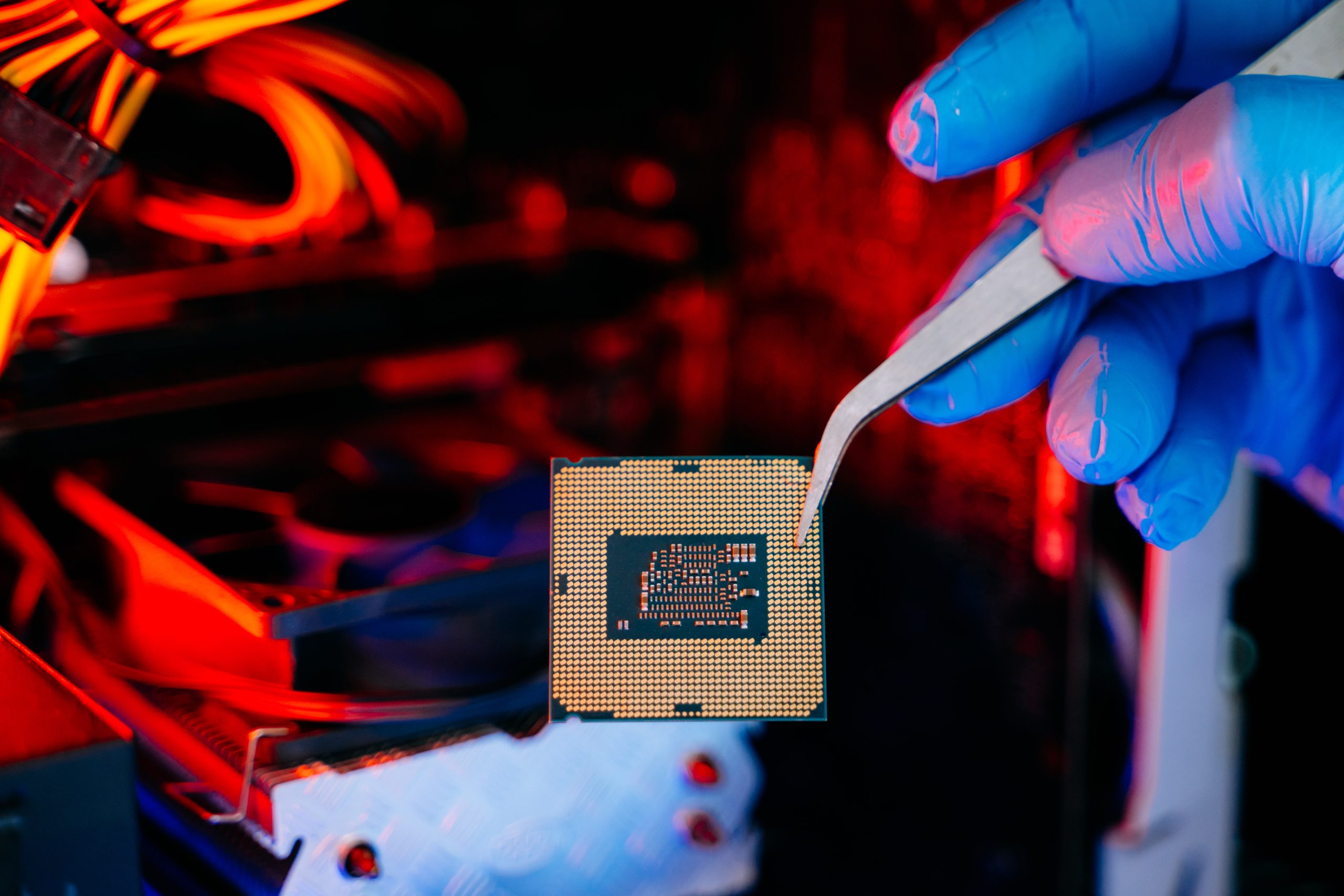
The Silicon Cycle Crushes the Consumer
The market has bifurcated. May was a month of brutal clarity for equity investors. The divergence between infrastructure providers and consumer services has reached a breaking point. While the broader indices mask the underlying decay, the individual tickers tell a story of extreme capital concentration. Micron and Dell have emerged as the primary beneficiaries of a desperate scramble for computing power. Meanwhile, the household names that once defined the American consumer landscape, such as AutoZone and Zoetis, are facing a liquidity wall.
The narrative of a soft landing is failing the reality test. High interest rates have finally permeated the layer of consumer resilience. People are no longer fixing their cars. They are no longer spending on premium pet care. They are, however, funneling every available dollar into the backend of the artificial intelligence revolution. This is not a broad market rally. It is a surgical extraction of value from the old economy to the new.
Micron and the High Bandwidth Monopoly
Supply is the only metric that matters. Micron (MU) has capitalized on a structural deficit in the memory market. According to recent industry data from early June, Micron’s production capacity for High Bandwidth Memory (HBM3E) is effectively locked through the end of the year. The stock’s outperformance in May was not driven by sentiment. It was driven by pricing power.
The technical shift from DDR5 to HBM4 is creating a massive barrier to entry. Micron’s bit-shipment growth has outpaced the industry average by 12 percent. Investors are betting that the margin expansion seen in Q2 is just the beginning. The company has successfully navigated the transition to extreme ultraviolet (EUV) lithography, reducing defect rates while increasing density. This is a capital-intensive moat that competitors are struggling to cross. The market is rewarding the scarcity of the product, not the promise of the technology.
Dell and the Server Integration Premium
Dell (DELL) has transformed from a PC manufacturer into an AI utility. The company has integrated itself into the Nvidia ecosystem more effectively than any other OEM. In May, Dell saw a significant surge in its AI server backlog. Per market reports from June 5, the demand for liquid-cooled server racks has reached an all-time high. This is the plumbing of the AI age.
The hardware is complex. It requires sophisticated thermal management and power distribution units. Dell’s supply chain dominance allows it to source components that smaller players cannot reach. The stock’s performance reflects a realization that the AI trade is moving from the chip designers to the integrators. While PC sales remain stagnant, the enterprise data center segment is carrying the entire valuation. This is a high-stakes pivot that relies on the continued capital expenditure of hyperscalers.
The Consumer Discretionary Bloodbath
AutoZone (AZO) is the canary in the coal mine. For years, the DIY auto repair sector was considered recession-proof. That thesis died in May. As credit card interest rates hover near record highs, the average consumer is deferring maintenance. The ‘miles driven’ index has plateaued, but the cost of parts has not. AutoZone is caught in a pincer movement of rising input costs and falling foot traffic.
The technical breakdown of AZO stock suggests a deeper systemic issue. Inventory turnover has slowed for three consecutive quarters. The company’s aggressive share buyback program, which previously propped up the stock price, is now being questioned as cash flow tightens. When people stop fixing their cars, it is a signal that the discretionary budget has been deleted. The market is finally pricing in a prolonged period of consumer austerity.
Zoetis and the Elasticity of Pet Care
Zoetis (ZTS) was once the darling of the healthcare sector. It was believed that pet owners would sacrifice their own well-being before cutting back on their animals’ medication. May proved that even pet care has a price ceiling. Zoetis has faced increasing competition from generic alternatives and a cooling of the ‘pandemic pet’ boom. The stock’s decline is a direct result of volume contraction in premium veterinary products.
Technical indicators for Zoetis show a sharp rejection at the 200-day moving average. The company’s reliance on high-margin specialty drugs for chronic conditions is now a liability. As household budgets tighten, veterinarians are seeing a shift toward lower-cost treatment plans. The premium valuation of the animal health sector is being re-evaluated in real-time. The safety net is gone.
May 2026 Stock Performance Comparison
Percentage Change for Key Tickers in May 2026
The Capital Trap
The divergence is not a fluke. It is a structural realignment of the economy. Investors are fleeing companies that depend on the American consumer’s wallet and hiding in companies that depend on corporate capital expenditure. This creates a dangerous concentration of risk. If the AI ROI (Return on Investment) does not materialize for the hyperscalers, the entire infrastructure trade will collapse. For now, the momentum is undeniable.
The market is ignoring the macro headwinds in favor of the micro-monopolies. Micron and Dell represent the only growth stories left in a stagnant environment. The ‘worst’ performers of May are simply the first to feel the chill of a cooling economy. The others will follow if the consumer does not find a second wind. The data suggests that wind is not coming.
Watch the upcoming Federal Reserve meeting on June 17. The dot plot will reveal if the central bank acknowledges the consumer slowdown or remains hyper-focused on the tech-driven inflation spike. The spread between the 2-year and 10-year Treasury yields remains the most critical data point for the remainder of the month.