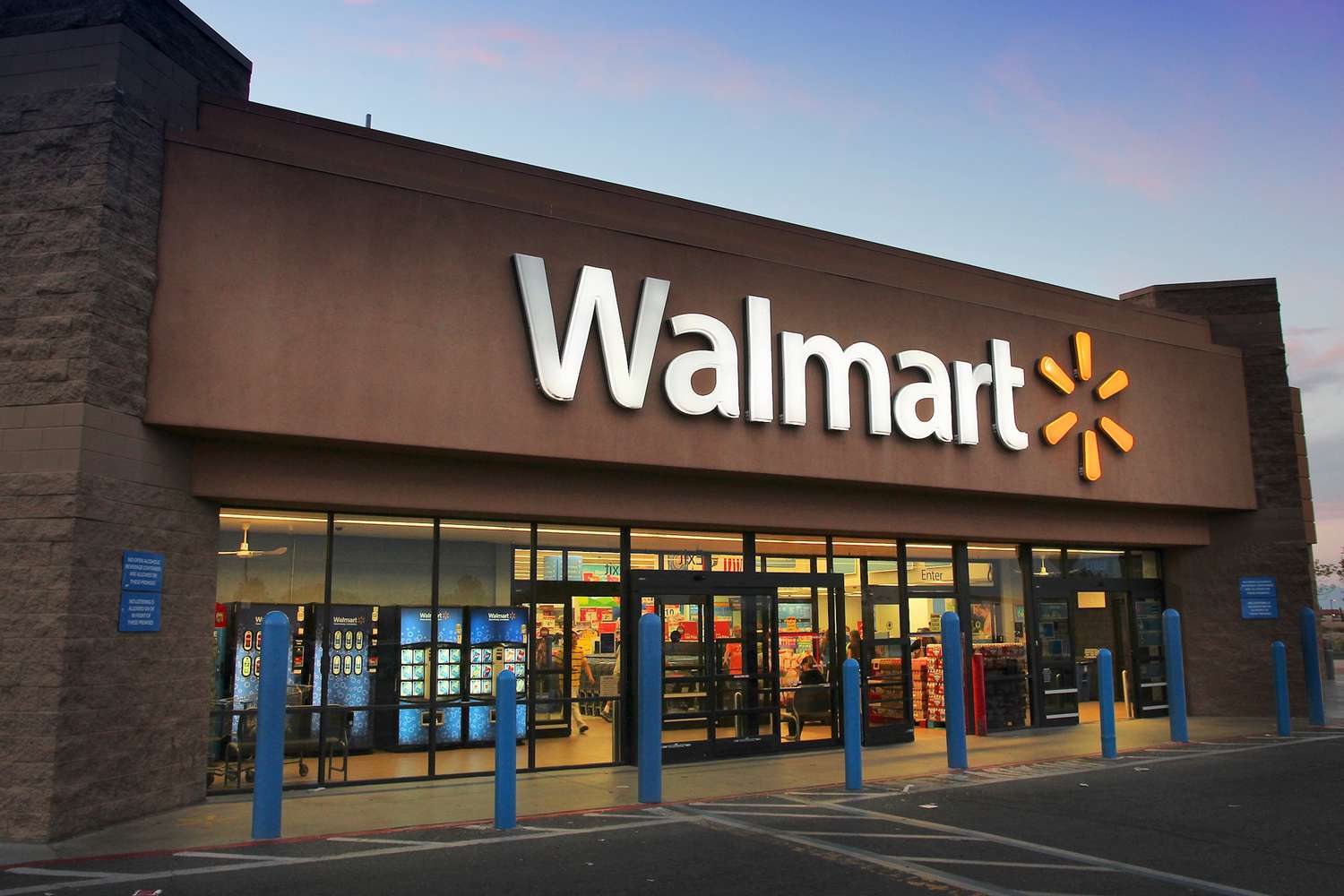
The Bentonville Behemoth as a Shadow Central Bank
Walmart wins. The market is finally waking up to a reality that has been brewing in the Ozarks for three years. While the Federal Reserve struggles to anchor inflation expectations, Walmart is doing the job for them. By force. The world’s largest retailer is no longer just a merchant. It is a price-fixing machine for the American middle class. The scale is the weapon. The grocery aisle is the battlefield.
Scale is the only defense. Walmart knows this better than anyone. As of May 28, 2026, the company has effectively decoupled its pricing architecture from the broader Consumer Price Index. While national grocery inflation hovers at a stubborn 3.1 percent, Walmart’s internal ‘Basket Index’ suggests a mere 1.2 percent increase year-over-year. This is not charity. It is a calculated move to seize market share from regional grocers and premium retailers who lack the balance sheet to absorb margin compression.
The mechanism is simple but brutal. Walmart leverages its unmatched volume to dictate terms to suppliers like Procter & Gamble and Nestle. If you want access to 250 million weekly customers, you eat the cost of raw material spikes. Walmart does not. This ‘Pricing Moat’ is widening as Bloomberg data indicates that high-income households—those earning over $100,000—are now the fastest-growing segment of Walmart’s customer base. They are trading down, and they are staying there.
Retail Price Variance: Walmart vs National Average (May 2026)
The Mechanics of Tariff Insulation
Tariffs are a tax on the weak. Mainstream narratives suggest that global trade barriers inevitably lead to higher shelf prices. Walmart proves the exception. The company’s ‘Tariff Insulation’ strategy is a masterclass in supply chain vertical integration. While smaller competitors rely on third-party importers, Walmart has spent the last 24 months moving its ‘Landed Cost’ calculations in-house. They own the logistics. They own the data. They own the risk.
Direct sourcing is the key. By bypassing intermediaries and dealing directly with manufacturers in Vietnam, India, and Mexico, Walmart has reduced its exposure to Chinese manufacturing by 15 percent since 2024. When a new tariff is announced, Walmart doesn’t just raise prices. It triggers ‘Forward Buying’ contracts that lock in inventory costs for 18 months. This creates a temporal buffer. By the time the tariff hits the shelf, Walmart has already negotiated a lower factory-gate price to offset the duty. This is the ‘Consumer Shield’ in action.
Data from recent SEC filings reveals that Walmart’s private label penetration—specifically the Great Value brand—has hit an all-time high of 32 percent of total grocery sales. Private labels offer double the margin of national brands. This extra ‘spread’ allows Walmart to keep prices for staples like milk and eggs artificially low, even as the cost of feed and fuel rises. It is a subsidy funded by the inefficiency of their competitors.
Grocery Price Comparison Table (May 2026)
| Essential Item | Walmart Price ($) | Competitor Average ($) | Premium/Discount (%) |
|---|---|---|---|
| Milk (1 Gallon) | 3.12 | 3.68 | -15.2% |
| Large Eggs (1 Dozen) | 2.18 | 2.84 | -23.2% |
| White Bread (Loaf) | 1.75 | 2.35 | -25.5% |
| Ground Beef (1 lb) | 4.85 | 5.40 | n-10.1% |
The Ad-Revenue Subsidy
Retail is a low-margin game. Advertising is not. The secret weapon in Walmart’s fight against inflation is Walmart Connect. This retail media network is now generating billions in high-margin revenue by selling ad space on its website and in-store screens. This capital is not being returned to shareholders as dividends. It is being recycled into the grocery business to suppress prices.
Think of it as an internal transfer. The marketing budgets of CPG companies are effectively subsidizing the price of bread for the consumer. This creates a virtuous cycle. Lower prices drive more foot traffic. More foot traffic creates more ad impressions. More ad impressions generate more revenue to lower prices further. It is a feedback loop that the likes of Kroger or Albertsons simply cannot replicate. According to Reuters reports, Walmart’s media business grew by 28 percent in the first quarter, providing a massive war chest for the upcoming summer price wars.
The ‘Consumer Shield’ is not just a marketing slogan. It is a structural reality. By leveraging its data ecosystem, Walmart can predict demand surges with terrifying accuracy. This reduces ‘shrink’ and waste, which are the silent killers of retail margins. Every dollar saved on a spoiled head of lettuce is a dollar that can be used to keep the price of a rotisserie chicken at five dollars. In a high-interest-rate environment, operational efficiency is the only thing that matters.
Watch the June 15 Retail Sales report. If the trend of ‘Trade-Down’ acceleration continues, Walmart’s dominance will transition from a market trend to a systemic monopoly on the American pantry. The next milestone is the Q2 earnings call in August, where the impact of the new logistics automation roll-outs will be laid bare. If per-unit fulfillment costs drop another 5 percent, the pricing moat becomes an ocean.