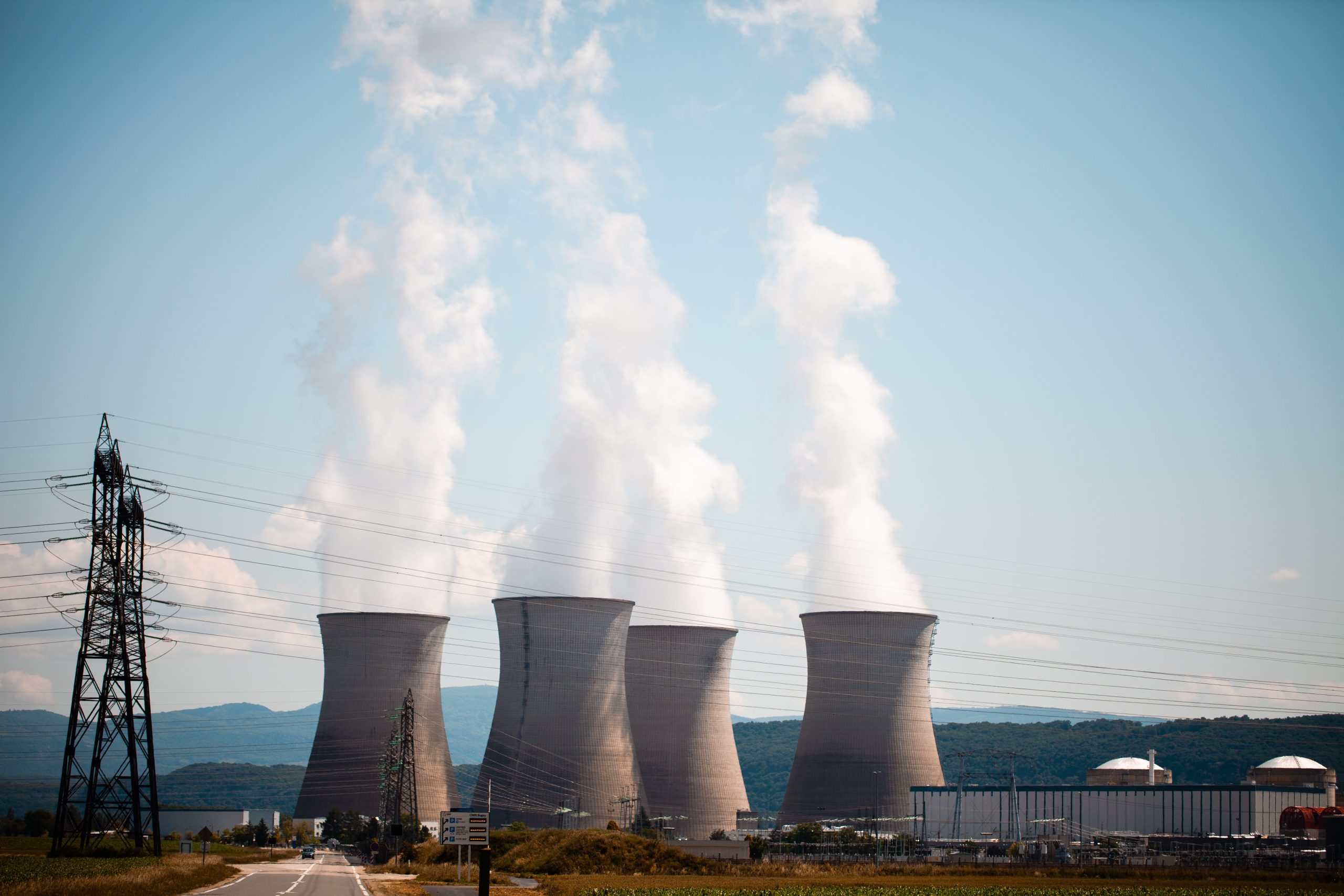
The Terrestrial Power Wall
The grid is breaking. Power demand from hyperscalers has finally outstripped the capacity of aging terrestrial infrastructure. In the United States and United Kingdom, data centers now consume a staggering 6 percent of total electricity supply. This is no longer a localized utility headache. It is a systemic threat to industrial stability. The International Data Center Authority recently confirmed that the global energy footprint for these facilities has surged 36 percent in just two years. We are witnessing the physical limits of geography and physics collide with the insatiable appetite of generative models.
Efficiency is a myth. While Silicon Valley marketing departments tout green initiatives, the reality is far grimmer. Analysts estimate that 13 percent of US data center power is wasted on zombie cloud containers. These are services that were never switched off but serve no active users. This waste alone accounts for roughly 3 gigawatts of consumption. That is equivalent to the output of three nuclear reactors. As the industry moves from managing incremental chip-level power to confronting a step-change in rack density, the traditional air-cooled model has become obsolete. New AI-optimized racks now demand over 110 kilowatts. This is an order of magnitude increase that local grids were never designed to handle.
The Nuclear Stopgap
Big Tech is desperate. Microsoft is currently navigating a high-scrutiny regulatory pathway to reopen the Three Mile Island Unit 1 reactor. Now renamed the Crane Clean Energy Center, the project represents a $16 billion gamble on 24/7 carbon-free baseload power. Amazon and Google are following suit, securing direct relationships with nuclear generation to bypass the 2,600 gigawatt interconnection queue currently paralyzing the US grid. These behind-the-meter deals are expensive workarounds. While grid power in major markets runs roughly $95 per megawatt-hour, these dedicated nuclear solutions can cost up to $165 per megawatt-hour.
Water is the next bottleneck. A single large-scale facility can require millions of gallons daily for cooling. In regions like Northern Virginia, where data centers are projected to consume nearly 60 percent of the state’s electricity by 2030, community pushback is turning into political intervention. Usage caps and project cancellations are becoming the norm. The industry is hitting a wall that even billions in capital cannot easily climb. This is why the conversation has shifted from the Susquehanna River to the vacuum of space.
2026 Data Center Energy Demand vs Grid Capacity
The Orbital Arbitrage
Space offers a radical exit. In orbit, the solar constant is roughly eight times more efficient than on Earth. There are no clouds, no atmosphere, and no night cycles for satellites in specific sun-synchronous orbits. More importantly, the cooling problem is solved by the infinite heat sink of the vacuum through radiative cooling. There are no water bills in Low Earth Orbit. There are no NIMBY protests in the thermosphere. The physical constraints that make terrestrial expansion a nightmare are non-existent in the high frontier.
The economics are finally aligning. According to recent reports on SpaceX’s launch cadence, the cost to reach orbit is plummeting. While Falcon 9 pricing hovered around $3,000 per kilogram, the debut of Starship Version 3 targets a transformative sub-$200 per kilogram threshold. This is the magic number. Industry feasibility studies suggest that once launch costs drop below this level, processing data in orbit becomes more cost-effective than building new terrestrial facilities burdened by carbon taxes and surging utility rates.
The Race for Sovereign Compute
Sovereignty is the new gold. SpaceX and xAI have already filed applications for a constellation of one million satellites designed specifically for orbital data processing. This is not about internet connectivity. It is about hosting the world’s inference engines in a jurisdiction that no single nation can easily regulate or tax. Other players like Blue Origin and Starcloud are racing to deploy modular satellite clusters equipped with radiation-hardened GPUs. These systems use inter-satellite optical links to create a mesh network of compute that functions as a single, global supercomputer.
The technical hurdles remain significant. Radiation is the primary enemy. Silicon is fragile in the harsh environment of space, requiring advanced shielding or triple modular redundancy that increases mass and cost. Furthermore, latency remains a factor for real-time applications. However, for the massive training runs and batch inference tasks that define modern AI, a few extra milliseconds are a small price to pay for unlimited power and zero cooling constraints. The market is moving from speculative whitepapers to operational hardware with unprecedented speed.
Infrastructure is the ultimate bottleneck. As Reuters detailed in its analysis of recent Big Tech energy deals, the time required to connect a new 100-megawatt facility to the US grid now stretches up to seven years. In contrast, a Starship can be integrated and launched in months. This speed-to-market advantage is becoming the deciding factor for venture capital and hyperscale procurement teams alike.
The next critical milestone is only days away. On May 19, the first Starship Version 3 is scheduled to launch from South Texas. This flight is not just a test of heavy-lift capability. It is a validation of the logistics chain required to build the first gigawatt-scale data center in the sky. Watch the payload deployment data from that mission. It will reveal exactly how close we are to the first production-grade AI clusters leaving the planet for good.