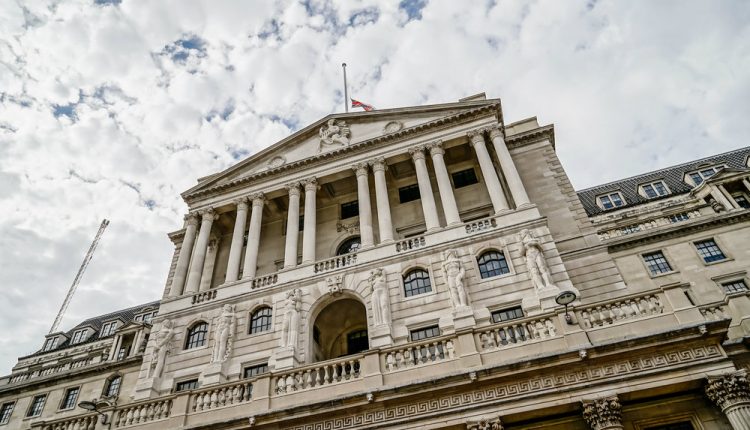
The 2020 promise is a 2026 reality
The ledger is the law. Central banks spent a century outsourcing money creation to commercial banks. Now they want it back. Six years ago today, ING Economics noted that digital currencies were closer than ever. That proximity has vanished. It has been replaced by implementation. The architectural shift from private bank deposits to direct sovereign liabilities represents the most significant change in monetary history since the end of Bretton Woods.
The mechanics are brutal. In the traditional system, your deposit is an unsecured loan to a commercial bank. If the bank fails, you rely on deposit insurance. A Central Bank Digital Currency (CBDC) eliminates this intermediary. It moves the liability directly onto the central bank balance sheet. This is not just a technical upgrade. It is a fundamental reordering of the financial hierarchy. Commercial banks are being relegated to mere interface providers.
The Digital Euro Trap
Frankfurt is moving fast. The European Central Bank (ECB) has moved beyond the preparation phase into a live environment. The Digital Euro is no longer a white paper. It is a protocol. However, the design contains a poison pill. To prevent a catastrophic drain on commercial bank liquidity, the ECB has enforced a holding limit. Current data suggests a cap of approximately 3,000 euros per citizen. This is not money as we know it. It is a restricted asset class.
The technical implementation relies on a hybrid model. While the ECB controls the ledger, private payment service providers manage the distribution. This creates a facade of decentralization. Beneath the surface, every transaction is traceable. The ECB claims privacy by design. Critics argue that “programmable money” is simply a euphemism for conditional spending. According to recent Reuters reports on Eurozone liquidity, the tension between privacy and anti-money laundering (AML) compliance remains the primary friction point for adoption.
The Fed Wholesale Pivot
Washington is paralyzed by politics. The Federal Reserve watches the Eurozone with a mix of envy and terror. A retail Digital Dollar is currently a political impossibility in the United States. Legislative pushback has framed the CBDC as a tool for state surveillance. But the Fed is not sitting idle. They have pivoted to the wholesale market. Project Cedar has proven that cross-border settlements can be settled in seconds rather than days.
Wholesale CBDCs are the real engine of change. They target the plumbing of global finance. By using a distributed ledger for interbank settlements, the Fed can bypass the aging SWIFT system. This reduces counterparty risk. It also increases the velocity of money. While the public debates the privacy of their coffee purchases, the Fed is rebuilding the foundation of the global reserve currency. Per Bloomberg market analysis, this shift could save the banking sector billions in collateral costs annually.
Global CBDC Status by GDP Share (May 2026)
The Disintermediation Crisis
Commercial banks are terrified. They should be. If a citizen can hold a risk-free digital wallet with the central bank, the incentive to hold a standard checking account vanishes. This is the disintermediation threat. To survive, commercial banks are forced to offer higher interest rates on deposits. This squeezes their net interest margins. The business model of “borrowing short and lending long” is under direct assault from the sovereign.
| Feature | Digital Euro (ECB) | Digital Dollar (Fed – Wholesale) | e-CNY (PBoC) |
|---|---|---|---|
| Primary Focus | Retail Payments | Interbank Settlement | Retail & Surveillance |
| Anonymity | Tiered (Low for small sums) | None (KYC mandatory) | Controlled Anonymity |
| Programmability | Limited by Policy | High (Smart Contracts) | Full Integration |
| Holding Limits | Yes (approx. 3,000 EUR) | No (Institutional) | No (Dynamic) |
Programmability is the ultimate control mechanism. In a CBDC environment, the central bank can theoretically implement negative interest rates directly on your balance. They can expire money that isn’t spent within a certain timeframe. They can restrict purchases based on carbon footprints or social credit. This is not a conspiracy theory. It is a technical capability of the code being written in Frankfurt and Beijing today. The abstraction of value into a centralized ledger allows for a granular level of economic engineering that was previously impossible.
The illusion of choice is fading. As stablecoins face increasing pressure from the SEC, the state-backed digital currency becomes the only “safe” option in the digital asset space. This is a classic pincer movement. Regulate the private competition out of existence while offering a public alternative that grants the state total visibility. The 2020 musings of ING Economics have evolved into a geopolitical arms race. The winner will control the global flow of data, which in 2026, is indistinguishable from money.
Watch the ECB Governing Council meeting on June 18. They are expected to release the final technical specifications for the “Offline Mode” of the Digital Euro. This specific data point will reveal exactly how much privacy the state is willing to concede to maintain public trust.