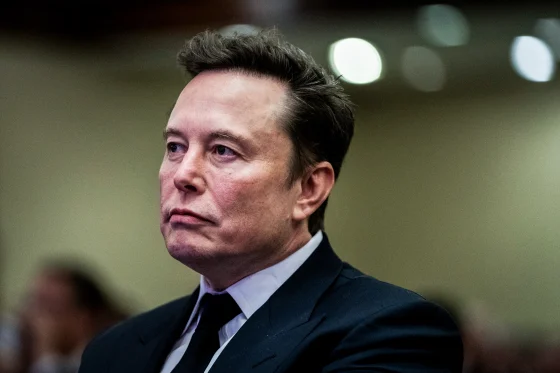
Elon Musk thinks your 401k is a relic. The billionaire’s latest assertion that saving for retirement won’t matter sent a tremor through the financial planning industry this morning. It is a provocative claim. It assumes a post-scarcity world that does not yet exist. Musk argues that the rapid ascent of Artificial General Intelligence (AGI) will decouple survival from labor. If labor is obsolete, the traditional mechanisms of wealth accumulation—compound interest and equity growth—become secondary to resource distribution. This is a radical departure from the fiscal conservatism that has governed the middle class for a century.
The Post Scarcity Mirage
The math does not work for the average worker. Musk suggests that a post-scarcity economy renders compound interest obsolete. This assumes a seamless transition to universal high income that ignores the friction of legacy debt. As of May 5, 2026, the national retirement savings gap has widened to a record $14 trillion. While AI productivity gains have bolstered corporate margins, they have not yet translated into the broad-based wealth distribution Musk envisions. The divergence between algorithmic efficiency and household liquidity is stark. We are seeing a concentration of capital in the hands of those who own the compute power, not those who own the mutual funds.
Institutional investors are skeptical. BlackRock and Vanguard have spent the last 48 hours defending the necessity of long-term capital allocation. They argue that even in an AI-dominated landscape, ownership of the underlying infrastructure remains the only hedge against inflation. Musk’s vision relies on a benevolent state or a corporate utopia that has no historical precedent. If the cost of goods drops to near zero, the value of the currency used to buy them becomes the primary concern. Saving for retirement is not just about the quantity of money. It is about the preservation of purchasing power in a shifting regime.
Retirement Sentiment Index Collapse
Consumer confidence in traditional retirement vehicles has plummeted following these remarks. The market is reacting to the possibility that the “Great Automation” will arrive faster than the social safety nets required to support it. Data from the May 4 Labor Market Report shows that mid-level white-collar roles are being displaced at three times the rate of manual labor. This creates a liquidity trap. Workers cannot save for a future that they are told will be free, yet they must pay for a present that is increasingly expensive.
Retirement Confidence Index May 2026
The Technical Breakdown of the No Savings Thesis
Musk’s thesis relies on the marginal cost of production hitting zero. In this scenario, energy, food, and transport become so cheap that they are essentially public utilities. The technical bottleneck is the transition phase. We are currently in the “Expensive Transition” period. Energy costs remain high due to the massive power requirements of AI data centers. The SEC filings from major utility providers in the first quarter show a 15 percent increase in capital expenditure for grid hardening. This cost is being passed to the consumer. The idea that retirement savings won’t matter assumes that this transition is already complete.
Wealth is being redefined. In a world where labor is devalued, the only assets that retain worth are those with physical scarcity. Land, raw materials, and energy production are the new gold. Paper assets like 401ks are vulnerable to the deflationary pressure of AI. If a company can produce ten times the output with zero employees, its stock price might soar, but the velocity of money in the broader economy slows. This creates a structural deficit for the retiree who relies on a liquid market to sell their shares.
| Asset Class | 2025 Growth (%) | May 2026 Projected (%) | Risk Profile |
|---|---|---|---|
| AI Infrastructure | 24.5 | 31.2 | High Volatility |
| Traditional Equities | 8.2 | 4.1 | Systemic Decline |
| Physical Commodities | 12.4 | 18.7 | Inflation Hedge |
| Cash/Fixed Income | 4.5 | -2.1 | Deflationary Trap |
The cynicism of the market is palpable. Musk’s comments are often a leading indicator of his own investment pivots. If he is signaling the end of retirement, he is likely signaling a move toward a new form of asset ownership. Investors should look closely at the upcoming June 15 meeting of the Federal Reserve. The central bank is expected to discuss the first framework for “Human Labor Subsidies.” This is the first step toward the Universal High Income model Musk champions. Until that framework is codified into law, abandoning a retirement strategy is a gamble on a future that has no safety net. The next data point to watch is the June CPI report, which will reveal if the deflationary pressure of AI is finally offsetting the rising costs of energy and housing.