The Silicon Moat Is Dry
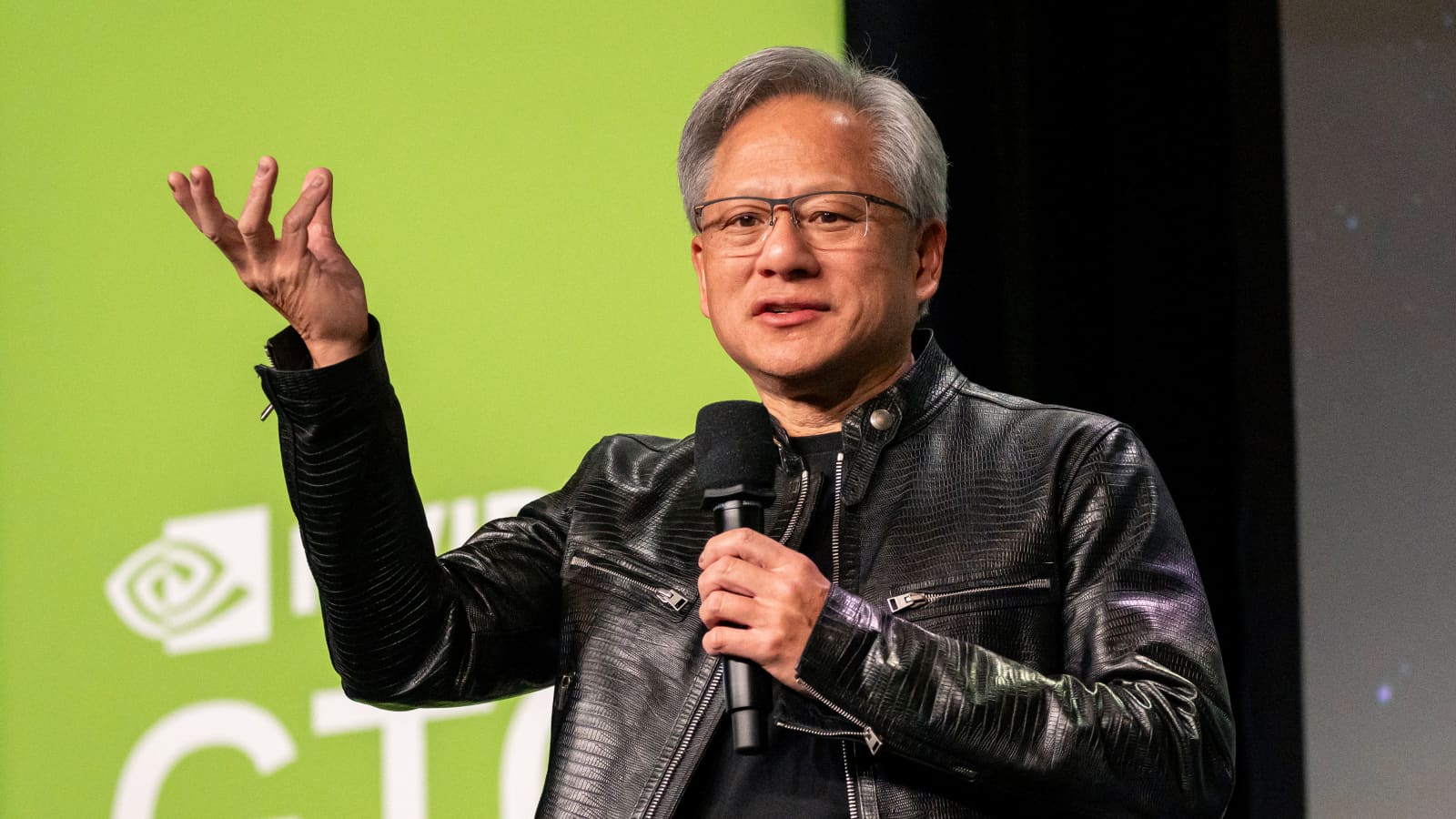
Jensen Huang is no longer satisfied with the graphics market. He wants the socket. For decades, Intel and AMD held a comfortable duopoly over the central processing unit (CPU) landscape. That era is over. The hardware architecture that defined computing for forty years is facing an existential threat from the very company that once lived on its periphery. Nvidia is moving from the peripheral slot to the center of the motherboard. This is not a gradual transition. It is a hostile takeover of the compute cycle.
The Death of the Accelerator Model
The old world was modular. You bought an Intel Xeon or an AMD EPYC to run the operating system and then added an Nvidia GPU to handle the heavy lifting. This separation created a bottleneck. Data had to travel across the PCIe bus, a narrow bridge that slowed down the massive datasets required for generative artificial intelligence. Nvidia solved this by building the bridge into the house. The Grace CPU Superchip represents the first major crack in the x86 foundation. By using the ARM Neoverse V2 core, Nvidia has bypassed the legacy constraints of the x86 instruction set. They are not just selling a chip. They are selling a unified memory architecture that makes the CPU and GPU act as a single organism.
Technical cannibalism is the strategy. According to recent filings with the Securities and Exchange Commission, Nvidia’s data center revenue now dwarfs the entire market capitalization of its traditional rivals. The integration of NVLink allows for a coherent memory pool between the CPU and GPU. This renders the traditional stand-alone CPU nearly obsolete in high-performance computing environments. Intel is fighting a two-front war. It is struggling with the yields of its 18A process node while simultaneously losing the architectural battle to ARM-based efficiency. AMD is in a slightly better position due to its chiplet mastery, but it remains tethered to an x86 ecosystem that is increasingly viewed as a legacy burden.
Windows on ARM and the Consumer Pivot
The home turf is shifting. While the data center is already an Nvidia stronghold, the consumer PC market is the next target. Reports from Reuters suggest that Nvidia is accelerating its development of a high-performance ARM-based processor for the Windows ecosystem. This is a direct shot at the heart of Intel Core and AMD Ryzen. The efficiency gains seen in Apple’s M-series chips have proven that x86 is not the only path to performance. Nvidia has the advantage of a massive software moat. Every developer on the planet is already optimizing for CUDA. If Nvidia can provide a CPU that shares the same ecosystem, the friction for users to switch disappears.
Data Center Compute Share (February 2026)
Financial Divergence and the Margin Gap
The numbers tell a story of total dominance. Intel is currently operating on gross margins that have plummeted toward 40 percent as they dump billions into foundry infrastructure. Nvidia is comfortably sitting above 75 percent. This capital disparity allows Nvidia to outspend the entire industry in research and development. They are not just designing chips. They are designing the racks, the cooling systems, and the networking protocols. As noted by Bloomberg, the shift toward “AI-first” infrastructure has turned the CPU into a utility component. It is no longer the star of the show. It is the support staff.
| Metric | Nvidia | Intel | AMD |
|---|---|---|---|
| Gross Margin (%) | 76.2 | 41.5 | 52.1 |
| R&D Spend (TTM) | $11.2B | $16.5B | $6.1B |
| Market Cap (Est.) | $3.4T | $115B | $280B |
Intel’s attempt to pivot into a foundry business is a desperate move to stay relevant in a world where they no longer lead in design. If you cannot design the best chips, you build them for the people who do. But even here, Nvidia has the upper hand by maintaining a tight relationship with TSMC. The logistical moat is just as deep as the technical one. AMD remains the only viable x86 alternative, but they are increasingly forced to follow Nvidia’s lead in AI networking and software stacks. The duopoly has become a monarchy.
The Next Milestone
The market is now fixated on the upcoming GTC event in March. Investors are looking for the “Blackwell-Next” roadmap which is expected to further integrate CPU and GPU logic into a single silicon die. This would effectively end the era of the socketed processor in the high-end market. Watch the 10-year Treasury yield as a proxy for tech valuation volatility, but the real data point to track is the adoption rate of ARM-based instances in AWS and Azure. If ARM compute hours surpass x86 by the end of the second quarter, the transition will be irreversible.