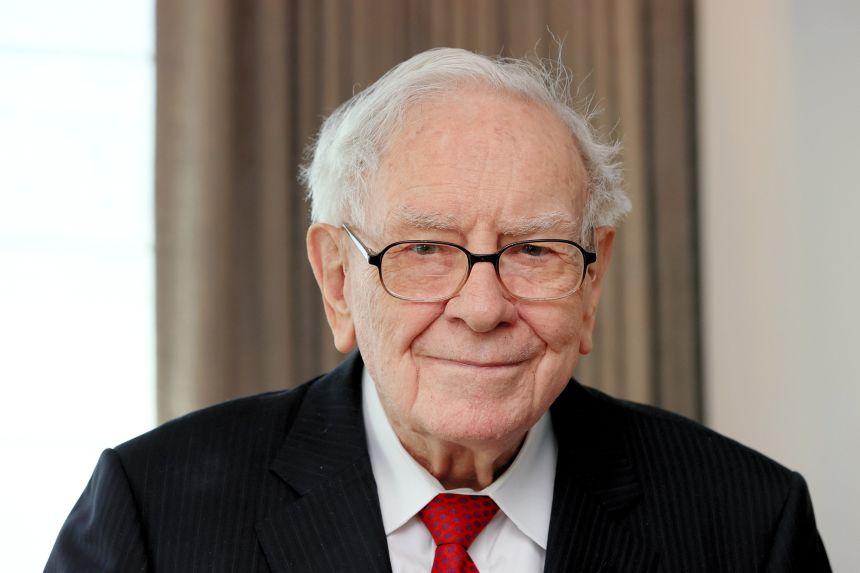
Buffett is back. The Oracle of Omaha just reversed a six year exile from the newsroom. Yesterday, Berkshire Hathaway revealed a 350 million dollar stake in The New York Times Company. The market is stunned. The signals are clear. After declaring the newspaper industry toast in 2020, the world’s most famous value investor has found a moat worth defending.
The Great Reversal
In 2020, Berkshire Hathaway exited the sector entirely. Buffett sold his chain of 30 dailies to Lee Enterprises for 140 million dollars. It was a fire sale. He claimed that most newspapers were a dying breed. Only a few, he argued, had the brand power to survive the digital meat grinder. He named The New York Times, The Wall Street Journal, and The Washington Post. He was right. But he stayed away from the ticker until now.
The 350 million dollar investment, disclosed in a recent regulatory filing, represents a surgical entry. It is not a takeover attempt. It is a validation of the digital subscription model. The New York Times has ceased to be a newspaper company. It is now a software company that happens to produce journalism. This distinction is critical for the Berkshire thesis.
The Anatomy of the Digital Moat
Why now? The answer lies in the bundle. The New York Times has successfully diversified its revenue streams away from the volatile advertising market. It has built a fortress around lifestyle products. Games, Cooking, and Wirecutter are the high margin pillars. The Athletic, once a cash-burning acquisition, has finally stabilized. These products create a sticky ecosystem that reduces churn.
Low churn is the holy grail of subscription businesses. When a user starts their day with Wordle and ends it with a recipe from NYT Cooking, the news product becomes an incidental luxury. This creates pricing power. According to Bloomberg market data, the company has successfully pushed through price increases with minimal subscriber loss. That is the definition of a moat.
The Financial Snapshot
The numbers tell a story of aggressive transformation. In 2020, the company was still grappling with the decline of print advertising. Today, the balance sheet is lean. The cash position is robust. The following table illustrates the shift in fundamentals between Buffett’s exit from the industry and his return to the Gray Lady.
| Metric | 2020 (Industry Exit) | 2026 (NYT Entry) |
|---|---|---|
| Digital-Only Subscribers | 6.1 Million | 13.5 Million |
| Annual Revenue | $1.78 Billion | $3.10 Billion (Est.) |
| Operating Margin | 10.2% | 18.8% |
| Cash and Equivalents | $680 Million | $1.25 Billion |
The growth trajectory is not just about volume. It is about Average Revenue Per User (ARPU). The company has shifted from a single-product offering to a multi-product bundle. This increases the Lifetime Value (LTV) of each subscriber. Buffett loves businesses where the customer pays upfront and the marginal cost of distribution is near zero. Digital journalism fits this profile perfectly.
The AI Defensive Play
There is a deeper cynical layer to this move. As generative AI floods the internet with low quality content, premium brands become more valuable. The New York Times has been aggressive in protecting its intellectual property. Its legal battles with major tech firms are not just about damages. They are about establishing the value of human-vetted data. Buffett is betting that in an ocean of synthetic noise, people will pay a premium for a signal.
This is a classic ‘toll bridge’ investment. If you want high-quality, verified information that moves markets or influences culture, you must cross the Times bridge. And you must pay the toll. The current valuation reflects a company that has survived the existential threat of the internet and emerged as a dominant aggregator. Per reports from Reuters, the broader media sector remains in turmoil, but the divergence between the winners and losers has never been wider.
The next milestone for investors arrives in early May. The Q1 earnings report will reveal if the recent price hikes have impacted subscriber retention. Watch the ARPU figures closely. If the bundle continues to scale without increasing churn, Buffett’s 350 million dollar bet will look like another masterclass in timing. The Oracle hasn’t just returned to the newsroom. He has bought the front row seat to the future of the attention economy.