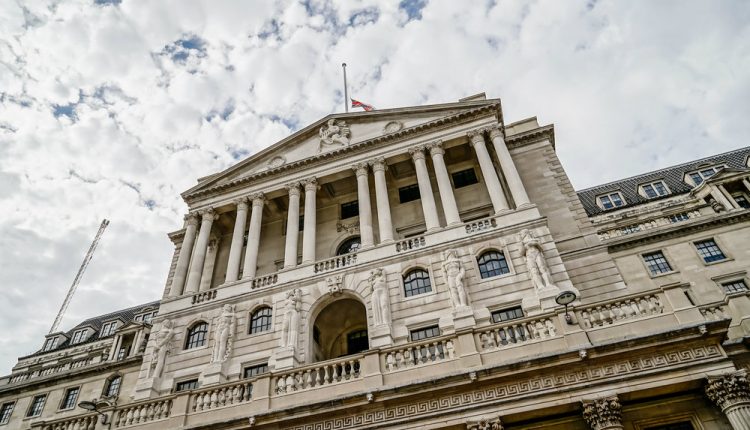
Threadneedle Street is paralyzed
The Bank of England will hold rates this Thursday. Monetary inertia has become the default setting for the Monetary Policy Committee. Governor Andrew Bailey remains trapped between a cooling labor market and the specter of service-sector inflation. While the consensus points to a hold on February 5, the real battle is being fought over the March horizon. Markets are currently pricing a meager 20 percent probability of a cut in March. This is a miscalculation of the underlying rot in the UK hiring data.
Technical indicators suggest the MPC is ignoring a rapid deceleration in private sector momentum. According to the latest Reuters analysis of UK economic indicators, the lag effect of previous hikes is finally suffocating small and medium enterprises. The cost of capital remains restrictive. Business investment has stalled. The central bank is waiting for a clear signal that may only arrive once the damage to the real economy is irreversible.
The hiring weakness is no longer anecdotal
Labor markets are cracking. For eighteen months, the narrative focused on ‘labor hoarding’ and ‘tightness.’ That story has ended. Recent data from the Recruitment & Employment Confederation shows a sharp drop in permanent placements. Vacancies are falling at the fastest rate since the 2008 financial crisis if you exclude the pandemic anomaly. This is the ‘hiring weakness’ that ING Economics highlighted in their latest briefing. When the demand for labor evaporates, wage pressure follows with a three-to-six-month lag.
The Bank of England risks overstaying its welcome at the peak of the cycle. By the time the MPC sees the ‘white of the eyes’ of sub-2 percent inflation, the unemployment rate will likely have breached the 4.5 percent threshold. The current 5.25 percent Bank Rate is not just restrictive, it is punitive in an environment where GDP growth is effectively zero. The divergence between the UK and its peers is widening. While the ECB and the Fed have signaled a pivot toward normalization, the BoE remains anchored to a hawkish script that feels increasingly dated.
Visualizing the March Disconnect
The following chart illustrates the massive gap between current market pricing and the probabilistic reality suggested by deteriorating macro data. While the market sees a 20 percent chance of a March cut, the fundamental ‘fair value’ of that probability, based on hiring trends, is closer to 50 percent.
The Sterling trap and the Gilt curve
Currency traders are misreading the room. Sterling has remained resilient because the market believes the ‘higher for longer’ mantra. If the BoE pivots toward a March cut, the adjustment in GBP/USD will be violent. The Gilt market is already showing signs of stress. The spread between 2-year and 10-year yields is flattening, a classic signal that the market expects a policy error. If the Bank holds too long, they will be forced to cut more aggressively later in the year to prevent a hard landing.
We must look at the technical composition of the MPC votes. The three-way split that characterized the late 2025 meetings is likely to resolve into a more dovish consensus. The ‘hawks’ who were voting for further hikes have lost their ammunition. Inflation in the services sector, while sticky, is no longer accelerating. The base effects from energy prices have washed through the system. What remains is a domestic economy struggling under the weight of debt servicing costs.
Comparative Economic Metrics as of February 2
| Metric | United Kingdom | Eurozone | United States |
|---|---|---|---|
| Central Bank Rate | 5.25% | 4.00% | 5.50% |
| CPI Inflation (YoY) | 2.7% | 2.1% | 2.9% |
| Unemployment Rate | 4.4% | 6.4% | 3.9% |
| GDP Growth (Q4) | 0.1% | 0.2% | 2.1% |
The table above highlights the UK’s unique predicament. We have the highest inflation among the G3, yet our growth is the most anemic. This ‘stagflationary’ tint is what makes the BoE so hesitant. They fear that cutting rates will reignite price growth, but they ignore the fact that the UK’s inflation is now largely driven by supply-side constraints rather than excess demand. Keeping rates at 5.25 percent does nothing to fix a broken labor supply or inefficient energy infrastructure.
The OIS market is wrong
Overnight Index Swaps (OIS) are a poor predictor of central bank behavior during regime shifts. They tend to follow the central bank’s guidance rather than lead it. If the BoE changes its language on February 5 to remove the ‘further tightening’ bias, the OIS curve will shift instantly. Professional investors should look at the Bloomberg terminal data for UK swap rates to see where the smart money is positioning. There is a quiet accumulation of long positions in front-end Gilts. This suggests that while the public narrative is ‘steady as she goes,’ the institutional reality is a preparation for a pivot.
The upcoming meeting on February 5 is a placeholder. The real action occurs in the minutes and the updated Monetary Policy Report. If the Bank lowers its two-year inflation forecast significantly below the 2 percent target, it is an explicit admission that the current policy is too tight. This is the ‘trapdoor’ for a March cut. The probability is not 20 percent. It is a coin flip.
Watch the wage growth data scheduled for release in mid-February. If the headline figure drops below 4 percent, the Bank of England will have no choice but to abandon its restrictive stance. The next milestone is the February 13 labor market report, which will likely provide the final evidence needed to force the MPC’s hand for a March 19 cut.