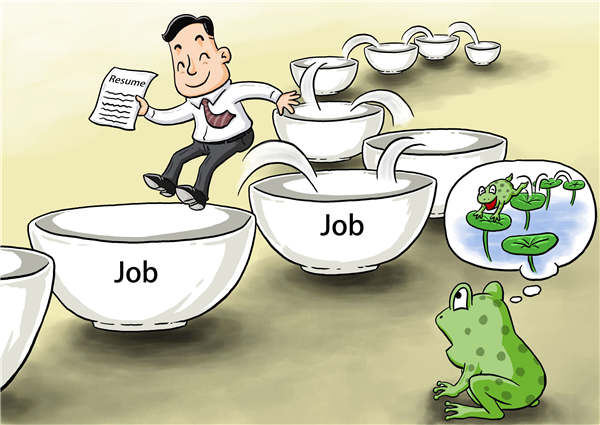
The World Bank issued a polite warning today. It arrived via social media on International Day of Education. The message focused on literacy and numeracy. It spoke of children mastering socioemotional skills. Behind the soft language lies a hard financial reality. Human capital is depreciating faster than physical infrastructure. The global economy is facing a solvency crisis of the mind.
The Productivity Paradox
Labor productivity is stalling. Central banks have exhausted their monetary toolkits. The remaining lever is the quality of the workforce. The data suggests this lever is broken. According to recent World Bank Learning Poverty metrics, over half of ten year olds in low income countries cannot read a basic text. This is not a social tragedy. It is a structural economic barrier. Without foundational literacy, the transition to a high value service economy is impossible. The workforce becomes a liability rather than an asset.
Markets ignore this. They focus on quarterly earnings and terminal rates. They miss the long term decay of the tax base. A population that cannot calculate basic interest rates cannot participate in complex financial markets. They cannot innovate. They can only consume. This creates a ceiling on GDP growth that no amount of quantitative easing can pierce. The socioemotional skills mentioned by the World Bank are even more critical. These are the traits that allow for collaboration in a decentralized global economy. Their absence leads to friction. Friction leads to cost.
The Debt Trap and the Schoolhouse
Sovereign debt is cannibalizing the future. Many emerging markets now spend more on interest payments than on primary education. This is a liquidation of the next generation. The IMF Global Debt Monitor indicates that debt-to-GDP ratios in the developing world remain at historic highs. When a nation chooses to pay a bondholder instead of a schoolteacher, it is choosing a slow death. It is maintaining current liquidity at the expense of future solvency.
The table below illustrates the widening gap between debt obligations and human investment in key regions. The numbers are stark. They represent a transfer of wealth from the future to the present.
Fiscal Priorities in Emerging Markets
| Region | Education Spending (% of GDP) | Debt Service (% of Revenue) | Projected Literacy Rate (2026) |
|---|---|---|---|
| Sub-Saharan Africa | 3.2% | 42.1% | 64.5% |
| South Asia | 2.8% | 38.5% | 71.2% |
| Latin America | 4.1% | 29.8% | 88.4% |
| Middle East | 3.5% | 22.4% | 79.1% |
The math does not work. You cannot build a tech-enabled economy on a 3% education budget. The World Bank is trying to signal this to the private sector. They want private capital to fill the gap. But private capital seeks immediate returns. Education has a twenty year gestation period. This mismatch is the core of the crisis.
Visualizing the Learning Poverty Gap
The Skills Chasm
Education is no longer about degrees. It is about adaptability. The World Bank post emphasizes the ability to learn and thrive. This is a direct response to the automation of routine tasks. If a human can only perform a task that a machine can do, that human has zero market value. Literacy and numeracy are the base layers. Socioemotional skills are the differentiator. Without them, the workforce is a commodity. Commodities are subject to price wars.
The UNESCO Education Day 2026 reports highlight that the digital divide is widening. Access to information is not the same as the ability to process it. We are seeing a bifurcation of the global labor market. A small percentage of the population is highly skilled and globally mobile. The rest are trapped in local economies with diminishing opportunities. This is a recipe for social unrest. It is also a recipe for economic stagnation.
Investors should look past the platitudes. The World Bank is not just celebrating a holiday. It is sounding an alarm about the quality of the global balance sheet. Human capital is the only asset that can generate long term alpha. Right now, that asset is being neglected. The cost of this neglect will be paid in lower growth and higher volatility for the remainder of the decade.
Watch the upcoming February PISA equivalency scores for the G20. If the downward trend in mathematics continues, the current equity valuations in the tech sector will be impossible to justify. The intelligence is artificial, but the skills gap is very real.