The liquidity paradox
Cash is king. But this king is a hermit. Corporate treasuries are currently overflowing with record liquidity. Trillions of dollars sit idle on balance sheets while climate targets drift further out of reach. This is the structural rot of modern capital allocation. Companies pledge carbon neutrality by 2050 but refuse to deploy the capital necessary to achieve it today. The money exists. The intent does not.
The scale of the disconnect is staggering. Recent data suggests that the global funding gap for climate transition exceeds $4 trillion annually. Much of this shortfall could be covered by the massive cash reserves held by the S&P 500 and their global counterparts. Instead of investing in high-risk, long-term green infrastructure, boards are opting for the safety of short-term money market funds and aggressive share buybacks. This preference for liquidity over transformation creates a terminal drag on the energy transition.
The hurdle rate trap
Internal logic is the enemy of external survival. Most corporations apply a standard hurdle rate to all capital expenditures. These rates often exceed 15 percent for new energy projects. This is a death sentence for decarbonization. Green hydrogen and carbon capture projects typically offer lower, more stable returns over thirty-year horizons. They do not fit the three-year payback period demanded by impatient equity analysts.
This creates a perverse incentive structure. A CEO who spends $5 billion on a carbon-neutral refinery sees their stock price punished for ‘capital inefficiency.’ A CEO who spends that same $5 billion on share repurchases sees their bonus swell. According to recent reports from Reuters, the divergence between corporate climate rhetoric and actual capital expenditure (CapEx) has widened significantly over the last twelve months. The market rewards the depletion of the future to pay for the present.
Regulatory failures and the SEC mandate
Transparency is not a substitute for action. The Securities and Exchange Commission has pushed for more rigorous climate disclosures, yet these rules focus on reporting rather than reallocation. Companies have become experts at reporting their emissions while doing nothing to fund their reduction. They treat climate risk as a legal compliance issue rather than a fundamental business threat.
The accounting treatment of stranded assets is another point of failure. If companies were forced to mark their fossil-fuel-dependent infrastructure to market based on a 1.5-degree Celsius scenario, their balance sheets would collapse. By maintaining the fiction that these assets will remain viable for decades, they avoid the necessity of investing their cash piles into alternatives. This is a balance sheet bubble waiting for a catalyst.
Sector Analysis: The Funding Gap
- Technology: Holds the largest cash reserves but allocates less than 5 percent to physical green infrastructure, focusing instead on ‘virtual’ offsets.
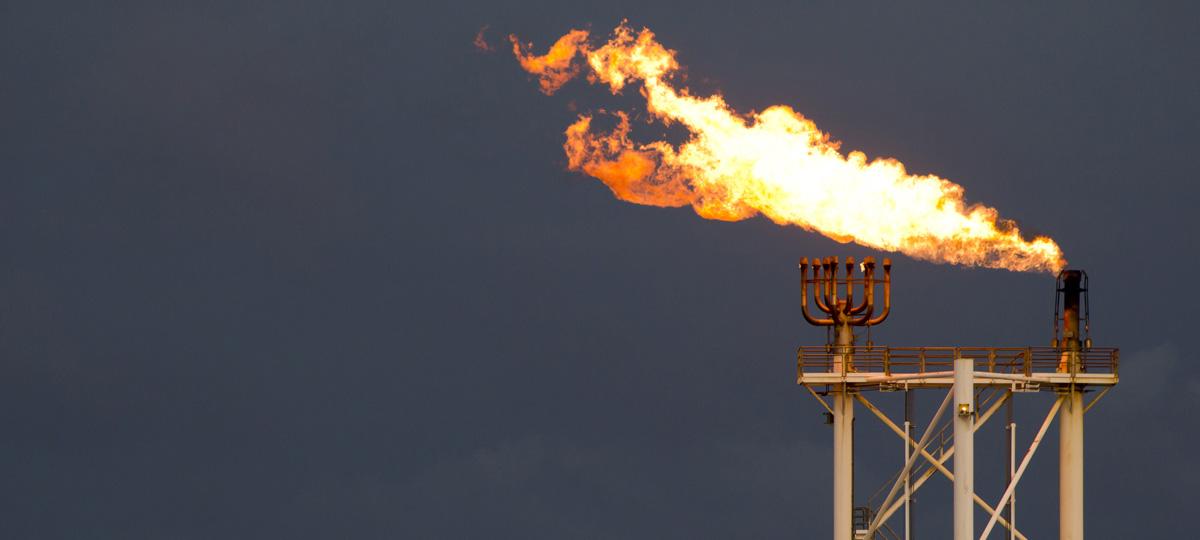
- Energy: Reinvesting record profits into legacy oil and gas extraction while branding marginal solar projects as ‘core strategy.’
- Finance: Facilitating the debt that powers the status quo while charging a premium for ‘green bonds’ that often lack verifiable impact.
| Sector | Cash Reserves (Est. $B) | Annual Green CapEx ($B) | Gap to Net Zero (%) |
|---|---|---|---|
| Tech | 850 | 45 | 92% |
| Energy | 620 | 110 | 65% |
| Finance | 980 | 30 | 97% |
| Industrials | 410 | 85 | 55% |
The cost of inaction
Delay is a choice. Every quarter that these trillions remain in low-yield accounts is a quarter where the cost of the transition increases. The ‘Green Premium’ is not shrinking fast enough because the economies of scale are stalled by capital cowardice. We are witnessing a massive failure of the private sector to lead, despite having the resources to do so. The market is not broken; it is functioning exactly as designed, prioritizing short-term liquidity over long-term civilizational stability.
The focus now shifts to the Q1 2026 earnings season. Analysts will be watching the ‘Cash-to-Green Ratio’ more closely than ever before. If the current trend of hoarding continues, the pressure for a ‘Climate Tax’ on idle corporate reserves will become an inevitability. Watch the 10-year Treasury yield. If it remains elevated, the incentive to keep cash in risk-free assets will continue to starve the planet of the capital it needs.