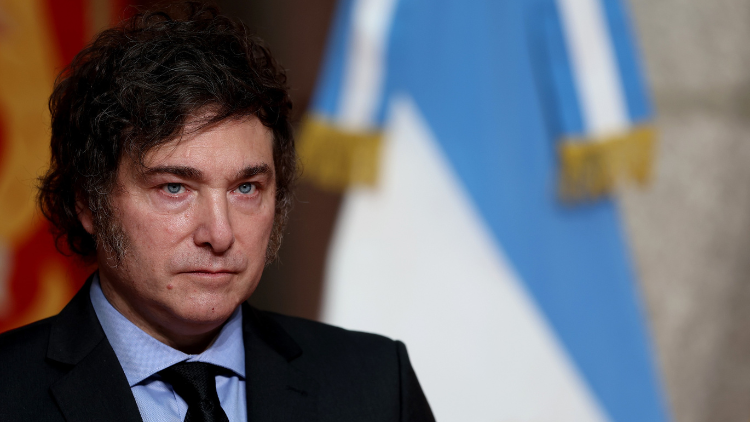
Buenos Aires is quiet, but it is the quiet of a surgical ward, not a cemetery. Two years ago, the city breathed the hot, frantic air of a 211.4 percent inflation rate; a figure that decimated savings and turned the simple act of buying milk into a strategic exercise. Today, as of December 22, 2025, the narrative has shifted from survival to a high stakes gamble on institutional credibility. President Javier Milei is no longer just a man with a chainsaw; he is a leader attempting to rewire the very DNA of a G20 economy while walking a social tightrope that has seen poverty rates hover at a staggering 36 percent, even as the macro numbers begin to sing.
The Twenty Billion Dollar Handshake
To follow the money in late 2025, one must look North. The most critical pivot of the last quarter was not found in the halls of the Casa Rosada, but in the quiet finalization of a $20 billion currency swap framework with the United States Treasury. Under the guidance of Treasury Secretary Scott Bessent, this liquidity injection has provided the backstop Milei desperately needed to move toward his ultimate goal: the total elimination of the Central Bank’s interest bearing liabilities. This is the alpha that generic observers missed. While the world watched Milei’s rhetoric, his economic team was busy converting toxic short term debt into long term stability, a move that per recent Bloomberg market analysis has seen Argentine sovereign bonds rally to their highest levels since the 2020 restructuring.
This swap is more than a loan; it is a geopolitical alignment. By securing this line of credit, Argentina has effectively anchored its recovery to the dollar without formal dollarization, at least for now. The strategy is clear: drain the swamp of pesos by making the dollar the only viable store of value. The Central Bank’s reserves, which were a hollowed out negative $11 billion when Milei took office, have clawed back to a record $43.61 billion this week. This was achieved through a combination of aggressive dollar purchases and the surprising success of the tax innocence bill, which encouraged citizens to pull an estimated $251 billion in mattress dollars out of hiding and into the formal banking system.
The Cost of the Cure
While the graph above shows a miraculous cooling of the Consumer Price Index, the microeconomic reality remains a battlefield. The monthly inflation rate ticked up slightly to 2.5 percent in November, up from October’s 2.3 percent. This minor acceleration is a reminder that the tail end of disinflation is often the most stubborn. For the average worker, the real wage recovery has been sluggish. The latest INDEC reports indicate that while the poverty rate has dropped from a peak of 53 percent in early 2024 to 36 percent today, the structural scars of the crisis remain deep. Nearly half of all households still report significant economic stress, unable to fully cover the basic food basket despite the stabilization of prices.
Milei’s administration has stayed the course with a fiscal discipline that would make a monk blush. For the first time in fourteen years, Argentina is running a primary surplus. They achieved this by firing over 50,000 civil servants and slashing subsidies that once kept utility bills artificially low. The reward for this austerity has been a dramatic drop in country risk, which fell from 2,500 basis points to approximately 600 by the end of 2025. This normalization is the prerequisite for the next phase of the plan: a return to international capital markets in early 2026.
Liquid Gold and the Swiss Stage
The next major milestone is already on the calendar. President Milei has confirmed his attendance at the World Economic Forum in Davos, scheduled for January 19, 2026. This is not just a speaking engagement; it is a sales pitch. He is no longer selling a theory; he is selling a reality where the Vaca Muerta shale formation is projected to attract $22 billion in energy investment over the next three years. The recent entry of U.S. based Continental Resources, which acquired a 90 percent stake in the Los Toldos II Oeste concession, proves that the big players are finally moving past their skepticism.
The technical mechanism of this recovery is the RIGI (Incentive Regime for Large Investments). By offering tax and customs stability for thirty years, Milei has bypassed the traditional distrust of Argentine volatility. Investors are betting that the laws are now stronger than the whims of the next president. This is the reward side of the equation. If Milei can keep the streets stable and the inflation rate below 2 percent MoM, he may well preside over the highest growth rate in Latin America next year, currently projected at 4.5 percent by the IMF.
The immediate data point to watch is the January 9, 2026 bond maturity. The Treasury remains approximately $2.4 billion short for these payments, but with the recent $20 billion swap and a widening trade surplus, the market expects a last minute liquidity bridge. The success or failure of this payment will set the tone for Milei’s address in Switzerland and determine if Argentina has truly broken its cycle of default. All eyes now turn to the Central Bank’s daily dollar auction results as we close out the final week of December.