The Five Hundred Billion Dollar Mirage
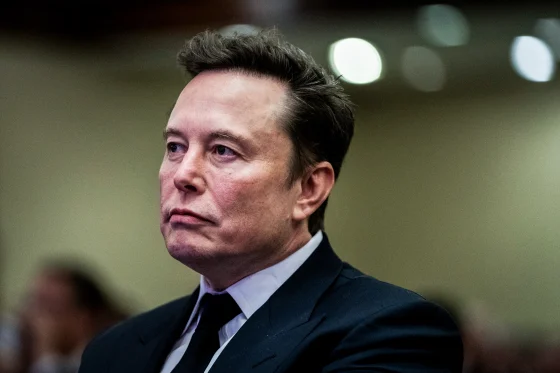
The numbers are staggering. On paper, Elon Musk is worth more than the GDP of several G20 nations. As of December 15, 2025, the Bloomberg Billionaires Index pegged his net worth at a peak of approximately $482 billion. This represents a surge of nearly $170 billion since the start of the year. But look closer. This is not a liquid fortune. It is a high-stakes bet on regulatory capture and the suspension of traditional valuation metrics. The math is broken, and the friction is starting to show.
Yesterday, Tesla (TSLA) shares closed at $408.22, a 3.1 percent slide from the morning open. While the broader market remained flat, the premium on Musk-related assets is beginning to fray. Investors are no longer just buying an electric vehicle company or a rocket manufacturer; they are buying a seat at the table of the incoming administration. This political premium is the most volatile asset in human history.
The Tesla Multiplier and the China Problem
Tesla is currently trading at a price to earnings ratio that defies industrial logic. While competitors in the legacy automotive space struggle with single-digit multiples, Tesla maintains a triple-digit valuation. This is predicated on the promise of Full Self-Driving (FSD) version 14, yet real-world data from the last forty-eight hours suggests the intervention rate remains too high for true Level 4 autonomy. The catch is the technical debt. Tesla has bet its entire valuation on a vision-only system while the industry moves toward redundant sensor suites including Lidar.
In the Chinese market, the pressure is mounting. Local competitors like BYD and Xiaomi are not just matching Tesla on price; they are out-innovating on software integration. Per the latest SEC Form 4 filings and quarterly reports, Tesla’s margins in the APAC region have compressed by 240 basis points. The wealth record Musk currently holds is a trailing indicator. It reflects past hype rather than the current reality of a saturated EV market.
The xAI Bubble and the Memphis Power Crisis
If Tesla is the foundation, xAI is the speculative roof. Recent Reuters reports on private equity markets indicate that xAI is seeking a fresh round of funding at a $100 billion valuation. This is for a company that was non-existent two years ago. The valuation is tied directly to the Colossus supercluster in Memphis, Tennessee. However, local utility reports from December 14 indicate that the facility’s power demands are pushing the regional grid to its breaking point.
The technical mechanism of this wealth creation is a feedback loop. Musk uses his social media platform, X, to train the Grok AI models. This creates a perceived ecosystem value that justifies massive private equity markups. But this value is illiquid. Unlike Tesla stock, which can be dumped on retail investors, the xAI valuation relies on a small circle of venture capitalists who are effectively betting on Musk’s political influence rather than the LLM’s architecture. If the federal subsidies for domestic AI clusters are scaled back, that $100 billion figure evaporates overnight.
SpaceX and the Monopoly on Orbit
SpaceX remains the only asset with a tangible, defensible moat. The December tender offer, which allowed employees to sell shares at a $250 billion valuation, confirms that private markets still view Starlink as a global utility. But even here, the risks are regulatory. SpaceX currently enjoys a near-monopoly on NASA and Department of Defense launches. This creates a massive conflict of interest as Musk prepares for his role in the Department of Government Efficiency (DOGE).
The skepticism lies in the execution. Can a man who oversees the very agencies that contract his companies truly claim to be cutting ‘waste’? The market is currently pricing in a frictionless environment where Musk-owned companies receive preferential treatment. This is a dangerous assumption. Any legal challenge to these contracts under the Administrative Procedure Act could freeze SpaceX’s revenue streams for years. The legal system moves slower than a Falcon 9, and the courts are not always friendly to executive overreach.
The Liquidity Trap
Wealth is not cash. To fund his various ventures and maintain his lifestyle, Musk borrows against his equity. This creates a margin loan risk that could trigger a forced liquidation if Tesla shares drop below critical support levels. The current support is estimated at $340. If the global economy enters a hard landing in early 2026, the margin calls could be catastrophic.
| Asset Class | Estimated Value (Dec 2025) | Primary Risk Factor |
|---|---|---|
| Tesla (Public) | $210 Billion | FSD safety failure & China competition |
| SpaceX (Private) | $125 Billion | Federal contract litigation |
| xAI (Private) | $95 Billion | Energy costs & model commoditization |
| X (Twitter) | $12 Billion | Debt service & advertiser exodus |
The market is currently drunk on the prospect of a ‘Golden Era’ for deregulation. But deregulation is a double-edged sword. It invites competition just as much as it removes barriers. The current $482 billion figure assumes that Musk will face no meaningful opposition from the FTC, the DOJ, or international regulators in the coming year. It is a best-case scenario valuation in a world that rarely follows the script.
Watch the January 20, 2026 inauguration as the primary volatility catalyst. The specific data point to monitor is the first official audit report from the DOGE initiative. If the projected $2 trillion in savings fails to materialize within the first hundred days, the ‘efficiency premium’ baked into Musk’s net worth will likely undergo a violent correction.