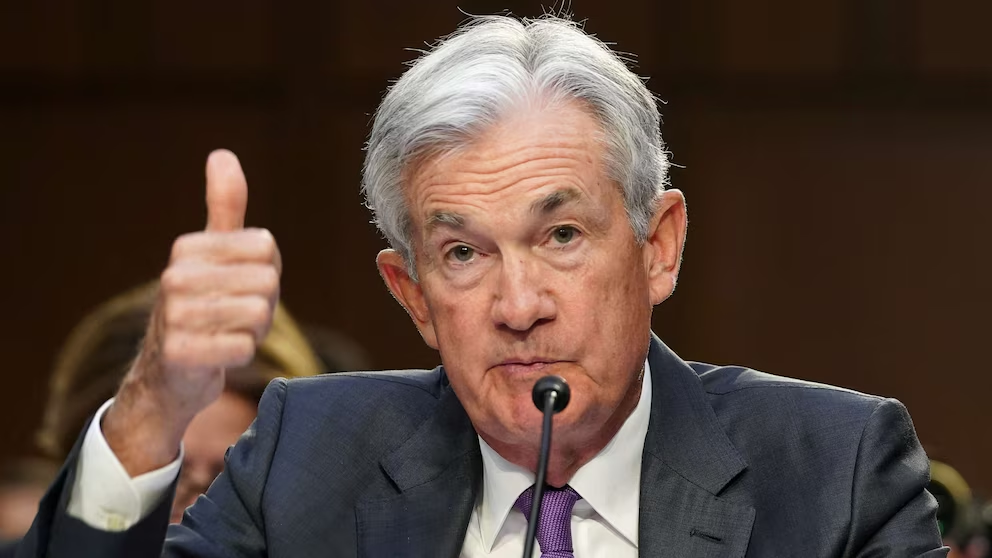
The Fed Ends 2025 With a Hawkish Warning
The Federal Reserve just signaled a cold winter for equity markets. Yesterday, December 10, 2025, the FOMC concluded its final meeting of the year by maintaining the federal funds rate at 4.25 to 4.50 percent. While the pause was widely anticipated by the CME FedWatch Tool, the updated Summary of Economic Projections (SEP) reveals a central bank deeply divided over the pace of easing. The dot plot now shows a median projection of 3.625 percent for the end of 2026, a sharp hawkish revision from the 3.125 percent projected back in September. This 50 basis point shift represents a fundamental realignment of the Fed’s terminal rate expectations.
Breaking Down the Dots
Numbers do not lie. Of the 19 FOMC participants, nine now see fewer than three rate cuts in 2026. This clustering of dots at the higher end of the spectrum suggests that the ‘higher for longer’ narrative has not been retired; it has simply been recalibrated for a stickier inflationary environment. The core PCE (Personal Consumption Expenditures) index, per the report released yesterday afternoon, remains stubbornly trapped at 2.7 percent, well above the 2.0 percent mandate. This mismatch between market expectations and Fed reality led to a 0.8 percent slide in the S&P 500 during the final hour of trading on December 10.
The Yield Curve and the 2026 Liquidity Trap
The bond market response was immediate. The 10-Year Treasury yield rose to 4.12 percent this morning, December 11, reflecting a sell-off in long-dated debt as investors price out the aggressive easing cycle they had hoped for. This upward pressure on yields directly impacts corporate debt refinancing. In 2026, an estimated 850 billion dollars in corporate bonds are set to mature. If the Fed maintains the median 3.625 percent rate indicated in the dot plot, many of these firms will be forced to roll over debt at rates 200 to 300 basis points higher than their original coupons. This is the definition of a liquidity trap. It squeezes margins and forces a shift from growth-oriented capital expenditure to debt service.
Tech Valuations vs. The Risk-Free Rate
Growth stocks are the primary victims of this dot plot shift. The Nasdaq 100 closed down 1.2 percent following the SEP release. When the risk-free rate, which is the 10-Year Treasury, stays above 4 percent, the present value of future cash flows for high-multiple tech companies collapses. As of this morning, the forward P/E ratio for the technology sector remains at 28.4, significantly above its ten-year average of 21.1. If the Fed dots continue to move higher in the March 2026 meeting, we can expect a violent valuation compression across the AI and software sectors. The market is currently pricing in a soft landing, but the Fed’s own projections for 1.8 percent GDP growth in 2026 suggest a period of stagnation instead.
Global Divergence and the Dollar Strength
The Fed’s hawkish stance yesterday stands in stark contrast to the European Central Bank. According to market data from the London open today, the Euro has weakened to 1.04 against the Dollar. While the ECB is grappling with a manufacturing recession in Germany and considering more aggressive cuts, the Fed is prioritizing inflation containment. This divergence creates a ‘Dollar Milkshake’ effect, pulling global liquidity into U.S. dollar-denominated assets. While this supports the Greenback, it creates massive headwinds for U.S. multinationals that generate more than 40 percent of their revenue overseas. Every 1 percent increase in the Dollar Index historically leads to a 0.5 percent drag on S&P 500 earnings growth.
The Employment Factor
Jerome Powell emphasized that the ‘dual mandate’ is now in balance, but the numbers tell a more complex story. The official November jobs report showed an unemployment rate of 4.2 percent. The December 10 projections suggest the Fed is comfortable with unemployment rising to 4.4 percent in 2026 to ensure inflation returns to target. This is a subtle but critical admission. The Fed is willing to sacrifice 300,000 to 500,000 jobs to win the inflation war. For investors, this means consumer discretionary spending, which has been the engine of the 2025 recovery, is likely to stall by the second quarter of 2026.
Forward Looking Milestone for 2026
The next critical data point is the January 28, 2026, FOMC meeting. Investors must watch the Q4 2025 GDP first-read, scheduled for late January, to see if the 4.50 percent interest rate is already causing a hard contraction in private domestic investment. If GDP growth falls below 1.2 percent, the dots will likely shift back down in March, but until that data arrives, the 3.625 percent median rate is the gravity well for all asset valuations.