The Ledger of Ruins
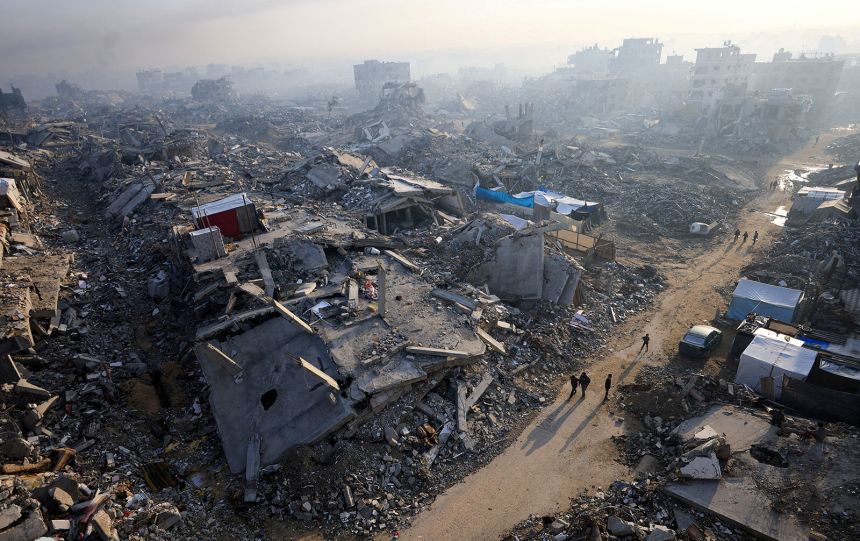
November 22, 2025. The air over the Gaza Strip is no longer filled with the immediate thunder of ordnance, but with something far more persistent: the fine, grey silt of 61 million tonnes of pulverized concrete. For the financial architects in Riyadh, Doha, and Brussels, this is not just a humanitarian catastrophe. It is the most complex logistics and reconstruction puzzle of the 21st century. The ledger is staggering. According to the latest assessments from the World Bank, the total cost to return Gaza to its pre-October 2023 baseline has surged past $52 billion, a figure that grows every day the rubble remains uncleared.
Cash is moving, but it is moving with surgical hesitation. The risk vs. reward calculation here is unlike any other emerging market. On one side, the ‘Rubble Dividend’ offers massive contracts for regional construction giants. On the other, the ‘Political Sinkhole’ threatens to swallow any capital that enters without ironclad security guarantees. This is a story of follow-the-money, where the currency is both dollars and diplomatic leverage.
The Logistics of 61 Million Tonnes
To understand the scale, one must look at the debris. This is not simple trash. It is a hazardous cocktail of unexploded ordnance (UXO), industrial chemicals, and an estimated 1.5 million tonnes of asbestos. The UNDP reported yesterday that while 120,000 tonnes have been cleared since January, the current pace is a drop in a toxic ocean. At the present rate of removal, it would take 14 years just to clear the ground before a single foundation can be poured.
For investors, the bottleneck is the primary source of ‘Alpha.’ Firms specializing in specialized hazardous waste removal and automated UXO detection are seeing a surge in private inquiries. The ‘Risk’ is the sheer volume of hidden explosives; the ‘Reward’ is a monopoly on the first phase of reconstruction. The cost of clearing a single square meter of dense urban debris in Gaza has risen 40% since the start of 2025, driven by insurance premiums and the scarcity of heavy machinery permitted through the border crossings.
The Sovereign Wealth Tug-of-War
The financing of this reconstruction is not a charity project; it is a geopolitical land grab. Qatar, the UAE, and Saudi Arabia are the primary actors, but their ‘Alpha’ is influence. By funding specific corridors of the reconstruction, these nations are effectively buying seats at the table for the future of Mediterranean trade routes. We are seeing the emergence of ‘Reconstruction Bonds’—a high-yield, high-risk vehicle that ties the payout to the long-term stability of the region.
As of November 20, 2025, the funding gap remains cavernous. While $15 billion has been pledged in various donor summits, only 12% has been disbursed. The reason? The ‘Contingency Clause.’ Major donors are refusing to release funds until a ‘Day After’ governance framework is finalized. This has created a secondary market for smaller, more agile private contractors who are willing to work under ‘force majeure’ conditions for a 300% markup on standard international rates.
Sector Breakdown of Immediate Needs
The following data represents the capital requirements as of the Q4 2025 assessment:
| Sector | Estimated Damage ($B) | Priority Level | Primary Funding Source |
|---|---|---|---|
| Residential Housing | 24.5 | Critical | GCC Sovereign Funds |
| Water & Sanitation | 4.2 | High | EU/World Bank |
| Energy Grid | 3.8 | High | Private Equity/Partnerships |
| Debris Management | 8.5 | Immediate | UN/International Donors |
The Asbestos Arbitrage
The technical mechanism of the reconstruction is where the real story hides. The ‘Asbestos Arbitrage’ is a term used by regional contractors to describe the profit margin gained by bypassing safety standards. Because Gaza lacks the specialized facilities to process the 1.5 million tonnes of hazardous building materials, the cost of ‘safe’ disposal is prohibitive. Investigative traces suggest that much of this material is being crushed and reused in temporary roadbeds—a move that saves millions today but creates a public health liability that will bankrupt the local healthcare system by 2040.
Investors looking for ‘Alpha’ in this environment are not looking at cement; they are looking at the ‘Trust Infrastructure.’ This includes blockchain-based tracking of aid shipments to prevent ‘leakage’ and the use of satellite imagery to verify work in real-time. Per Reuters reports from earlier this week, the integration of ‘smart contracts’ into the reconstruction pipeline is the only way to lure Western institutional capital back into the fold. The risk of ‘leakage’—the euphemism for funds diverted to non-civilian use—remains the single biggest barrier to the $50 billion target.
The 2026 Milestone
The window for the ‘Early Entry’ phase of Gaza’s reconstruction is closing. By the end of Q1 2026, the first major ‘Integrated Reconstruction Zone’ (IRZ) is scheduled to be tendered. This will be the first true test of whether private capital can coexist with humanitarian mandates in a post-kinetic environment. Watch the ‘Disbursement to Pledge’ ratio in the coming weeks; if it remains below 15%, the ‘Rubble Dividend’ will remain a theoretical exercise in a field of very real dust.